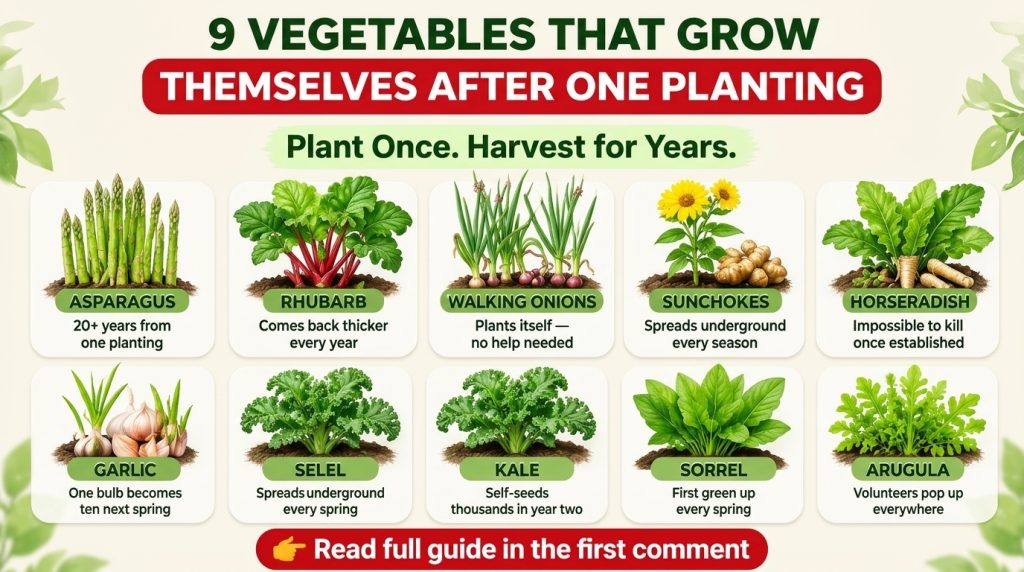
Who doesn’t love a vegetable patch that seems to take care of itself? Perennial vegetables are plants that live for several years, returning each spring without being replanted from seed. They won’t do all the work for you, but once established, many of them reward you with harvests season after season. Here are nine favorites to consider for your garden, along with simple tips for getting started.
Why Perennial Vegetables Are Worth Growing
Annual vegetables complete their life cycle in one season, so you need to sow and plant them again every year. Perennials put their energy into roots and crowns that survive winter, which means less replanting and a more predictable harvest. They also tend to build healthy soil over time, since their roots stay in place and their leaves return to the ground as mulch.
Nine Perennial Vegetables to Consider
1. Asparagus
Asparagus is one of the classic perennial vegetables. Once planted, a bed can produce spears for 15 years or more. Plant crowns in early spring, and allow the plants to grow foliage for the first year or two before harvesting.
2. Rhubarb
Rhubarb produces thick, tart stalks in spring and early summer. Plant it in a sunny spot with rich soil and good drainage. Avoid harvesting heavily in the first year so the plant can establish itself.
3. Globe Artichoke
Globe artichokes are striking plants with silvery foliage and edible flower buds. In colder regions they may need winter protection, but in mild climates they can return for several years with minimal fuss.
4. Perennial Kale
Perennial kale, often sold as tree kale or thousand-head kale, keeps producing leaves for years. It handles cool weather well and can be harvested continuously by picking the outer leaves.
5. Egyptian Walking Onion
Also called tree onion, this plant forms small bulbils at the top of its stalks. These bulbils can be replanted or left to fall naturally, making it an easy way to expand your patch.
6. Sorrel
Sorrel has a bright, lemony flavor that works well in salads, soups, and sauces. It grows readily in partial shade and returns reliably each year. Cut back flower stalks to keep the leaves tender.
7. Chives
Chives are one of the easiest perennial herbs to grow. They form clumps that can be divided every few years, and their purple flowers attract pollinators to the garden.
8. Horseradish
Horseradish is a hardy perennial with a strong, spicy root. Because it spreads through its roots, it is best grown in a contained area or large container. Harvest roots in late autumn or early spring.
9. Lovage
Lovage is a tall perennial with a flavor similar to celery. Its leaves can be used fresh or dried, and the plant gives shade and structure to the back of a border.
Tips for Growing Perennial Vegetables Successfully
- Choose a permanent location, since many perennials stay in the same spot for years.
- Prepare the soil well before planting, adding compost to improve texture and nutrients.
- Mulch around the plants in autumn to protect roots from freezing and to keep moisture in the soil.
- Divide overcrowded clumps every few years to keep plants vigorous.
- Feed the soil with organic compost or compost tea to support steady growth.
Getting Started in Your Garden
Start small with two or three perennials that suit your climate and cooking style. Asparagus, chives, and rhubarb are good first choices for many gardeners. As you gain experience, you can add more plants and create a productive edible border that returns year after year.
If this guide helped you plan your garden, save it for later and share it with a friend who loves growing their own food. Happy gardening!