Gardening doesn’t have to be complicated. Many of the most helpful practices are simple habits and low-cost household tricks that support soil, water, and plant health. Here are several practical ideas you can try in your vegetable beds, flower borders, or container garden.
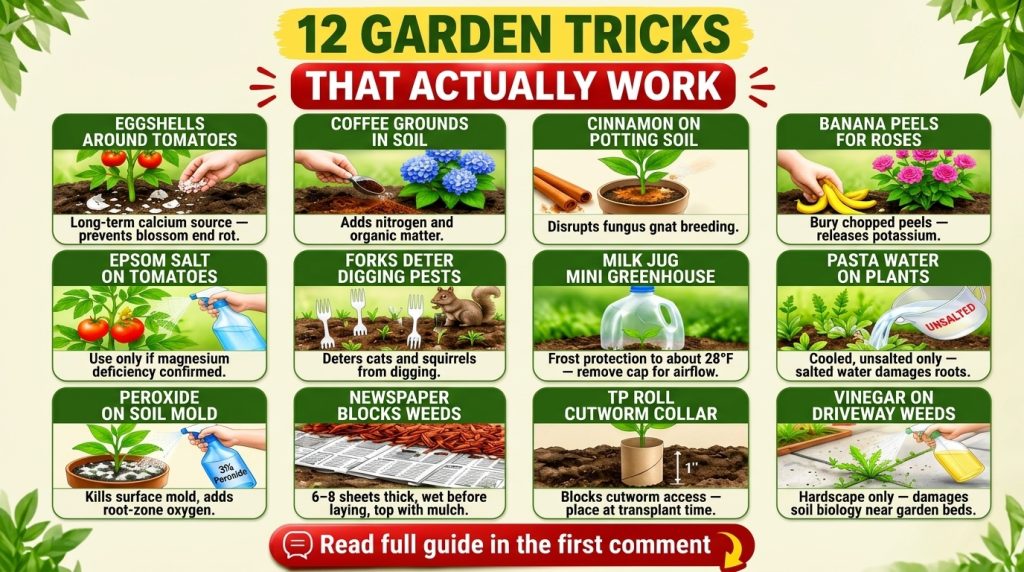
Use Crushed Eggshells as a Slow-Release Calcium Source
Eggshells are a popular organic addition to tomato beds. They contain calcium carbonate, which breaks down slowly in the soil. To prepare them, rinse the shells, let them dry completely, and grind them into a fine powder. Mix the powder into the top layer of soil or add it to your compost pile.
Keep your expectations realistic. Eggshells release nutrients gradually, so they work best as a long-term soil amendment rather than a quick fix. If you suspect a calcium problem, such as blossom end rot on tomatoes, the cause is often uneven watering, so consistent moisture matters just as much as calcium.
Mulch to Keep Soil Moisture Steady
A 2 to 3 inch layer of straw, shredded leaves, or wood chips helps reduce evaporation and keeps soil temperatures more stable. Mulch also limits weeds and reduces soil splashing onto leaves, which can help lower the spread of some diseases. Keep mulch a few inches away from plant stems to avoid rot.
Water Deeply Rather Than Often
Shallow, frequent watering encourages weak roots. Instead, water deeply so moisture reaches the root zone, then let the top inch of soil dry slightly before watering again. Morning watering is ideal because leaves have time to dry during the day.
Pair Compatible Plants Together
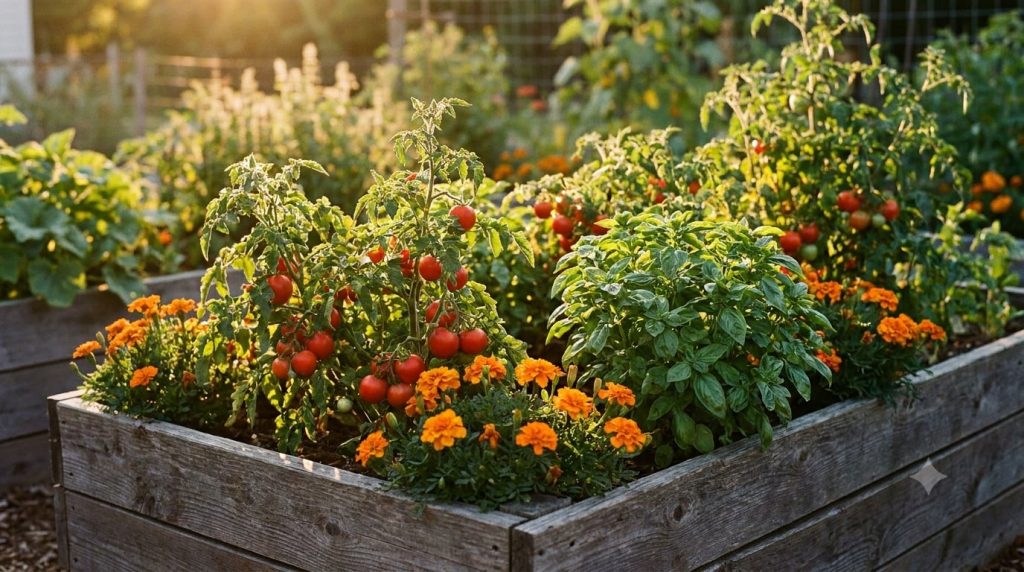
Companion planting is a classic approach to garden design. Many gardeners grow basil near tomatoes or plant marigolds among vegetables to attract helpful insects. These pairings are a useful starting point, though results vary with climate, soil, and garden layout.
Add Compost to Improve Soil Structure
Compost improves drainage in heavy soil and helps sandy soil hold water. It also adds organic matter that supports beneficial microorganisms. Spread a 1 to 2 inch layer over garden beds each season and mix it into the top few inches of soil.
Rotate Crops Each Season
Planting the same crop in the same spot year after year can build up soil-borne pests and diseases. Rotating crop families, such as moving tomatoes to a different bed, is a simple habit that supports healthier plants over time.
Check Plants for Pests Early
Inspect the undersides of leaves every few days. Hand-picking visible pests is often the easiest first step. For minor soft-bodied insect problems, a mild soapy water spray can be used, and it is wise to test it on a single leaf first. Avoid harsh chemicals, and always follow product labels when using any commercial treatment.
Start with a Few Tricks and Build Gradually
You don’t need to try every idea at once. Choose two or three tricks that fit your space and plants, observe what changes over a season, and keep notes. Over time, your garden routine will become more intuitive, and your plants will reflect your care.