Your compost pile does more than break down kitchen scraps and yard waste. It also gives off a steady stream of clues through its smell. Learning to read those clues is one of the simplest ways to keep your garden healthy, reduce odors, and turn waste into rich, dark soil you can be proud of.
In this guide, we walk through the most common compost smells, what each one usually means, and practical fixes you can try this week. Whether you are a beginner with a single bin or an experienced gardener managing a large heap, these tips will help you troubleshoot with confidence.
Why Compost Smells Matter
A healthy compost pile should smell earthy, like a forest floor after rain. When the smell changes, it usually points to a shift in moisture, air flow, or the balance between green and brown materials. Green materials such as fresh grass clippings, vegetable scraps, and coffee grounds are rich in nitrogen. Brown materials such as dry leaves, cardboard, and straw are rich in carbon. Microbes need both, along with oxygen and water, to do their work efficiently.
The Five Most Common Compost Smells
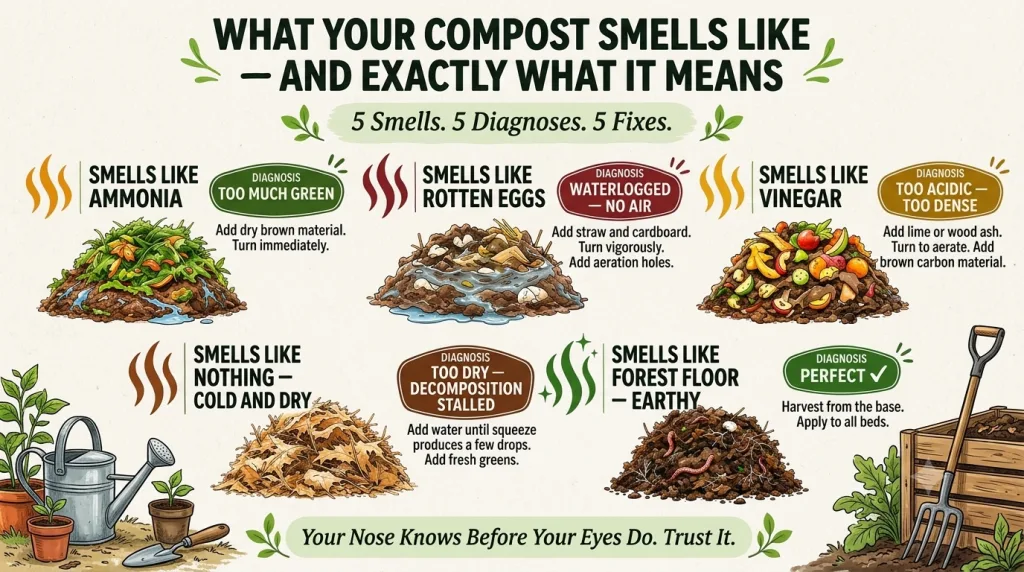
1. Sweet and Earthy
This is the smell you want. It means the pile is active, balanced, and breaking down materials without problems. No action is needed beyond keeping the pile moist and turning it occasionally.
2. Sharp Ammonia
A strong, stinging smell like cat litter often means there is too much nitrogen. Grass clippings, manure, or food scraps may have piled up faster than the carbon materials can balance them. To fix it, add a generous layer of dry leaves, shredded cardboard, or straw, then mix thoroughly. Adding browns usually brings the smell back into balance within a few days.
3. Rotten Egg or Sulfur
A rotten egg odor signals that parts of the pile have become waterlogged and oxygen-starved. Without enough air, anaerobic conditions develop. Turn the pile to introduce oxygen, break up compacted clumps, and mix in dry brown materials to absorb excess moisture. Avoid adding more wet kitchen scraps until the smell fades.
4. Sour or Vinegar-Like
A sour, vinegary smell often means the pile is too wet and fermenting quickly, usually because of an excess of fruit scraps or soggy food waste. Add dry carbon materials such as shredded paper or dry leaves, and turn the heap to improve airflow. Covering food scraps with a layer of brown material when you add them can also help prevent this problem.
5. Musty or Mildew-Like
A damp, musty smell can appear when the pile is cool, compacted, or sitting in shade with limited air movement. Mold on the surface is often harmless and part of the natural decomposition process. Turn the pile, spread it out to dry slightly if it is soggy, and make sure it gets some sun and ventilation.
How to Keep Your Compost Smelling Fresh
- Aim for a rough balance of about two to three parts brown materials to one part green materials by volume.
- Keep the pile as damp as a wrung-out sponge, neither dripping nor bone dry.
- Turn the pile every one to two weeks to add oxygen and speed up decomposition.
- Chop large scraps into smaller pieces so microbes can access them more easily.
- Keep a bucket of dry leaves or shredded paper near your bin so it is easy to add browns after each kitchen scrap deposit.
When to Check Your Compost
If your pile smells off for more than a week despite adjustments, look at the overall size and placement. Very small piles can lose heat and moisture too quickly, while very large piles can compact and suffocate. Placing your bin in a partly shaded, well-drained spot often makes management easier, especially in hot summers or wet seasons.
Turning Smells into Better Soil
Once you learn to read your compost, you can prevent most problems before they start. A well-managed pile not only smells pleasant but also produces crumbly, nutrient-rich material that improves soil structure, supports beneficial organisms, and helps vegetables, flowers, and indoor plants thrive. Every adjustment you make teaches you more about your own garden ecosystem.
Start by checking your compost each time you turn it. Take a quick sniff, note what you notice, and make one small change at a time. With a little practice, your nose will become one of the most useful tools in your gardening kit.