Have you ever found yourself reaching for that second (or third) cookie, even when you weren’t truly hungry? Or perhaps you’ve felt an undeniable pull towards a bag of chips or a slice of pizza, despite knowing there might be healthier options. You’re not alone! Many of us experience these powerful cravings, and it’s often not just about willpower. There’s a fascinating, and sometimes concerning, science behind why certain foods are incredibly hard to resist, particularly ultra-processed foods (UPFs).
Today, we’re diving deep into the chemical engineering that makes ultra-processed foods so alluring and how they powerfully interact with your brain’s reward system. Understanding this ‘chemical pull’ is the first step towards making more informed and empowering food choices for a healthier you.
What Are Ultra-Processed Foods (UPFs)?
Before we explore their irresistible nature, let’s clarify what ultra-processed foods are. UPFs are industrial formulations typically made from inexpensive ingredients like sugars, oils, fats, salt, anti-caking agents, stabilizers, and flavor enhancers, often with little to no whole food content. They are designed for convenience, palatability, and long shelf life, and often bear little resemblance to their original food sources.
The ‘Addictive’ Power of UPFs: A Chemical Tug-of-War
Our brains are wired for survival, and part of that wiring involves a reward system that releases dopamine when we experience pleasure – like eating delicious food. Historically, this system encouraged us to seek out energy-dense foods. Ultra-processed foods, however, are expertly engineered to hijack this natural system, creating a powerful ‘chemical pull’ that can make them incredibly hard to resist.
They achieve this through a precise combination of ingredients, textures, and flavors that activate our reward pathways intensely and rapidly, often overriding our natural satiety signals. This can lead to overconsumption and contribute to a cycle of cravings.
Top 10 Ultra-Processed Foods and Their Irresistible Characteristics
An insightful infographic recently highlighted some of the most commonly craved ultra-processed foods and the specific chemical characteristics that make them so hard to put down. Let’s look at what makes these foods so uniquely compelling:
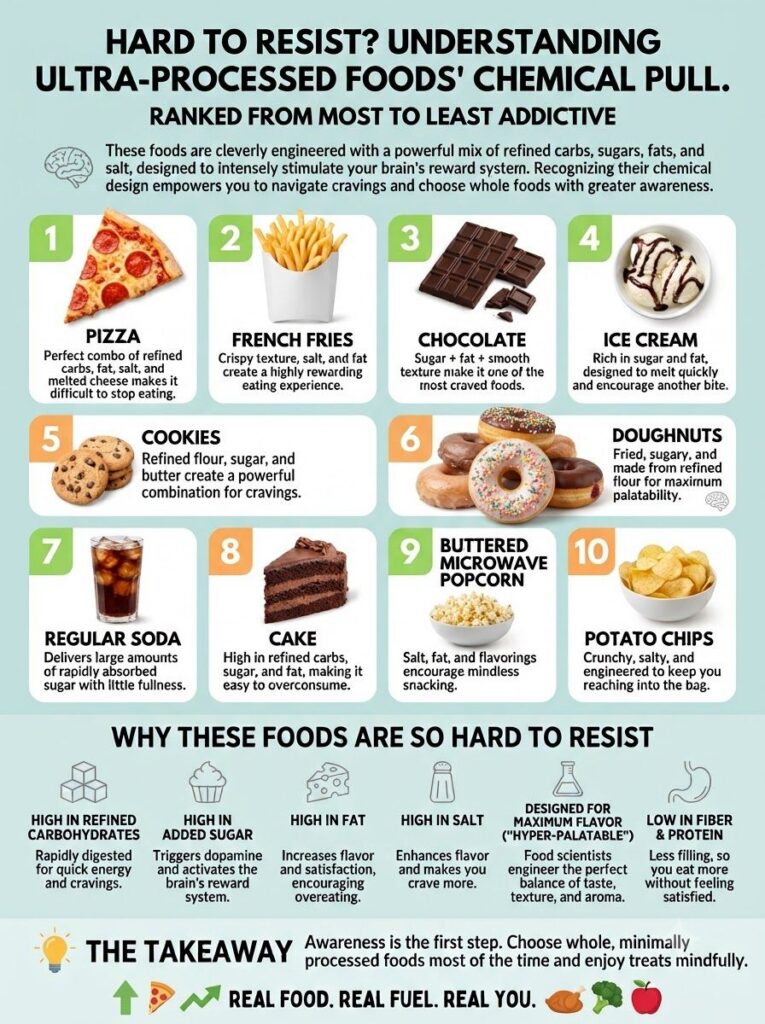
- Pizza: A perfect storm of fat, salt, refined carbohydrates (crust), and sometimes sugar, creating a highly satisfying sensory experience that hits multiple pleasure points simultaneously.
- French Fries: The ideal combination of crispiness, saltiness, and high fat content, making them incredibly palatable and difficult to eat in moderation.
- Chocolate: Contains a unique blend of sugar, fat, and psychoactive compounds like anandamide and phenylethylamine, which can elevate mood and create a sense of reward.
- Ice Cream: A creamy, cold, and intensely sweet delight, rich in sugar and fat, that melts in your mouth and offers immediate gratification.
- Cookies: Often a mix of refined flour, high sugar content, and butter (fat), providing a comforting texture and an immediate energy rush that quickly fades, leaving you wanting more.
- Doughnuts: Deep-fried refined carbohydrates, heavily sweetened, and often glazed, offering a dense hit of sugar and fat that is both texturally appealing and calorically rich.
- Regular Soda: Liquid sugar delivery that provides a rapid spike in blood glucose without any fiber to slow absorption, leading to a quick high and subsequent crash.
- Cake: Similar to cookies and doughnuts, cakes are a concentrated source of sugar, refined flour, and fat, designed for celebration and indulgence, making them psychologically and chemically appealing.
- Buttered Microwave Popcorn: A blend of salty, fatty, and crunchy, often with artificial flavors, creating a satisfying texture and taste that encourages continuous snacking.
- Potato Chips: Exceptionally crunchy, salty, and fatty. Their thin texture allows for rapid consumption, and the high salt and fat content stimulate the brain’s reward centers repeatedly.
Why These Foods Are So Hard to Resist: A Deeper Dive
The infographic broke down the key reasons why UPFs are so compelling. Let’s expand on these factors:
1. High Refined Carbohydrates
UPFs often contain refined carbohydrates like white flour and corn syrup. These break down quickly into glucose, causing rapid blood sugar spikes. This surge triggers a release of insulin, which can lead to a subsequent blood sugar crash, making you feel hungry again sooner and crave another quick energy boost.
2. Added Sugar
Sugar is a powerful driver of the brain’s reward system. Food manufacturers know this, which is why they add significant amounts of various forms of sugar (high-fructose corn syrup, sucrose, dextrose) to UPFs. This sweetness lights up pleasure centers in the brain, creating a desire for more, even when full.
3. Excessive Fat
Fat adds richness, flavor, and a satisfying mouthfeel. When combined with sugar and salt, fat becomes incredibly potent in stimulating our reward pathways. UPFs often contain unhealthy fats (like trans fats or highly refined vegetable oils) that contribute to their appeal and caloric density.
4. High Sodium Content
Salt enhances flavor and masks the often bland taste of highly processed ingredients. The combination of salt, sugar, and fat (known as the ‘bliss point’) creates an almost irresistible sensory experience that food scientists meticulously engineer to maximize consumption.
5. Hyper-Palatability
This is the ultimate goal of UPF engineering. Hyper-palatable foods are designed to be so incredibly delicious that they’re hard to stop eating. They hit multiple sensory pleasure points simultaneously (taste, texture, aroma) in a way that natural, whole foods rarely do, overwhelming our natural satiety cues.
6. Low Fiber and Protein
Unlike whole foods, which are rich in fiber and protein, UPFs are often stripped of these essential nutrients. Fiber and protein are crucial for satiety, helping us feel full and satisfied. Without them, UPFs can be consumed in large quantities without triggering the ‘I’m full’ signal, leading to overeating.
The Takeaway: Making Healthier Choices
Understanding the clever chemistry behind ultra-processed foods is truly empowering. It helps us realize that our cravings aren’t always a personal failing but often a response to highly engineered products designed to be irresistible. The key isn’t to demonize foods but to become more aware and conscious consumers.
The ultimate message is clear: REAL FOOD. REAL FUEL. REAL YOU.
Practical Tips for Reducing UPF Consumption:
- Read Labels: Become familiar with common UPF ingredients (e.g., high-fructose corn syrup, hydrogenated oils, artificial flavors, emulsifiers) and choose products with shorter ingredient lists and recognizable whole foods.
- Focus on Whole Foods: Prioritize fruits, vegetables, lean proteins, whole grains, and healthy fats. Build your meals around these ingredients.
- Cook at Home: Preparing your own meals gives you control over ingredients and helps you avoid hidden sugars, fats, and sodium.
- Plan Your Meals: Having healthy snacks and meals planned can prevent impulsive choices when hunger strikes.
- Stay Hydrated: Sometimes, thirst can be mistaken for hunger. Drink plenty of water throughout the day.
- Be Mindful: Pay attention to your body’s hunger and fullness cues. Eat slowly and savor your food.
Conclusion
The journey to healthier eating is a continuous one, and knowledge is your most powerful tool. By understanding the chemical allure of ultra-processed foods, you can equip yourself to make choices that nourish your body, support your brain health, and truly fuel the ‘real you.’ It’s about empowering yourself to break free from the chemical pull and embrace a lifestyle of wholesome, satisfying nutrition.
Which food on this list do you find hardest to resist, and what strategies have you found helpful in making healthier choices? Share your thoughts in the comments below!