Our gardens are often seen as serene sanctuaries, places of beauty, growth, and connection with nature. We spend hours tending to our plants, watching them flourish, and enjoying the fruits (and flowers!) of our labor. But did you know that some of the most beautiful plants in our yards can harbor hidden dangers? It’s true! While most plants are harmless, a surprising number contain compounds that can be toxic if ingested or even touched, posing risks to curious children, playful pets, and even unsuspecting adult gardeners.
Understanding which plants to approach with caution isn’t about fear; it’s about being informed and empowering ourselves to create a truly safe and nurturing outdoor space. Think of it as another layer of garden wisdom, shared from one neighbor to another. Let’s dig into how we can identify these tricky plants and cultivate a safer environment for everyone.
Why Some Plants Are Toxic: Nature’s Self-Defense
Plants have developed incredible ways to protect themselves over millennia, and producing toxins is one of their most effective defense mechanisms. These compounds help deter pests, fungi, and hungry herbivores. For us, knowing about these natural defenses means we can enjoy the plant’s beauty while respecting its boundaries.
The toxicity can vary wildly, from causing a mild skin rash to severe internal issues if ingested. Different parts of a plant might be toxic too – some plants have poisonous berries, others have dangerous sap, and in some cases, the entire plant is harmful.
Common Garden Suspects: What to Watch For
Many common ornamental plants, beloved for their beauty, are among those we need to be mindful of. Here are some characteristics and types of plants that often contain toxic properties:
- Plants with Attractive Berries: Many plants produce colorful berries that can look tempting to children or birds, but are highly toxic to humans and pets. Think about plants with red, black, or white berries that aren’t grown specifically for consumption.
- Plants with Milky Sap: If a plant produces a milky, sticky sap when a leaf or stem is broken, it’s often a sign of irritating or toxic compounds. This sap can cause skin irritation, rashes, or even eye damage upon contact.
- Beautiful Flowering Plants: Some of our most cherished garden flowers, including certain bulbs like daffodils or lilies, and ornamental shrubs like oleander or rhododendron, can be toxic if ingested. Their beauty can sometimes mask their danger.
- Common Weeds & Wild Growth: Even seemingly innocuous weeds or wild plants that pop up in your garden can be toxic. Always be sure of a plant’s identity before handling it extensively or allowing pets or children near it.
It can be tough to keep track of every single plant. That’s why resources that help you identify specific dangerous plants are so valuable. Having a visual guide can make all the difference in quickly recognizing potential hazards.
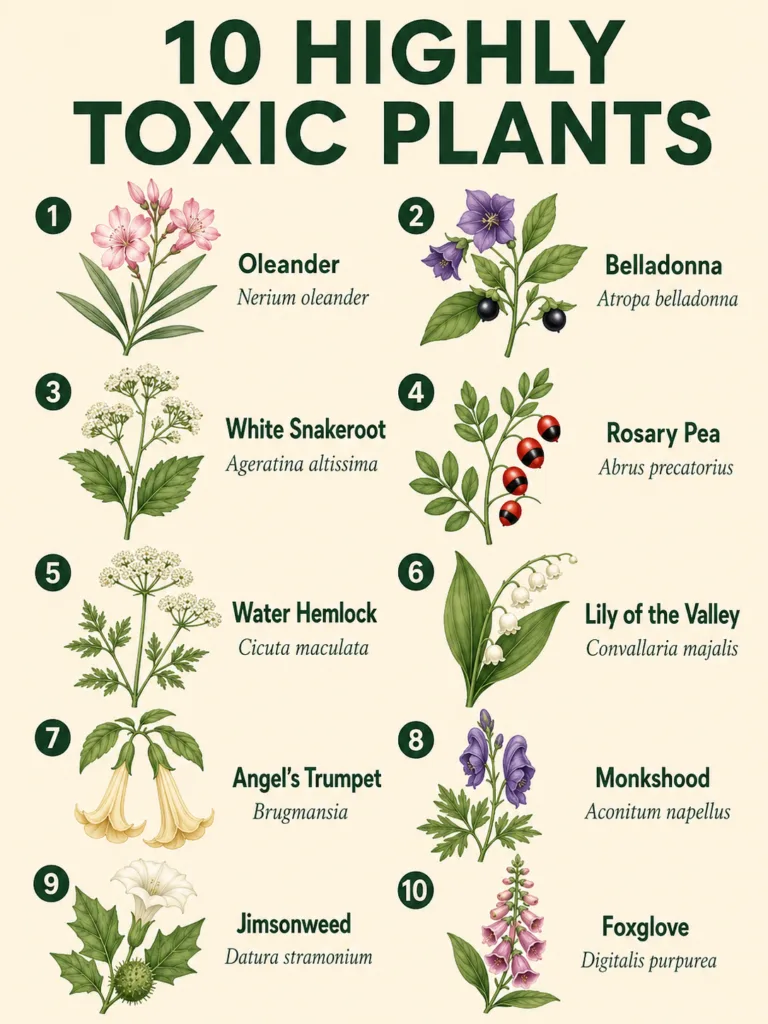 A visual guide to commonly found toxic plants can be an invaluable tool for any gardener.
Practical Steps for a Safer Garden
Creating a safer garden doesn’t mean ripping out every beautiful plant. It’s about smart management and awareness. Here are some actionable tips:
1. Know Your Plants: Identification is Key
- Research Before You Plant: Before bringing a new plant home, especially if you have children or pets, take a moment to research its characteristics, including any potential toxicity.
- Identify Existing Plants: Take the time to identify all the plants currently in your garden. If you’re unsure about a plant, err on the side of caution. Many excellent plant identification apps and local garden extension services can help.
- Label Plants: For particularly sensitive areas, consider labeling plants with their common and scientific names. This helps with quick identification.
2. Create Physical Barriers and Designated Zones
- Fencing Off: If you have highly toxic plants that you wish to keep, consider fencing them off or planting them in areas inaccessible to children and pets.
- Raised Beds or Containers: Grow known edibles in easily identifiable raised beds or containers, separate from any ornamental plants that might be toxic.
3. Practice Safe Gardening Habits
- Wear Gloves: When handling plants, especially those with milky sap or unknown properties, always wear gardening gloves. This protects your skin from irritants.
- Wash Hands Thoroughly: After any gardening activity, wash your hands thoroughly with soap and water before touching your face or eating.
- Supervise Children and Pets: Never leave young children or pets unsupervised in the garden, especially if you know there are toxic plants present. Teach children the important rule: “Look, don’t touch, and never eat anything from the garden unless a grown-up says it’s okay.”
- Proper Pruning and Disposal: When pruning or removing toxic plants, handle cuttings carefully and dispose of them securely where children or pets cannot access them. Do not compost toxic plant material if you plan to use the compost on edible gardens.
4. Be Prepared for Emergencies
- Keep Emergency Numbers Handy: Have the number for Poison Control (1-800-222-1222 in the USA) and your veterinarian readily accessible.
- Know Symptoms: Familiarize yourself with common symptoms of plant poisoning, which can range from skin irritation to nausea, vomiting, or lethargy.
Cultivating Confidence and Connection
By taking these mindful steps, you’re not just safeguarding your family and furry friends; you’re also deepening your connection to your garden. You’re learning its intricate details, understanding its natural defenses, and becoming a more informed and confident gardener. This isn’t about creating a sterile environment, but a thriving, sustainable practice where peace of mind grows alongside your beautiful blooms and bountiful harvests.
Remember, your garden is an ever-evolving ecosystem. Continuous learning and a watchful eye are your best tools for nurturing a space that’s not only visually stunning but also genuinely safe for everyone to enjoy. Happy gardening!