As the days grow shorter and a festive chill fills the air, there’s a unique joy in bringing nature’s beauty indoors. Holiday plants aren’t just decorations; they’re living expressions of warmth, cheer, and the vibrant spirit of the season. From classic blooms to unexpected winter beauties, these green companions add a touch of magic to any home, transforming everyday spaces into cozy, festive havens. They offer a refreshing contrast to traditional ornaments and a wonderful opportunity to connect with the living world during the holidays. Choosing the right plants and understanding their simple needs ensures they’ll thrive and bring lasting delight.
Cultivating these festive plants doesn’t require a green thumb; it simply calls for a little attention to their specific needs during the colder months. Many of these plants are chosen for their ability to bloom, display colorful foliage, or maintain their verdant appeal when most other plants are dormant. Understanding their light, water, and temperature preferences is key to enjoying their full seasonal splendor.
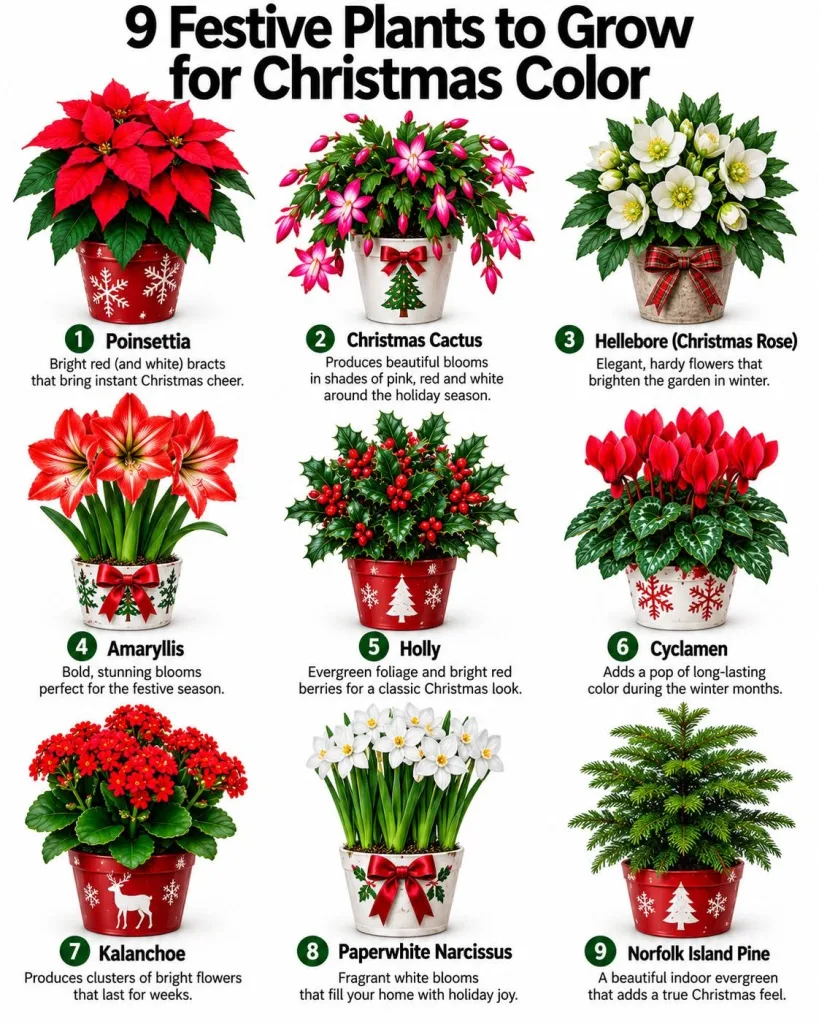 Bring festive cheer indoors with these vibrant Christmas plants.
Your Guide to 9 Cheerful Holiday Plants
Let’s explore nine delightful plants that will infuse your home with natural beauty and holiday spirit, along with practical tips for their care.
1. Poinsettia (Euphorbia pulcherrima)
The quintessential Christmas plant, known for its vibrant red, pink, or white bracts (modified leaves). Poinsettias are surprisingly easy to care for once you understand their needs.
- Hardiness: Perennial in USDA Zones 9-11; typically grown as an annual houseplant elsewhere.
- Plant type: Tropical shrub, often treated as a temporary indoor annual.
- Exposure: Bright, indirect light for at least six hours daily. Avoid direct sun, which can scorch the leaves.
- Watering: Keep the soil consistently moist but never soggy. Water thoroughly when the top inch of soil feels dry to the touch, and ensure good drainage to prevent root rot.
- Practical Tip: Protect from drafts and sudden temperature changes, which can cause bracts and leaves to drop prematurely. Maintain indoor temperatures between 65-70°F (18-21°C).
- Warning: The milky sap can be a mild skin irritant and stomach upset if ingested, so keep away from pets and small children.
2. Christmas Cactus (Schlumbergera spp.)
These festive cacti offer a spectacular display of tubular flowers in shades of red, pink, white, or orange, blooming just in time for the holidays.
- Hardiness: Tropical succulent, grown indoors in all zones.
- Plant type: Epiphytic cactus.
- Exposure: Bright, indirect light. An east-facing window is often ideal.
- Watering: Water when the top inch of soil is dry. They prefer more water than desert cacti, especially when budding and blooming, but avoid overwatering.
- Practical Tip: To encourage reblooming, provide a period of cooler temperatures (around 50-55°F / 10-13°C) and 12-14 hours of uninterrupted darkness each day for 6-8 weeks in early fall.
- Common Mistake: Overwatering and insufficient light are common causes of bud drop.
3. Amaryllis (Hippeastrum spp.)
Known for its striking, large trumpet-shaped flowers, amaryllis bulbs are a joy to force into bloom, providing dramatic color during winter.
- Hardiness: Perennial in USDA Zones 8-10; grown as an annual or forced bulb indoors elsewhere.
- Plant type: Bulbous perennial.
- Exposure: Bright, direct light once growth appears.
- Watering: After planting, water sparingly until the sprout is 2 inches tall, then water regularly when the top inch of soil is dry.
- Practical Tip: Plant bulbs in a pot only slightly larger than the bulb, with one-third of the bulb exposed above the soil line.
- Harvesting: Once blooms fade, you can cut the flower stalk back and continue to water and fertilize for year-round growth to potentially rebloom next year.
4. Paperwhite Narcissus (Narcissus papyraceus)
These fragrant, delicate white flowers are a classic for indoor forcing, bringing a sweet scent and elegant beauty to your holiday decor.
- Hardiness: Perennial in USDA Zones 8-10; typically forced indoors.
- Plant type: Bulbous perennial.
- Exposure: Bright, indirect light once sprouted; they can tolerate lower light but may become leggy.
- Watering: If grown in pebbles and water, maintain the water level just below the bulb’s base. If in soil, keep it consistently moist.
- Practical Tip: To prevent leggy growth, place them in a cool room (around 60-65°F / 15-18°C) once they sprout, and turn the pot regularly. You can also stake taller varieties.
- Warning: Some people find the scent overpowering.
5. Holly (Ilex aquifolium and other Ilex species)
With its glossy green leaves and bright red berries, holly is an iconic symbol of winter. Often displayed as cut branches indoors.
- Hardiness: Varies greatly by species, e.g., English Holly (Ilex aquifolium) in USDA Zones 6-9.
- Plant type: Evergreen shrub or small tree.
- Exposure: Full sun to partial shade outdoors. Cut branches need no light.
- Watering: Cut branches should be placed in water to extend their freshness. Change water every few days.
- Practical Tip: For outdoor growing, remember that only female holly plants produce berries, and they need a male plant nearby for pollination. When displaying cut branches, a floral preservative in the water can help prolong their life.
- Warning: Holly berries are toxic if ingested by humans or pets.
6. Cyclamen (Cyclamen persicum)
Cyclamen offers vibrant, upside-down flowers in shades of pink, red, purple, and white, set against attractive heart-shaped foliage, often marbled with silver.
- Hardiness: Tender perennial, usually grown as a houseplant.
- Plant type: Tuberous perennial.
- Exposure: Bright, indirect light. Avoid direct afternoon sun.
- Watering: Water from the bottom or carefully at the soil line, avoiding the crown of the plant, when the soil feels dry. Allow excess water to drain.
- Practical Tip: Cyclamen prefers cooler indoor temperatures, ideally between 50-65°F (10-18°C). Avoid warm, dry areas near heat vents.
- Common Mistake: Overwatering, especially on the crown, can lead to rot and is a primary cause of decline.
7. Orchid (e.g., Phalaenopsis)
Elegant and exotic, Phalaenopsis orchids (Moth Orchids) are popular during the holidays for their long-lasting, graceful blooms in an array of colors.
- Hardiness: Tropical epiphytes, strictly indoor plants in most regions.
- Plant type: Epiphytic perennial.
- Exposure: Bright, indirect light. An east-facing window is ideal; too much direct sun can burn leaves.
- Watering: Water when the potting medium is nearly dry. For orchids in bark, this might be once a week or every ten days. Allow water to drain completely; never let them sit in standing water.
- Practical Tip: Orchids thrive on humidity. Place them on a pebble tray with water or mist around them (not directly on flowers) to increase humidity.
- Repotting: Repot every 1-2 years into fresh orchid bark mix to ensure good aeration for the roots.
8. Norfolk Island Pine (Araucaria heterophylla)
This charming, symmetrical conifer resembles a miniature Christmas tree, making it a perfect living decoration for the holidays and beyond.
- Hardiness: Tropical tree, perennial in USDA Zones 10-11; grown as a houseplant elsewhere.
- Plant type: Evergreen tree.
- Exposure: Bright light, preferably with some direct morning sun. Rotate the plant regularly to ensure even growth.
- Watering: Keep the soil consistently moist but not waterlogged. Allow the top inch of soil to dry before watering again.
- Practical Tip: Norfolk Island Pines appreciate high humidity. Mist regularly or place on a pebble tray, especially in dry indoor environments.
- Warning: Avoid over-fertilizing, especially with high-nitrogen fertilizers, which can lead to leggy growth.
9. Christmas Rose (Helleborus niger)
Despite its name, the Christmas Rose is not a true rose but a member of the buttercup family, prized for its beautiful white, often pink-tinged, winter blooms.
- Hardiness: Perennial in USDA Zones 4-9; can be enjoyed indoors temporarily or forced for blooms.
- Plant type: Herbaceous perennial.
- Exposure: Outdoors, partial to full shade. When brought indoors for temporary display, provide bright, indirect light.
- Watering: Outdoors, keep soil consistently moist. Indoors, ensure soil remains moist but not soggy.
- Practical Tip: If grown outdoors, plant in well-drained soil rich in organic matter. For temporary indoor enjoyment, choose a cool spot and return it outdoors after the holidays.
- Warning: All parts of the Hellebore plant are toxic if ingested.
Cultivating Success with Your Holiday Plants
To ensure your festive plants thrive and continue to bring joy:
- Mind the Temperature: Most holiday plants prefer cooler temperatures than you might expect, often between 55-70°F (13-21°C). Avoid placing them near heat vents, fireplaces, or drafty windows.
- Humidity is Key: Indoor heating can dry out the air, which many tropical plants dislike. Increase humidity by misting, using a pebble tray, or grouping plants together.
- Water Wisely: Overwatering is a common killer of houseplants. Always check the soil moisture before watering and ensure pots have drainage holes. It’s better to slightly underwater than overwater.
- Light Exposure: Understand each plant’s light needs. Bright, indirect light is a safe bet for many, meaning a spot near a window that doesn’t get harsh, direct afternoon sun.
- Pest Watch: Inspect your plants regularly for common houseplant pests like spider mites, mealybugs, or aphids. Early detection makes control much easier. Use a gentle horticultural soap solution for treatment.
Embrace the Festive Greenery
Bringing these beautiful festive plants into your home is more than just decorating; it’s an invitation to cultivate life and beauty during a special time of year. Each plant tells its own story, offering unique colors, fragrances, and textures that enrich your living space. By understanding their simple needs, you can easily care for them, enjoying their festive presence throughout the holiday season and often well beyond. Embrace the joy of living decor and let these plants inspire a deeper connection to nature’s enduring beauty during the holidays.