When it comes to healthy eating, broccoli and cauliflower often share the spotlight as two of the most popular and versatile cruciferous vegetables. Both are nutritional powerhouses, packed with vitamins, minerals, and beneficial compounds that can significantly boost your health. But if you’ve ever wondered about the specific benefits of each, or which one might be a better fit for your dietary goals, you’re not alone.
This comprehensive comparison of broccoli vs. cauliflower will dive deep into their unique nutritional profiles. We’ll break down the calories, fiber, and essential vitamins each vegetable brings to your plate, helping you uncover their distinct advantages so you can make informed choices for a healthier diet. Get ready to discover which cruciferous champion truly makes it to your plate!
Broccoli: The Green Powerhouse on Your Plate
Often hailed for its vibrant green florets, broccoli is more than just a colorful addition to your meal; it’s a nutritional titan. This leafy green vegetable is brimming with essential nutrients that support various bodily functions and contribute to overall well-being. Let’s explore the specific nutritional values that make broccoli a standout choice:
- Calories: A serving of broccoli (approximately one cup) contains about 55 calories, making it a low-calorie option that can fit well into most diet plans.
- Fiber: With an impressive 5.1 grams of fiber per serving, broccoli is an excellent source for digestive health. Fiber aids in promoting regularity, supporting gut health, and helping you feel fuller for longer, which can be beneficial for weight management.
- Vitamin C: Broccoli is packed with Vitamin C, providing a remarkable 135% of the Daily Value (DV). This powerful antioxidant is crucial for immune function, skin health, and collagen production.
- Vitamin K: Offering 155% of the DV, Vitamin K in broccoli plays a vital role in blood clotting and bone health, helping to maintain strong bones.
- Folate: This green vegetable also supplies 42% of the DV for Folate, a B-vitamin essential for cell growth and function, particularly important during pregnancy.
- Antioxidants: Broccoli is categorized as having a ‘High’ antioxidant content. These compounds help protect your cells from damage caused by free radicals, potentially reducing the risk of chronic diseases.
Cauliflower: The Versatile White Wonder
Cauliflower, with its distinct white florets, is another highly beneficial cruciferous vegetable known for its mild flavor and incredible versatility in the kitchen. It’s often used as a low-carb alternative to grains and starches, making it a popular choice for various dietary preferences. Let’s examine the nutritional contributions of cauliflower:
- Calories: Cauliflower is notably low in calories, with only about 27 calories per serving (roughly one cup), making it an ideal food for calorie-conscious individuals.
- Fiber: It provides a solid 2.1 grams of fiber per serving, contributing to healthy digestion and satiety, similar to broccoli but in a smaller amount.
- Vitamin C: Cauliflower offers 77% of the DV for Vitamin C, providing a significant boost to your immune system and acting as an important antioxidant.
- Vitamin K: While present, cauliflower contains 14% of the DV for Vitamin K, a moderate amount that still contributes to bone health and proper blood clotting.
- Folate: You’ll get 14% of the DV for Folate from cauliflower, supporting essential cellular processes.
- Antioxidants: Cauliflower has a ‘Moderate’ antioxidant content, meaning it still provides valuable compounds that help protect your body from oxidative stress.
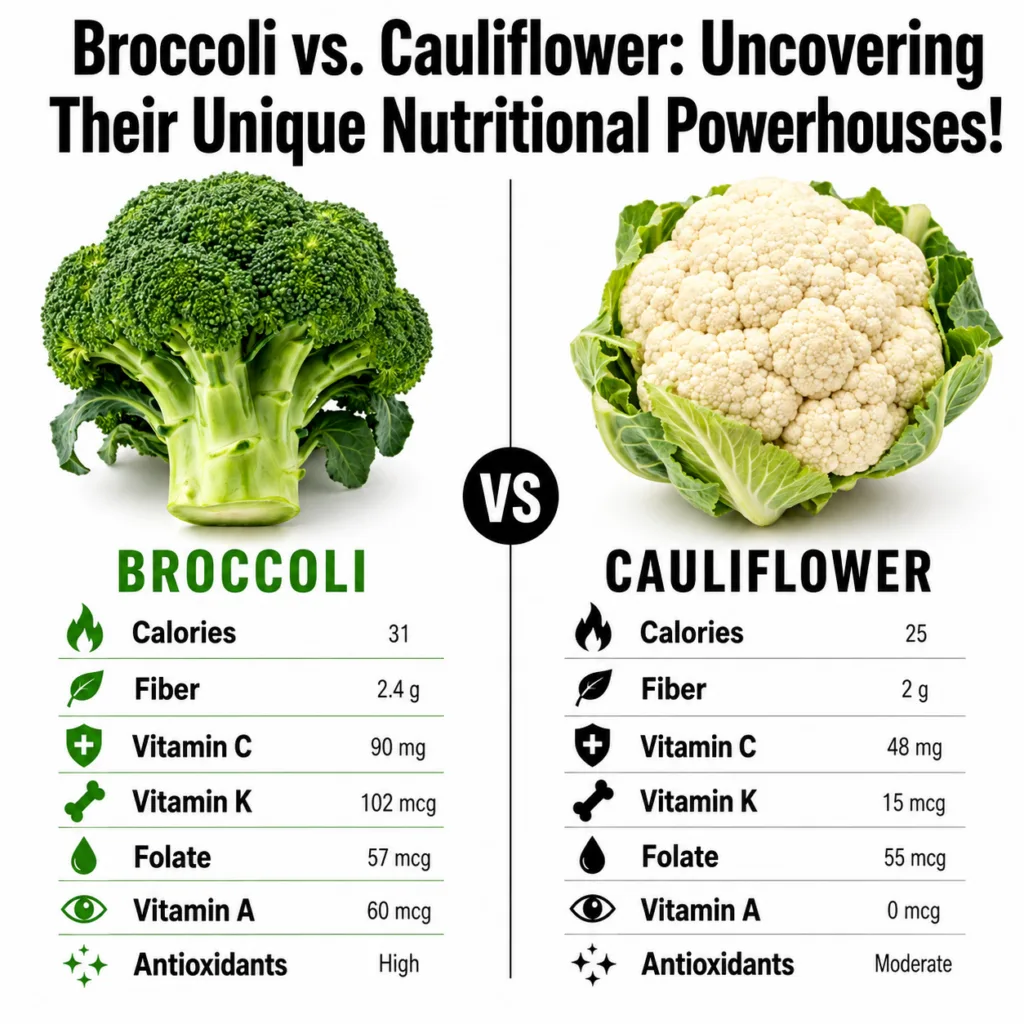
Broccoli vs. Cauliflower: A Side-by-Side Nutritional Showdown
Now that we’ve looked at each vegetable individually, let’s put them head-to-head to see how they stack up in a direct nutritional comparison:
Calories: A Clear Win for Cauliflower
- Cauliflower: At just 27 calories per serving, cauliflower is the winner for those seeking the lowest-calorie option.
- Broccoli: With 55 calories, broccoli still remains a low-calorie vegetable, but nearly double that of cauliflower.
If you’re on a very strict calorie deficit meal plan, cauliflower might be your go-to, but both are excellent choices for weight management.
Fiber: Broccoli Takes the Lead
- Broccoli: Offers 5.1g of fiber, more than double that of cauliflower.
- Cauliflower: Provides 2.1g of fiber.
For superior digestive health, increased satiety, and a higher intake of dietary fiber, broccoli clearly has an advantage. Both contribute to foods for digestion, but broccoli provides a more substantial amount per serving.
Vitamin C: Broccoli Dominates
- Broccoli: Delivers an impressive 135% DV of Vitamin C.
- Cauliflower: Contains 77% DV of Vitamin C.
While both are excellent sources of Vitamin C, broccoli offers significantly more. If you’re looking to boost your immune system or enhance skin health, broccoli provides a more concentrated dose.
Vitamin K & Folate: Broccoli’s Edge
- Vitamin K: Broccoli provides a substantial 155% DV, compared to cauliflower’s 14% DV.
- Folate: Broccoli offers 42% DV, while cauliflower has 14% DV.
Broccoli is a clear front-runner for both Vitamin K, vital for bone health and blood clotting, and Folate, crucial for cell development. If these nutrients are a priority, broccoli is the better choice.
Antioxidants: Broccoli Rated Higher
- Broccoli: Rated ‘High’ in antioxidant content.
- Cauliflower: Rated ‘Moderate’ in antioxidant content.
While both vegetables contain beneficial antioxidants that protect against cellular damage, broccoli is noted for its higher concentration of these protective compounds. This suggests broccoli may offer a slightly greater protective effect against oxidative stress.
Beyond the Numbers: Choosing Your Cruciferous Champion
After a deep dive into their nutritional profiles, it’s clear that both broccoli and cauliflower are incredibly healthy choices. Each offers a unique blend of nutrients that can contribute significantly to a balanced diet. So, which one should you choose?
- For Maximum Nutrient Density: If you’re aiming for the highest amounts of fiber, Vitamin C, Vitamin K, and Folate in a single serving, broccoli tends to be the winner. Its ‘High’ antioxidant rating also gives it an edge.
- For Calorie Control & Versatility: Cauliflower, with its significantly lower calorie count and milder flavor, is incredibly versatile. It’s often used to make ‘rice,’ ‘pizza crusts,’ or ‘mashed potatoes,’ making it a fantastic low-carb alternative in high protein low calorie meals.
- For Variety: The best approach is often to include both in your diet! Enjoying a variety of vegetables ensures you get a broader spectrum of nutrients. Consider incorporating them into healthy breakfast ideas, stir-fries, roasts, or even smoothies.
Whether you prefer the robust flavor of broccoli or the mild adaptability of cauliflower, both are exceptional choices for enhancing your health. Experiment with different preparation methods to find what you enjoy most!
FAQs: Your Top Questions About Broccoli and Cauliflower
Is one better for weight loss?
Both broccoli and cauliflower are excellent for weight loss due to their low calorie count and high fiber content, which promotes satiety. Cauliflower is slightly lower in calories per serving, which might make it a marginal winner for strict calorie counting, but both are highly effective.
Can I eat them raw?
Yes, both broccoli and cauliflower can be eaten raw. They make great additions to salads or served with dips. Eating them raw helps preserve their water-soluble vitamins, like Vitamin C, which can be partially lost during cooking.
How can I maximize their nutrients?
To maximize nutrients, consider steaming or lightly stir-frying these vegetables. Overcooking can reduce their vitamin content. Storing them properly in the refrigerator and consuming them fresh also helps retain their nutritional value. Eating them raw is another excellent way to get the full nutritional benefits.
Final Thoughts
Broccoli and cauliflower are undeniable stars in the world of healthy eating. While broccoli generally boasts higher levels of fiber, Vitamin C, Vitamin K, and Folate, cauliflower offers a significantly lower calorie count and incredible culinary adaptability. The choice between broccoli vs. cauliflower ultimately depends on your specific nutritional goals, taste preferences, and how you plan to incorporate them into your meals.
The good news is that you don’t have to pick just one. Including both of these cruciferous powerhouses in your diet ensures a rich intake of diverse vitamins, minerals, and antioxidants, paving the way for a healthier and more vibrant you. So, explore, enjoy, and let these healthy aesthetic foods fuel your journey to wellness!
Medical Disclaimer
The information provided in this article is for general informational purposes only and does not constitute medical advice. Always consult with a qualified healthcare professional before making any decisions about your health or starting any new diet or exercise program.