Your plate holds powerful choices for maintaining clear arteries and a healthy heart. Every meal is an opportunity to nourish your cardiovascular system, contributing to optimal blood flow and reducing your risk of various health concerns. This simple guide illustrates how easy food swaps can make a big impact on your cardiovascular well-being, helping you cultivate a lifestyle that supports long-term heart health.
Understanding which foods to embrace and which to limit is a cornerstone of preventing arterial plaque buildup. By making informed decisions about what you eat, you can actively work towards keeping your arteries clear and your heart strong.
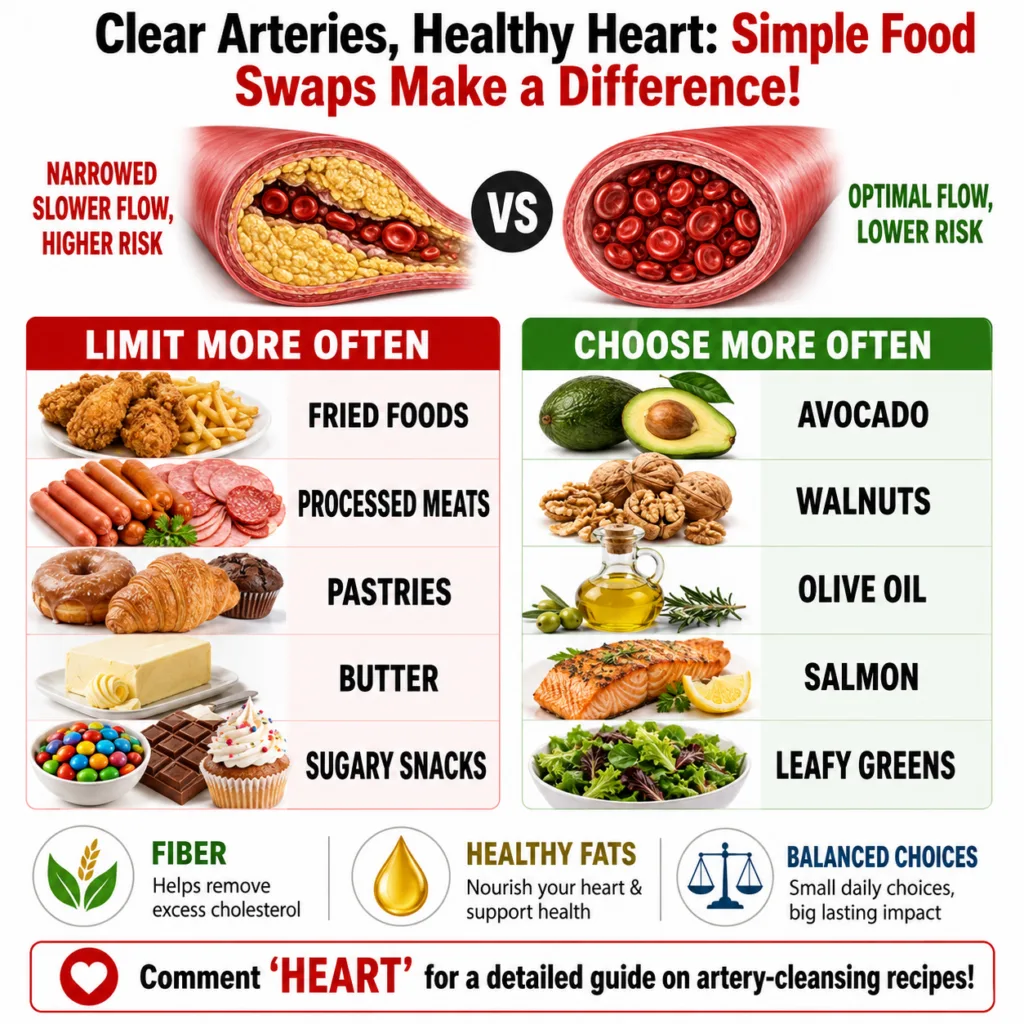
Understanding Your Arteries: The Foundation of Heart Health
Your arteries are vital vessels that carry oxygen-rich blood from your heart to the rest of your body. When they are healthy, blood flows freely, ensuring every organ and tissue receives the nourishment it needs. However, unhealthy lifestyle choices, particularly dietary habits, can lead to the buildup of plaque in these arteries, a condition known as atherosclerosis.
This plaque accumulation causes the arteries to narrow and harden, leading to ‘NARROWED SLOWER FLOW, HIGHER RISK’. This reduced blood flow increases the strain on your heart and can lead to serious cardiovascular events. Conversely, maintaining ‘OPTIMAL FLOW, LOWER RISK’ through smart food choices helps ensure your heart functions efficiently and your body receives the consistent supply of blood it requires.
Foods to Limit for Clearer Arteries
While occasional treats are part of a balanced life, regularly consuming certain foods can negatively impact your artery health. Reducing your intake of these items can significantly contribute to preventing plaque buildup and supporting a healthy cardiovascular system.
Fried Foods: The Silent Artery Hardener
Foods cooked in excessive oil at high temperatures, like french fries, fried chicken, and donuts, are often high in unhealthy fats, including trans fats and saturated fats. These fats can raise LDL (bad) cholesterol levels and contribute to inflammation, both of which are detrimental to artery health. Opting for baked, grilled, or air-fried alternatives can be a healthier choice.
Processed Meats: A Hidden Threat
Items such as bacon, sausages, deli meats, and hot dogs are typically loaded with sodium, unhealthy fats, and preservatives. High sodium intake can contribute to high blood pressure, putting extra stress on your arteries. The saturated fats often found in processed meats can also contribute to plaque formation. Consider lean protein sources like chicken breast, turkey, or plant-based proteins instead.
Pastries and Baked Goods: Sugar’s Sweet Deception
Many commercially prepared pastries, cakes, and cookies are high in refined sugars and unhealthy fats. Excessive sugar consumption can lead to inflammation, weight gain, and insulin resistance, all of which can harm your arteries. These items often offer little nutritional value beyond empty calories. Look for options with whole grains, natural sweeteners, and healthy fats, or bake your own with reduced sugar.
Butter and Saturated Fats: A Matter of Moderation
While some saturated fat is part of a balanced diet, excessive intake of butter, red meat fat, and full-fat dairy can elevate LDL cholesterol, promoting plaque formation in arteries. It’s not about complete avoidance but about moderation and smart swaps. Consider using healthier fats like olive oil or avocado oil in your cooking, or reducing the amount of butter used.
Sugary Snacks: Beyond Just Empty Calories
Candies, sugary drinks, and many packaged snacks provide quick energy but are devoid of essential nutrients. The high sugar content can trigger inflammation, impair blood vessel function, and contribute to weight gain. Choosing whole fruits, vegetables, or nuts for snacking can satisfy cravings while providing beneficial nutrients that support artery health.
Embrace These Foods for Optimal Artery Health
Incorporating these nutrient-dense foods into your daily diet can actively protect your arteries, reduce inflammation, and support healthy blood flow. Make these choices more often to reap their cardiovascular benefits.
Avocado: The Creamy Heart Helper
Avocado is rich in monounsaturated fats, particularly oleic acid, which is known for its ability to lower LDL (bad) cholesterol levels while raising HDL (good) cholesterol. It’s also packed with fiber and potassium, both beneficial for blood pressure regulation. Enjoy avocado sliced on toast, mashed in guacamole, or added to salads and smoothies for a creamy texture and a powerful heart-healthy boost.
Walnuts: Nature’s Brain and Heart Fuel
Walnuts are exceptional sources of omega-3 fatty acids, specifically alpha-linolenic acid (ALA), which can help reduce inflammation and improve blood vessel function. They also provide antioxidants and fiber. A handful of walnuts makes a satisfying snack, or they can be sprinkled over oatmeal, yogurt, or salads to add crunch and nutritional value.
Olive Oil: The Mediterranean Secret
Extra virgin olive oil, a staple of the Mediterranean diet, is another fantastic source of monounsaturated fats and powerful antioxidants called polyphenols. These compounds help protect arteries from damage and reduce inflammation. Use high-quality olive oil for dressing salads, drizzling over cooked vegetables, or as a healthy cooking fat at moderate temperatures.
Salmon: Rich in Omega-3 Power
Fatty fish like salmon are renowned for their high content of EPA and DHA, two types of omega-3 fatty acids that are incredibly beneficial for heart health. These omega-3s can lower triglycerides, reduce blood pressure, decrease inflammation, and prevent blood clots. Aim for at least two servings of salmon or other fatty fish per week, prepared by baking, grilling, or broiling.
Leafy Greens: Your Daily Dose of Protection
Spinach, kale, collard greens, and other leafy greens are nutritional powerhouses. They are rich in vitamins, minerals, and antioxidants, including nitrates which the body converts into nitric oxide. Nitric oxide helps to relax and widen blood vessels, promoting healthy blood flow. Incorporate a generous serving of leafy greens into your daily meals through salads, smoothies, stir-fries, or as a side dish.
Key Nutrients for Artery Health
Beyond individual foods, focusing on specific nutrient categories can further enhance your cardiovascular protection.
The Power of Fiber
Dietary fiber, found abundantly in fruits, vegetables, whole grains, nuts, and seeds, plays a crucial role in artery health. Soluble fiber, in particular, helps to reduce LDL cholesterol by binding to it in the digestive tract and carrying it out of the body. Insoluble fiber promotes digestive regularity, which is also beneficial for overall health. Aim for a diverse intake of fiber-rich foods daily.
Understanding Healthy Fats
Not all fats are created equal. Monounsaturated and polyunsaturated fats, found in foods like avocado, nuts, seeds, olive oil, and fatty fish, are considered ‘healthy fats’. They help lower bad cholesterol, reduce inflammation, and support overall cardiovascular function. Replacing unhealthy trans and saturated fats with these beneficial fats is a fundamental step towards clear arteries.
The Importance of Balanced Choices
Ultimately, a heart-healthy diet is about making balanced choices consistently. It means incorporating a wide variety of nutrient-dense foods, limiting those that can harm your arteries, and paying attention to portion sizes. Balanced eating patterns, such as the Mediterranean diet, emphasize whole, unprocessed foods and healthy fats, providing a sustainable approach to protecting your heart and arteries for life.
Final Thoughts
The journey to clear arteries and a healthy heart doesn’t require drastic overhauls; it begins with simple, consistent food swaps. By consciously choosing more nutrient-rich foods and limiting those that can contribute to plaque buildup, you empower your body to maintain optimal cardiovascular health. Embrace these practical changes, and feel the difference they make in your energy, vitality, and long-term well-being. Your heart will thank you.
Medical Disclaimer
This article is for informational purposes only and does not constitute medical advice. Always consult with a qualified healthcare professional before making any significant changes to your diet or lifestyle, especially if you have existing health conditions or concerns.