Are your beloved garden shrubs looking a little tired, leggy, or producing fewer flowers each year? It’s a common challenge for many gardeners. Over time, deciduous shrubs can become overgrown, with dense, unproductive stems that stifle new growth and diminish their ornamental appeal. But don’t despair! There’s a powerful, straightforward technique known as the 3-Year Renewal Pruning Method that can breathe new life into these plants, restoring their vigor and ensuring a spectacular display of blooms.
This method isn’t just about cutting back; it’s about thoughtful rejuvenation, encouraging healthy new growth from the base while maintaining the plant’s natural shape. By understanding and applying this technique, you can transform your overgrown shrubs into vibrant, flourishing specimens that enhance your landscape for years to come. Let’s explore how this method works and identify nine fantastic shrubs that truly benefit from this rejuvenating approach.
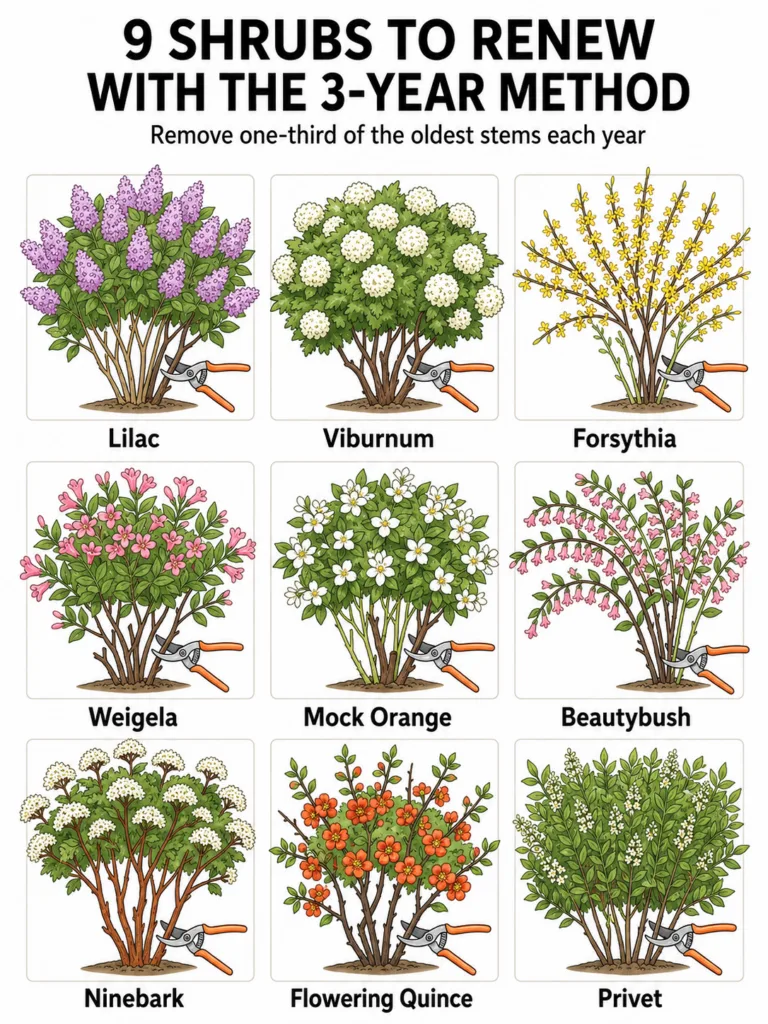 Learn how to rejuvenate these 9 common shrubs with the effective 3-Year Renewal Pruning Method.
Understanding the 3-Year Renewal Pruning Method
The 3-Year Renewal Pruning Method, often simply called renewal pruning, is a technique used to revitalize multi-stemmed deciduous shrubs that have become overgrown, woody, and less floriferous. Instead of shearing or heading back all branches, which often results in a dense, twiggy exterior and a lack of interior growth, this method focuses on systematically removing a portion of the oldest, least productive stems each year.
Why it Works
By removing about one-third of the oldest stems down to the ground level annually over three years, you stimulate the plant to produce strong, healthy new canes from its base. This gradual approach allows the shrub to maintain some foliage for photosynthesis while it regenerates, preventing the severe shock that can occur with a complete hard cut-back (rejuvenation pruning). Over three years, the entire shrub will have been renewed with a framework of younger, more vigorous stems.
How to Apply the 3-Year Method
- Identify Old Stems: In late winter or early spring (or immediately after flowering for shrubs that bloom on old wood), locate the thickest, oldest, and least productive stems. These often have less branching, fewer flower buds, or look woody and unhealthy.
- Remove One-Third: Using sharp, clean bypass pruners or loppers, cut approximately one-third of these identified old stems as close to the ground as possible. Aim for stems that are crossing, rubbing, or simply too old.
- Repeat Annually: Continue this process for two more years. By the end of the third year, the entire shrub will consist of younger, more vigorous stems, revitalized and ready to produce abundant flowers.
- Maintain: After the initial three-year cycle, you can continue this method as needed, removing a few of the oldest stems each year to keep the shrub healthy and productive.
9 Shrubs That Thrive with Renewal Pruning
Many common landscape shrubs benefit immensely from this systematic rejuvenation. Here are nine popular choices:
1. Lilac (Syringa vulgaris)
Lilacs are beloved for their fragrant, showy spring blooms, but they can become leggy and less floriferous with age. The 3-year method is ideal for encouraging new, strong flowering wood.
- Hardiness: USDA Zones 3-7
- Plant type: Deciduous shrub
- Exposure: Full sun (at least 6 hours)
- Height: 8-15 feet
- Spread: 6-12 feet
Pruning Tip: Prune immediately after flowering. Removing spent flower clusters also prevents seed formation, diverting energy back into the plant.
2. Viburnum (Viburnum species)
Many shrubby Viburnum varieties, valued for their flowers, berries, and fall color, can become dense and overgrown. Renewal pruning maintains their graceful form and improves air circulation.
- Hardiness: USDA Zones 4-8 (varies by species)
- Plant type: Deciduous shrub
- Exposure: Full sun to partial shade
- Height: 5-15 feet
- Spread: 5-15 feet
Pruning Tip: For spring-flowering types (like ‘Mohawk’ or ‘Burkwood’), prune right after the blooms fade to preserve next year’s flower buds.
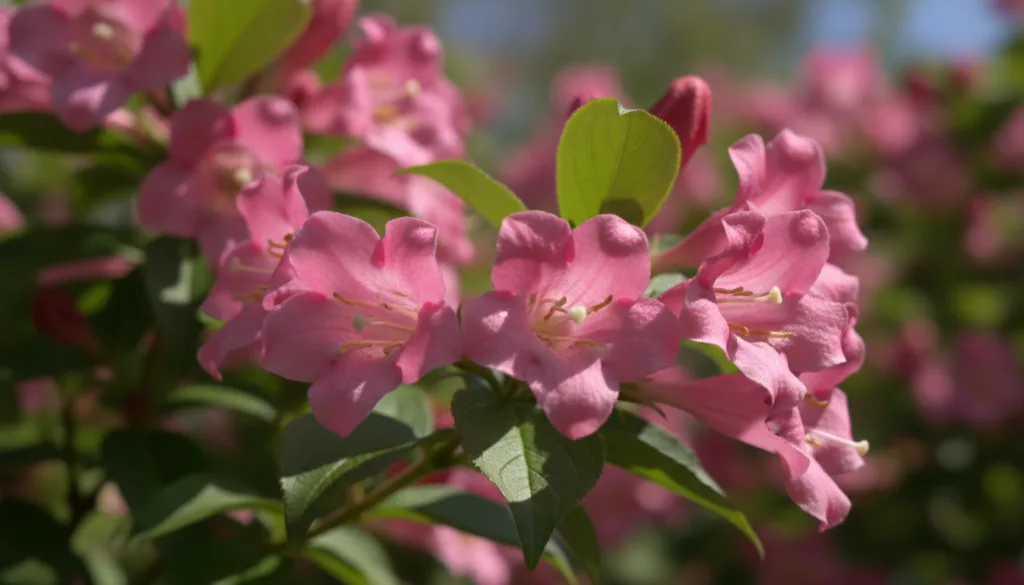 Weigela shrubs display abundant, colorful blooms when properly maintained.
3. Forsythia (Forsythia x intermedia)
Forsythia is one of the earliest heralds of spring, with its bright yellow flowers. Old plants can become a tangled mess of unproductive stems, making renewal pruning essential.
- Hardiness: USDA Zones 4-8
- Plant type: Deciduous shrub
- Exposure: Full sun
- Height: 6-10 feet
- Spread: 6-10 feet
Pruning Tip: Prune immediately after flowering. This encourages new growth that will bear flowers the following spring.
4. Mock Orange (Philadelphus coronarius)
Known for its intensely fragrant white flowers in late spring, Mock Orange benefits from renewal pruning to maintain a robust, floriferous shrub.
- Hardiness: USDA Zones 4-8
- Plant type: Deciduous shrub
- Exposure: Full sun to partial shade
- Height: 5-10 feet
- Spread: 4-8 feet
Pruning Tip: Prune after flowering. Older stems tend to flower less vigorously, so removing them encourages new, productive growth.
5. Hydrangea (Hydrangea macrophylla, Bigleaf Hydrangea)
While various Hydrangea species have different pruning needs, many of the traditional Bigleaf Hydrangeas (that bloom on old wood) can become woody and less productive without renewal. For panicle and smooth hydrangeas that bloom on new wood, this method can also be used, but timing is more flexible.
- Hardiness: USDA Zones 5-9
- Plant type: Deciduous shrub
- Exposure: Partial shade (morning sun preferred)
- Height: 3-6 feet
- Spread: 3-6 feet
Pruning Tip: For old-wood blooming types (like Bigleaf), prune only immediately after flowering to preserve next year’s blooms. For new-wood bloomers (like Panicle Hydrangeas), late winter or early spring before new growth emerges is best.
6. Weigela (Weigela florida)
Weigela offers beautiful trumpet-shaped flowers, often in shades of pink, in late spring to early summer. Renewal pruning keeps them neat and ensures prolific blooming.
- Hardiness: USDA Zones 4-8
- Plant type: Deciduous shrub
- Exposure: Full sun
- Height: 3-9 feet (dwarf cultivars available)
- Spread: 3-9 feet
Pruning Tip: Prune after flowering to encourage new growth that will set buds for the following season. Regular removal of spent blooms can also promote a second flush in some varieties.
7. Flowering Quince (Chaenomeles speciosa)
This shrub offers stunning early spring flowers, often before other plants show signs of life. Its thorny, dense growth can become impenetrable, making renewal pruning vital for health and aesthetics.
- Hardiness: USDA Zones 4-9
- Plant type: Deciduous shrub
- Exposure: Full sun to partial shade
- Height: 6-10 feet
- Spread: 6-10 feet
Pruning Tip: Prune immediately after flowering to manage its often rampant growth and encourage better flowering next year. Wear sturdy gloves to protect against thorns.
8. Beautybush (Kolkwitzia amabilis)
As its name suggests, Beautybush is a magnificent shrub in late spring, covered in a profusion of delicate pink, bell-shaped flowers. It naturally develops an arching, fountain-like habit that benefits from the removal of older, less productive stems.
- Hardiness: USDA Zones 4-8
- Plant type: Deciduous shrub
- Exposure: Full sun to partial shade
- Height: 6-10 feet
- Spread: 6-10 feet
Pruning Tip: Prune after flowering to maintain its elegant shape and maximize floral display for the following season.
9. Spirea (Spiraea species)
Many Spirea varieties, such as Japanese Spirea (Spiraea japonica) and Bridal Wreath Spirea (Spiraea vanhouttei), are excellent candidates for renewal pruning. Spirea often produces many slender stems from the base, which can become twiggy and bloom less over time.
- Hardiness: USDA Zones 4-8 (varies by species)
- Plant type: Deciduous shrub
- Exposure: Full sun
- Height: 2-8 feet (varies by species)
- Spread: 2-8 feet
Pruning Tip: For spring-blooming Spireas (like Bridal Wreath), prune after flowering. For summer-blooming types (like Japanese Spirea), prune in late winter or early spring before new growth appears, as they bloom on new wood.
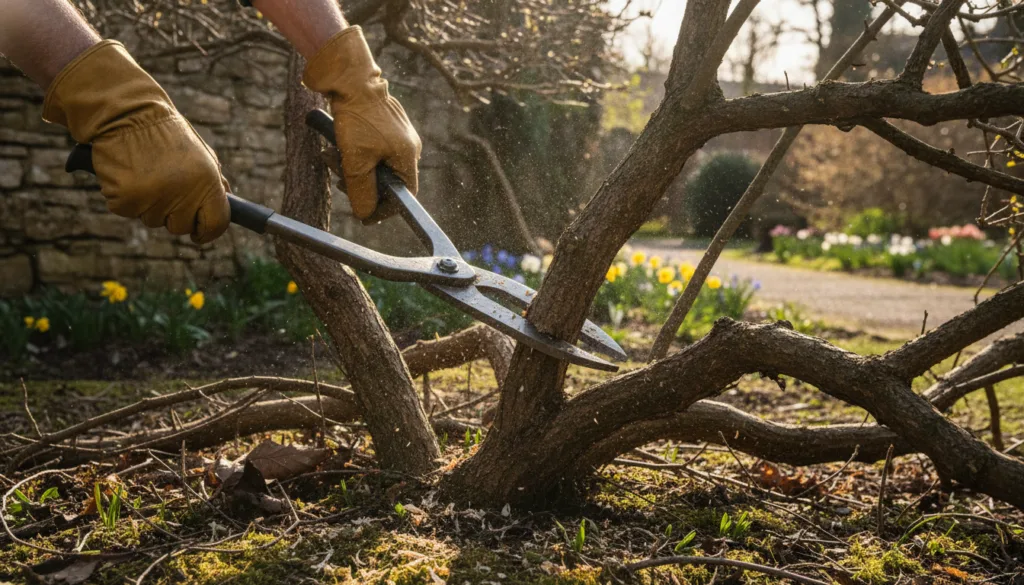 Always use sharp, clean tools to make precise cuts and minimize stress on your plants.
Common Mistakes to Avoid with Renewal Pruning
- Pruning at the Wrong Time: For shrubs that bloom on old wood (like most spring-flowering shrubs listed here), pruning in late winter or early spring before flowering will remove the flower buds and prevent blooms for that year. Always prune these immediately after they finish flowering.
- Removing Too Much: Do not remove more than one-third of the plant’s oldest stems in a single year during the renewal process. Removing too much can stress the plant unnecessarily and may even kill it.
- Using Dull Tools: Dull pruners crush stems rather than making clean cuts, creating ragged wounds that are more susceptible to disease and pests. Always use sharp, clean bypass pruners or loppers.
- Ignoring the Interior: The goal is to open up the shrub for better air circulation and light penetration. Don’t just prune the outer layers; reach in to remove those older, less productive stems from the base.
- Improper Cuts: Always cut stems back to the ground level or to a strong outward-facing side branch. Avoid leaving stubs, which can attract pests and diseases.
Regional and Seasonal Considerations for Pruning
While the ‘one-third per year’ rule is consistent, the timing of your initial pruning depends heavily on your local climate and the specific flowering habits of your shrubs.
- USDA Zones 3-5: In colder regions, wait until late winter or early spring to begin your renewal pruning cycle, ensuring the harshest cold has passed. For old-wood bloomers, mark your calendar to prune right after they flower.
- USDA Zones 6-8: These moderate zones offer more flexibility. You can typically begin renewal pruning in late winter for new-wood bloomers, or after spring bloom for old-wood varieties.
- USDA Zones 9-11: In warmer zones, the concept of