Unlock Your Property’s Potential: Design a Productive, Integrated Homestead
Dreaming of a thriving homestead that provides abundance with less effort? Many aspiring growers envision lush gardens, happy animals, and a pantry full of homegrown provisions, only to find themselves overwhelmed by inefficient layouts or constant backtracking. The secret to a truly productive and enjoyable homestead isn’t just hard work; it’s smart design. By thoughtfully arranging your gardens, animal spaces, and daily task zones, you can transform any property into a high-producing haven that’s both easier to manage and incredibly abundant. Let’s explore how strategic planning can make every corner of your land count, turning your vision into a sustainable reality.
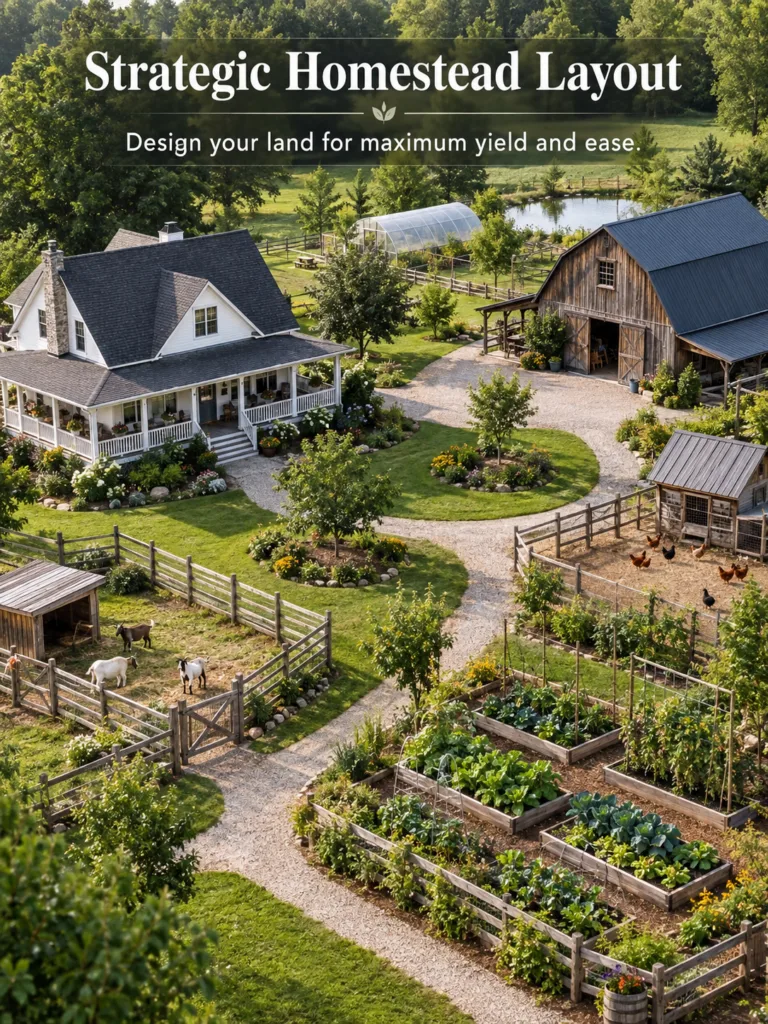
The Art of Homestead Zoning: Maximizing Yield and Ease
At the heart of an integrated homestead is the concept of zoning. Just like a city has residential, commercial, and industrial districts, your property can be divided into functional zones. This isn’t about rigid boundaries, but about intelligent placement that enhances efficiency, conserves resources, and streamlines your daily routine. By considering the proximity of related activities, the flow of materials (like water and compost), and the movement of people and animals, you create a harmonious ecosystem where everything supports everything else. This strategic layout minimizes travel time, optimizes sunlight and water use, and makes managing your garden and livestock a joy rather than a chore.
Key Zones of an Integrated Homestead
Let’s break down the essential components you might consider for your own property, drawing inspiration from highly productive homesteads.
The Living Core: Farmhouse and Immediate Surroundings
Your home is the central hub. Think about the areas closest to your house as Zone 1 – where you spend the most time and where quick access to essentials is paramount. This includes your immediate yard, entryways, and often, the kitchen garden.
- Dwelling & Pathways: Ensure clear, well-maintained paths connect your home to primary work areas. Gravel paths, as seen in many efficient designs, offer durability and good drainage.
- Aesthetics & Comfort: Don’t overlook the beauty of your immediate surroundings. Flower beds around the house, like those flanking the farmhouse, not only add charm but can also attract beneficial pollinators and deter some pests from your home.
Productive Heart: Kitchen Gardens & Raised Beds
The kitchen garden, often featuring raised garden beds, should be easily accessible from your home. This is where you’ll grow the vegetables, herbs, and fruits you use most frequently.
- Raised Garden Beds: These offer excellent drainage, warm up faster in spring, and allow for controlled soil composition. Their elevated edges reduce bending, making daily harvesting and weeding more comfortable. Fill them with a rich blend of compost, topsoil, and organic matter for optimal plant health.
- Crop Selection & Spacing: Prioritize crops that yield well in your climate and are staples for your family. Space plants according to their mature size to ensure good air circulation and light penetration, preventing disease. For instance, most leafy greens need 6-8 inches, while larger plants like tomatoes need 2-3 feet.
- Watering & Sunlight: Position your kitchen garden in an area receiving at least 6-8 hours of direct sunlight daily. Implement efficient watering systems like drip irrigation to deliver water directly to the root zone, reducing waste. Check soil moisture by sticking a finger 2-3 inches deep; if it feels dry, it’s time to water.
- Succession Planting: Maximize yield by planting new seeds or starts as soon as a previous crop is harvested, especially for fast-growing greens.
Livestock Hub: Barn, Goats & Chickens
Integrating animals into your homestead requires thoughtful placement for their welfare, your convenience, and efficient waste management. A barn, as shown in the image, is often central to this zone.
- Barn Placement: A well-situated barn provides shelter, feed storage, and a central point for animal care. Consider prevailing winds and drainage when choosing its location.
- Goat Enclosures: Goats are natural browsers and need secure fencing to prevent escape. Their enclosures should offer shelter from sun and rain, a clean water source, and plenty of space to move. Rotational grazing can help maintain pasture health and reduce parasite loads.
- Chicken Coops & Runs: Chickens need a secure coop for protection from predators and a run for foraging. Ensure the coop is well-ventilated, easy to clean, and provides roosting bars and nesting boxes. Their manure is a valuable fertilizer for your garden, so consider composting it nearby.
- Waste-to-Resource: Position animal housing so that manure can be easily collected and transported to compost piles, transforming a potential waste product into a valuable soil amendment.
Season Extension & Specialty: The Greenhouse
A greenhouse is an invaluable asset for extending your growing season, starting seeds early, and protecting tender plants.
- Optimizing Sunlight: Place your greenhouse where it receives maximum winter and spring sunlight. Orient it east-west for optimal light capture in colder climates.
- Ventilation & Temperature Control: Proper ventilation is crucial to prevent overheating in summer and manage humidity. Consider automatic vent openers if you can’t be there daily.
- Propagation & Seed Starting: Use your greenhouse to propagate cuttings, start seeds weeks ahead of your last frost date, and harden off seedlings before transplanting them outdoors.
Water Management & Ecology: The Pond
A pond can serve multiple functions, from irrigation to supporting local wildlife and enhancing the property’s aesthetics.
- Water Source: Ponds can be a source of irrigation water for your gardens, reducing reliance on municipal water, especially for larger properties.
- Biodiversity: A pond creates a microhabitat, attracting beneficial insects, amphibians, and birds, contributing to the overall ecological balance of your homestead.
- Placement: Consider natural drainage patterns. Positioning a pond at a lower elevation on your property can help collect rainwater runoff.
Infrastructure & Connectivity: Paths, Driveways & Utilities
Efficient movement and resource distribution are vital. The gravel driveway and winding paths visible in the image exemplify this.
- Thoughtful Pathways: Design paths that are direct but also guide movement gracefully between zones. Wide enough for wheelbarrows, they should also drain well to prevent muddy areas.
- Utility Access: Plan for easy access to water spigots, electrical outlets, and any gas lines in relevant zones. Future-proofing your design for potential expansion or new features will save you headaches later.
Strategic Design Principles: Cultivating Efficiency
Implementing a successful homestead layout involves several core principles:
- The Proximity Principle: Group activities that naturally belong together. Your kitchen garden should be near your kitchen. Your compost pile should be easily accessible from both your garden and your animal enclosures. This minimizes steps and maximizes output.
- Water Flow & Management: Design your land to capture, store, and distribute water efficiently. Utilize natural slopes for gravity-fed irrigation or build swales and rain gardens to direct and infiltrate runoff. Consider rain barrels for collecting water from roofs.
- Sun & Shade Mapping: Observe how sunlight moves across your property throughout the day and year. Place sun-loving vegetables in full sun, and protect shade-tolerant plants or animal shelters with natural shade from trees or structures.
- Access & Pathways: Ensure every important area is easily reachable, even with tools or a wheelbarrow. Wide, stable paths prevent bottlenecks and reduce maintenance.
- Waste-to-Resource Cycling: Embrace the circular economy. Animal manures become garden fertilizer. Garden waste becomes compost. This reduces external inputs and creates a truly sustainable system.
- Phased Implementation: You don’t have to build everything at once. Start with the most critical zones, like your kitchen garden, and expand gradually. This allows you to learn and adapt your design as your needs and experience grow.
Regional and Climate Considerations
While the principles of strategic design are universal, their application varies greatly across the United States. In USDA Zones 3-5, season extension (like greenhouses) is paramount, and plant choices focus on cold-hardy varieties. In Zones 6-8, a wider range of crops thrives, and the focus might shift to water conservation during summer dry spells. For Zones 9-11, managing intense heat and humidity becomes a key design factor, often involving shade structures or drought-tolerant plant selections.
Always consult your local extension services for specific plant recommendations, soil testing, and advice tailored to your microclimate. Factors like local frost dates, soil temperature, and average rainfall should always guide your planting schedules and water management strategies, rather than relying solely on calendar months.
Your Integrated Homestead Awaits
Designing an integrated homestead is an ongoing journey of observation, planning, and hands-on experience. By applying these strategic layout principles, you’re not just creating a farm; you’re cultivating a lifestyle that is more connected, more productive, and deeply rewarding. Take a fresh look at your property, envision its potential, and start planning how each element can work together in harmony. The joy of harvesting your own food, tending to happy animals, and living in a space designed for both beauty and utility is a profound reward. What design changes will you implement first to unlock your property’s full potential?