Feeling self-conscious about bad breath? It’s a common concern, and often, your body might be sending a subtle signal about your oral health. While many factors can contribute to it, the good news is that simple, natural solutions are often right in your kitchen. Understanding why bad breath occurs and how certain foods can help is the first step towards feeling fresher and more confident.
This article will explore the mechanisms behind bad breath and reveal effective natural remedies you can incorporate into your daily routine. We’ll delve into how these everyday foods work to combat odor, from removing toxins to balancing oral bacteria, offering practical ways to support fresher breath.
Understanding Bad Breath: How It Works
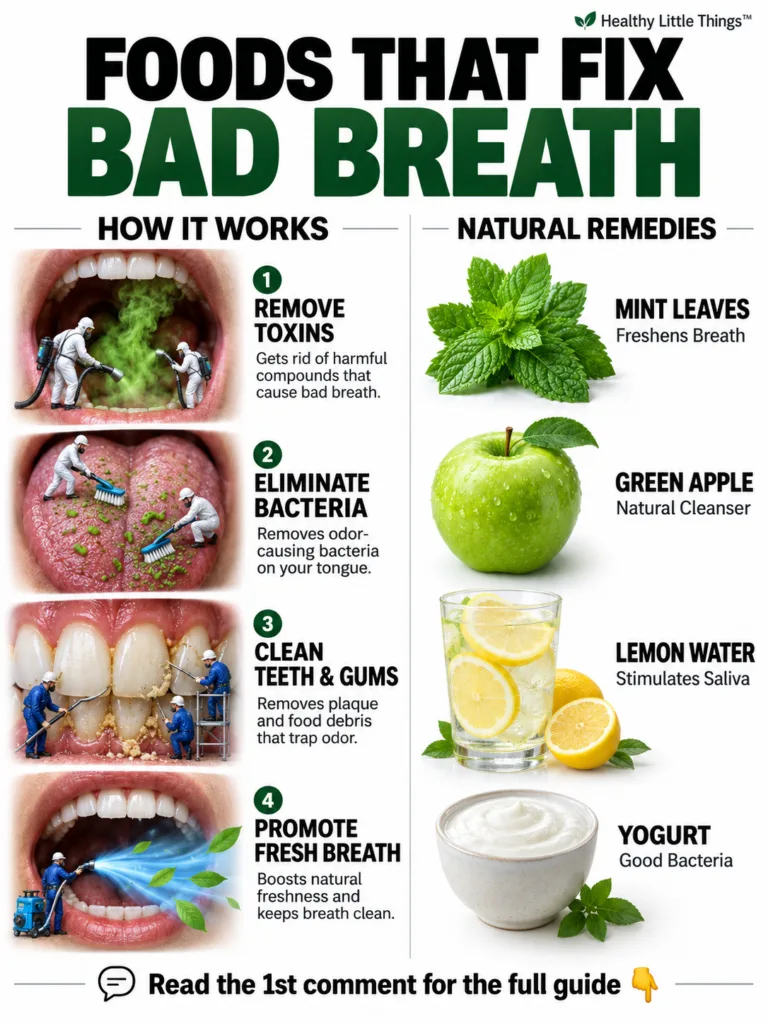
Bad breath, medically known as halitosis, often originates in the mouth. It’s usually caused by the breakdown of food particles by bacteria, particularly on the tongue and between teeth. The infographic highlights several key mechanisms through which our bodies (and certain foods) work to combat this:
Removing Toxins and Odor-Causing Compounds
Certain compounds in your mouth, such as volatile sulfur compounds (VSCs), are responsible for the unpleasant smell associated with bad breath. These are byproducts of bacterial activity. Effective breath solutions work by either neutralizing these toxins or helping to flush them out of the oral cavity. Foods rich in antioxidants or water can aid in this detoxification process, reducing the presence of these odor-producing molecules.
Eliminating Bacteria from the Tongue
The tongue is a primary breeding ground for bacteria, especially towards the back. These bacteria can feast on food debris, dead cells, and mucus, leading to significant odor. Scraping your tongue or consuming foods that naturally cleanse the tongue surface can physically remove a large portion of these bacteria and their byproducts, directly addressing a major source of bad breath.
Cleaning Teeth and Gums for a Fresher Feel
Food particles lodged between teeth and along the gum line also become fuel for bacteria. Regular brushing and flossing are essential, but certain foods can offer a supplementary cleaning action. Crunchy fruits and vegetables, for example, can act as natural toothbrushes, helping to dislodge debris and stimulate saliva production, which is crucial for rinsing the mouth and neutralizing acids.
Promoting Overall Fresh Breath
Beyond targeted actions, a holistic approach to oral hygiene and diet contributes to consistently fresh breath. This includes maintaining good hydration, supporting a balanced oral microbiome, and ensuring a healthy digestive system, all of which influence the freshness of your breath from the inside out.
Natural Remedies for Fresher Breath
Our kitchens hold powerful allies in the fight against bad breath. Here are four natural remedies and how they work to keep your breath feeling fresh:
Mint Leaves: The Classic Freshener
Mint leaves are perhaps the most well-known natural breath freshener. They contain menthol, a potent aromatic compound that not only masks odors but also has mild antiseptic properties that can help reduce bacteria. Chewing on fresh mint leaves stimulates saliva production, further aiding in cleansing the mouth.
- How to use: Chew a few fresh mint leaves after meals or as needed. You can also add them to water for a refreshing drink.
Green Apple: A Crunchy Cleanse
A crisp green apple does more than just taste good; it’s a fantastic natural cleanser for your mouth. Its crunchy texture helps to scrub teeth and stimulate saliva flow, effectively washing away food particles and bacteria. The natural acids in apples can also help neutralize odor-causing compounds. Plus, apples are rich in polyphenols, which may help break down sulfur compounds.
- How to use: Eat a whole green apple as a snack, especially after consuming strong-smelling foods like garlic or onions.
Lemon Water: A Zesty Defense
Lemon water is a simple yet powerful remedy. The citric acid in lemons stimulates saliva production, which is crucial for washing away bacteria and food debris. Lemon also has antibacterial properties that can help inhibit the growth of odor-producing bacteria in the mouth. A dry mouth is a common cause of bad breath, and staying hydrated with lemon water can effectively combat this.
- How to use: Squeeze half a lemon into a glass of warm or cold water and drink it throughout the day. Rinse your mouth with plain water afterward to protect tooth enamel from the acidity.
Yogurt: Balancing Oral Flora
Plain, unsweetened yogurt, particularly varieties containing live active cultures (probiotics), can be beneficial for bad breath. These beneficial bacteria can help to balance the oral microbiome, potentially outcompeting the odor-producing bacteria. Some studies suggest that the probiotics in yogurt can reduce levels of hydrogen sulfide, a primary cause of bad breath.
- How to use: Incorporate plain, unsweetened yogurt into your daily diet. Look for brands that explicitly state “live and active cultures” on the label.
Beyond Food: Practical Tips for Lasting Freshness
While natural remedies can significantly help, maintaining fresh breath is also about consistent good habits:
- Brush and Floss Regularly: This is the foundation of oral hygiene. Brush twice a day and floss daily to remove food particles and plaque.
- Tongue Scraping: Use a tongue scraper daily to remove bacteria and debris from the surface of your tongue.
- Stay Hydrated: Drink plenty of water throughout the day to keep your mouth moist and stimulate saliva production.
- Regular Dental Check-ups: Visit your dentist biannually for professional cleanings and check-ups to address any underlying issues.
- Mind Your Diet: While some foods help, others like onions, garlic, and certain spices can temporarily cause bad breath. Be mindful of your intake.
Final Thoughts
Addressing bad breath doesn’t always require complex solutions. By understanding how your body fights odor and incorporating these simple, natural remedies like mint, green apples, lemon water, and yogurt into your routine, you can take proactive steps towards maintaining fresh breath. Combine these dietary choices with consistent oral hygiene, and you’ll likely find yourself feeling more confident and ready to face the day.
Medical Disclaimer
The information provided in this article is for general knowledge and informational purposes only, and does not constitute medical advice. It is essential to consult with a qualified healthcare professional or dentist for any health concerns or before making any decisions related to your health or treatment.