Unlock Nature’s Wisdom: Traditional Home Remedies for Everyday Comfort
Tired of those everyday aches, irritations, and minor discomforts that seem to pop up at the most inconvenient times? You know the feeling: a pesky mosquito bite, a lingering headache, or perhaps just a general feeling of being a bit under the weather. What if some surprisingly simple, natural hacks, often found right in your kitchen or garden, could bring you a sense of relief and comfort? You might have overlooked these time-tested solutions in plain sight, passed down through generations.
We live in a world of quick fixes, but sometimes, the best answers come from the gentle wisdom of nature. Before you reach for synthetic solutions, let’s explore how embracing traditional home remedies can empower you to care for yourself and your loved ones naturally. Get ready to discover a complete list of surprising tips that might just change the way you approach everyday wellness!
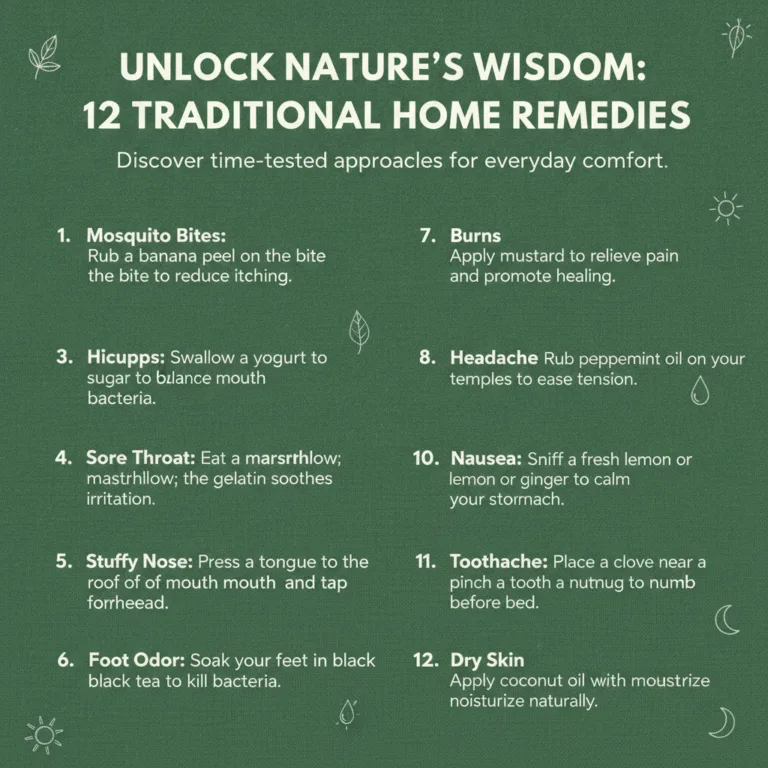
Why Connecting with Traditional Remedies Matters Today
In our fast-paced world, there’s a growing desire to reconnect with natural solutions and take a more active role in our personal wellness journey. People are increasingly interested in traditional remedies because they offer a gentle, holistic approach, often utilizing ingredients readily available and understood for centuries. There’s a deep comfort in knowing that ingredients like honey, ginger, or aloe vera have been trusted by our ancestors for their soothing properties.
Perhaps you’ve heard your grandmother talk about a specific tea for a cold, or recall a parent suggesting a warm bath for muscle aches. These aren’t just old wives’ tales; they often represent generations of accumulated wisdom about how nature can support our bodies. This approach particularly resonates with those who prefer to minimize chemical exposure and seek self-care options that are both effective and align with a natural lifestyle. Many find peace of mind in knowing exactly what goes into their remedies.
Embracing Nature’s Pantry: Your Guide to 12 Traditional Home Remedies
Let’s dive into some of the most cherished traditional home remedies that can offer relief and comfort for common daily annoyances. Remember, these are meant for minor issues and are not a substitute for professional medical advice.
1. Soothing Mosquito Bites with Aloe Vera & Lavender Oil
Few things are as annoying as an itchy mosquito bite. Thankfully, nature offers a powerful duo to calm the skin.
- How it Works: Aloe vera is renowned for its anti-inflammatory and soothing properties, which can reduce redness and irritation. Lavender essential oil, traditionally used for its calming scent, also has mild analgesic and anti-inflammatory qualities.
- Traditional Use: Aloe vera has been used for centuries for skin ailments, while lavender’s use in aromatherapy and minor skin issues dates back to ancient times.
- Practical Application: Apply a small dab of fresh aloe vera gel (from a leaf or pure bottled gel) directly to the bite. You can also mix one drop of pure lavender essential oil with a teaspoon of a carrier oil (like coconut or almond oil) and gently dab it on. Always do a patch test first.
2. Alleviating Headaches with Peppermint Oil & Ginger Tea
Whether it’s a tension headache or mild discomfort, these remedies offer a natural approach to relief.
- How it Works: Peppermint oil contains menthol, which can create a cooling sensation and relax muscles, potentially easing tension. Ginger is a well-known anti-inflammatory and has been studied for its ability to help with nausea often associated with headaches.
- Traditional Use: Peppermint has long been used for its analgesic and stimulating properties, while ginger has been a staple in traditional medicine for pain and digestive issues.
- Practical Application: For peppermint, dilute 1-2 drops of pure peppermint essential oil in a tablespoon of carrier oil (like jojoba or almond oil) and gently massage onto your temples and forehead, avoiding the eyes. For ginger tea, steep 1-2 inches of fresh, sliced ginger root in hot water for 10-15 minutes, then strain and sip.
3. Hydrating Dry Skin with Coconut Oil & Oatmeal Baths
Cracked, flaky, and itchy dry skin can be uncomfortable, but nature provides gentle moisturizers.
- How it Works: Coconut oil is a natural emollient, rich in fatty acids that can deeply moisturize and create a protective barrier on the skin. Oatmeal contains avenanthramides, compounds that have anti-inflammatory and anti-itch properties, making it excellent for sensitive or irritated skin.
- Traditional Use: Coconut oil has been a tropical beauty staple for millennia, while oatmeal baths have been a folk remedy for skin conditions like eczema and chickenpox for centuries.
- Practical Application: For coconut oil, warm a small amount in your hands and massage directly onto dry patches after showering or as needed. For an oatmeal bath, grind a cup of plain, uncooked rolled oats into a fine powder. Pour the powder into a warm bath and soak for 15-20 minutes.
4. Soothing a Sore Throat with Honey & Saltwater Gargle
A scratchy, sore throat is a common complaint, and these two remedies are incredibly simple yet effective.
- How it Works: Honey acts as a demulcent, coating the throat and providing relief from irritation. It also has natural antimicrobial properties. Saltwater gargles help draw out fluids from inflamed throat tissues, reducing swelling, and can help wash away bacteria or viruses.
- Traditional Use: Honey’s medicinal uses date back to ancient Egypt, while saltwater gargles have been recommended for throat comfort for ages.
- Practical Application: For honey, take 1-2 teaspoons of raw, local honey directly, or mix it into a warm (not hot) herbal tea. For a saltwater gargle, dissolve 1/4 to 1/2 teaspoon of salt in 8 ounces of warm water. Gargle for 30 seconds, then spit it out. Repeat a few times a day.
5. Clearing a Stuffy Nose with Steam Inhalation & Saline Rinse
When congestion strikes, these methods offer gentle relief for breathing.
- How it Works: Steam helps to thin mucus and moisturize nasal passages, making it easier to clear congestion. Adding eucalyptus oil can enhance the effect due to its decongestant properties. A saline rinse physically flushes out mucus, allergens, and irritants from the nasal passages.
- Traditional Use: Steam inhalation has been a go-to remedy for respiratory discomfort for generations, and saline solutions have ancient roots in Ayurvedic practices.
- Practical Application: For steam inhalation, carefully pour hot water into a bowl, lean over it with a towel draped over your head to create a tent, and breathe deeply for 5-10 minutes. You can add a drop or two of pure eucalyptus essential oil to the water. For a saline rinse, use a neti pot or saline spray with distilled or previously boiled and cooled water.
6. Calming Indigestion with Ginger & Peppermint Tea
An upset stomach can disrupt your day. These herbal teas can help settle things down.
- How it Works: Ginger contains gingerols, which can help stimulate digestion and relax the muscles of the digestive tract, easing nausea and discomfort. Peppermint has antispasmodic properties that can relax the smooth muscles of the digestive system, reducing bloating and gas.
- Traditional Use: Both ginger and peppermint have long histories of use as digestive aids in various cultures worldwide.
- Practical Application: Steep 1-2 inches of fresh, sliced ginger root in hot water for 10-15 minutes, or use a peppermint tea bag, and sip slowly.
7. Tending to Minor Burns & Sunburn with Aloe Vera Gel
For small, non-severe burns or painful sunburn, aloe vera can be a true skin savior.
- How it Works: Aloe vera’s natural compounds promote healing, reduce inflammation, and provide a cooling sensation, making it excellent for soothing burned skin.
- Traditional Use: Ancient Egyptians called aloe vera the