If you’ve ever tried to “eat more protein,” you already know the problem. Most advice is vague. It says “add protein,” but it never shows you what that actually means on a plate.
Most people never realize this works because they either under-eat protein at breakfast or they rely on tiny portions that do not add up.
Let’s break down every item in the image and how you can use it in real life.
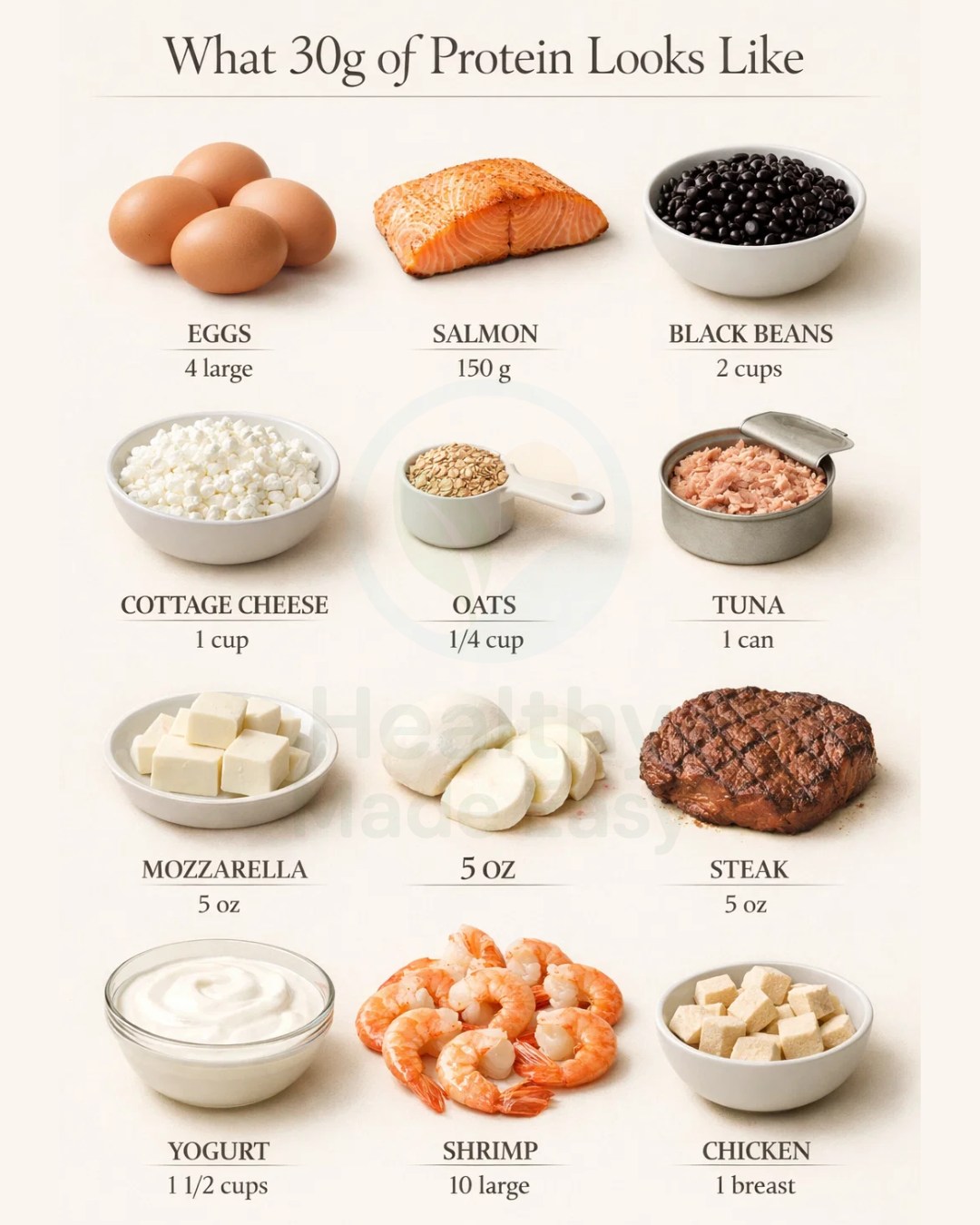
Eggs (4 large)
Eggs are one of the easiest ways to hit a protein target, especially at breakfast.
How to eat it:
Make an omelet with veggies, or do scrambled eggs with avocado and toast.
Salmon (150 g)
Salmon gives protein plus healthy fats that support fullness and heart health.
How to eat it:
Bake or pan-sear and serve with rice, potatoes, or a big salad.
Black Beans (2 cups)
Black beans are a high-volume way to reach 30g, and they bring fiber too.
How to eat it:
Use in burrito bowls, bean soups, or mash into a quick spread.
Cottage Cheese (1 cup)
Cottage cheese is protein-dense and works well for snacks or breakfast.
How to eat it:
Top with berries and cinnamon, or mix with cucumber and herbs for a savory bowl.
Oats (1/4 cup)
Oats are shown in the image as one option to reach 30g. Many people forget oats can contribute meaningful protein.
How to eat it:
Cook into oatmeal and pair with yogurt or milk for a more balanced bowl.
Tuna (1 can)
Tuna is one of the fastest “no-cook” protein fixes.
How to eat it:
Mix with olive oil, lemon, and pepper, then eat on toast or in a salad.
Mozzarella (5 oz)
Mozzarella provides protein and calcium, but portions matter.
How to eat it:
Add to a sandwich, snack plate, or caprese-style bowl with tomatoes.
Steak (5 oz)
Steak is protein-rich and very filling, but it is best enjoyed in moderation.
How to eat it:
Pair with a fiber-rich side like roasted vegetables or beans.
Yogurt (1 1/2 cups)
Yogurt is an easy, gentle protein choice that also supports gut health.
How to eat it:
Make a yogurt bowl with fruit and nuts, or blend into smoothies.
Shrimp (10 large)
Shrimp is lean, quick to cook, and high in protein.
How to eat it:
Sauté with garlic and serve with noodles, rice, or salad.
Chicken (1 breast)
Chicken breast is a classic way to reach 30g without much effort.
How to eat it:
Grill or bake and use for meal prep salads, wraps, or bowls.
How to Build a Daily Plate Using These Foods
If you want protein to feel automatic, aim for:
- Breakfast: eggs, yogurt, or cottage cheese
- Lunch: tuna, chicken, or beans
- Dinner: salmon, steak, shrimp, or chicken
A simple trick is choosing one main protein per meal, then building everything else around it.
When You’ll Notice Changes
- Within a few days: You may feel fuller after meals and snack less.
- Within 1–2 weeks: Many people notice steadier energy and fewer cravings.
- Within 3–6 weeks: Protein consistency supports strength, body composition, and recovery.
Tips to Combine Them Effectively
- Pair protein with fiber (vegetables, beans, fruit) to stay full longer.
- Add healthy fats (olive oil, avocado) for better satisfaction.
- Rotate sources across the week so you do not get bored.
- If digestion feels heavy, choose lighter proteins like yogurt, shrimp, tuna, or fish.
Final Takeaway
30 grams of protein does not have to be complicated. Once you know the portions, you can mix and match with confidence.
Save this guide if you want an easy protein reference.
Share it with someone who says, “I’m eating protein… but it never feels like enough.”