Curious about the secret to perfectly creamy overnight oats? The type of oat you choose makes a surprising difference. While both old-fashioned and thick-cut oats are fantastic whole grains, their unique textures and processing methods mean they behave quite differently when soaked overnight. This often leads to a common question for breakfast enthusiasts: which one truly makes better overnight oats?
Understanding the nuances between these two popular oat varieties can transform your morning meal prep. Whether you crave a silky-smooth consistency or a hearty, chewy bite, your choice of oats is the key. Let’s delve into the distinct characteristics of old-fashioned and thick-cut oats to help you craft your ideal overnight oats experience.
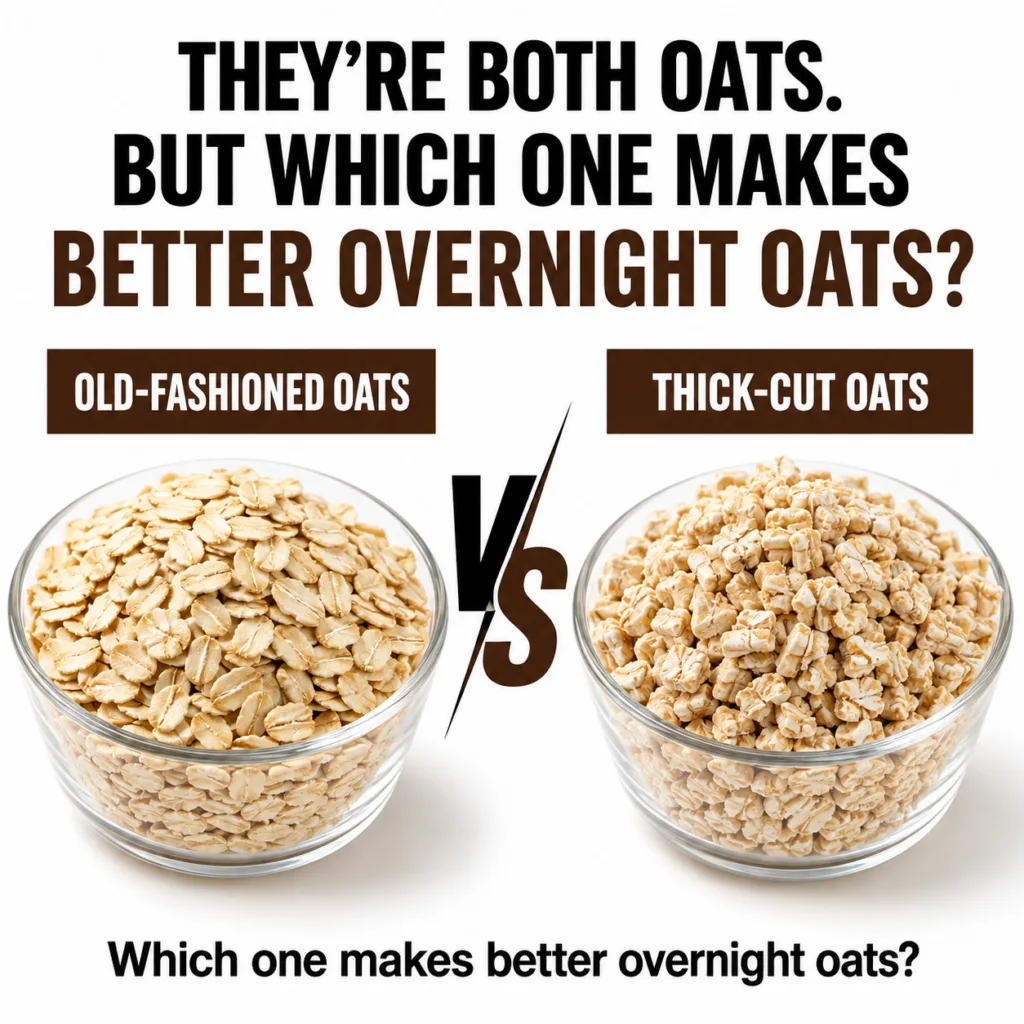 Discover the subtle yet significant differences between old-fashioned and thick-cut oats.
The Core Question: Old-Fashioned vs. Thick-Cut Oats for Overnight Oats
At first glance, oats might seem interchangeable. However, the way they are processed significantly impacts their texture, absorbency, and ultimately, the consistency of your overnight oats. Here’s a breakdown of the contenders.
Understanding Old-Fashioned Oats (Rolled Oats)
Old-fashioned oats, also known as rolled oats, are whole oat groats that have been steamed, then rolled flat into flakes. This process makes them thinner and wider, allowing them to absorb liquid more readily and cook faster. For traditional hot oatmeal, they yield a creamy, tender result.
- Texture for Overnight Oats: When used for overnight oats, old-fashioned oats typically create a very creamy, soft, and somewhat uniform texture. They tend to break down more, resulting in a classic, pudding-like consistency that many find appealing.
- Pros: Quick absorption, leads to a very smooth and creamy finish, familiar texture.
- Cons: Can become mushy if over-soaked or if the liquid ratio is too high for your preference; may lack a distinct chew.
Exploring Thick-Cut Oats
Thick-cut oats are also rolled oats, but they are processed to be thicker and often larger than old-fashioned oats. This means they retain more of their original shape and density. While they still absorb liquid, they do so at a slower rate and maintain more structural integrity.
- Texture for Overnight Oats: Thick-cut oats deliver a much chewier, more substantial texture in overnight oats. They hold their shape better, providing a satisfying bite and a less uniform consistency. If you prefer your oats with more ‘oomph,’ these are an excellent choice.
- Pros: Retains a distinct chewiness, provides a heartier texture, less prone to becoming mushy.
- Cons: Can feel too firm if not soaked long enough (at least 8 hours is often recommended), may require slightly more liquid than old-fashioned oats to achieve desired softness, less creamy.
So, Which One Makes Better Overnight Oats? The Verdict
The truth is, there’s no single