Maintaining a flourishing garden does not require expensive fertilizers, specialized equipment, or harsh chemical pesticides. Many of the most effective solutions for soil enrichment, pest control, and seed propagation are common household staples already sitting in your kitchen pantry or recycling bin.
Repurposing these everyday items reduces domestic waste while creating a cost-effective, organic gardening routine.
1. Coffee Grounds: Improve Soil Structure & Nitrogen Levels
Spent coffee grounds are a valuable organic soil amendment. Contrary to popular belief, used coffee grounds are generally close to neutral in pH because the acid dissolves into the brewed liquid.
-
Benefits: Adds organic matter to the soil, improves aeration, enhances water retention, and provides a slow-release source of nitrogen.
-
How to Apply: Work dried coffee grounds directly into the top few inches of your garden soil or compost pile. Alternatively, sprinkle a thin layer around the base of acid-loving crops like tomatoes, blueberries, and roses.
2. Crushed Eggshells: Deter Slugs & Boost Calcium
Eggshells are primarily composed of calcium carbonate, an essential secondary nutrient that strengthens plant cell walls.
-
Benefits: Prevents common physiological disorders like blossom end rot in tomatoes and bell peppers. The sharp edges of coarsely crushed shells also act as a physical barrier against soft-bodied pests.
-
How to Apply: Rinse, thoroughly dry, and crush eggshells into small fragments. Scatter them in a continuous ring around vulnerable seedlings to deter slugs and snails, or finely grind them into a powder and mix them into potting soil before planting.
3. Banana Peel Water: Natural Potassium Boost
Banana skins are rich in potassium, along with small amounts of phosphorus, magnesium, and calcium, which are crucial for root development, bloom formation, and fruit set.
-
Benefits: Delivers a gentle, organic liquid fertilizer that encourages robust blooming and improves overall drought resistance.
-
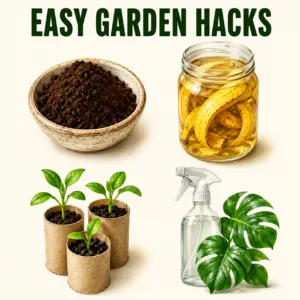
How to Apply: Chop 2 to 3 banana peels into small pieces and place them in a glass jar filled with water. Let the mixture steep for 48 to 72 hours, strain out the solids, and use the nutrient-infused liquid to water flowering and fruiting plants once a week.
4. Cinnamon Powder: Natural Organic Antifungal Agent
Cinnamon contains cinnamaldehyde, a potent natural compound with proven antifungal and antibacterial properties.
-
Benefits: Controls fungal issues such as damping-off disease in young seedlings, eradicates white mold on topsoil, and prevents root rot.
-
How to Apply: Lightly dust fine cinnamon powder over the surface of moist seed-starting mix, or apply it directly to cut plant stems and pruning wounds to accelerate healing and prevent airborne infections.
5. Unsalted Pasta or Potato Water: Micronutrient Enrichment
The leftover cooking water from boiling potatoes or pasta contains dissolved starches, minerals, and vitamins that nourish beneficial soil microbes.
-
Benefits: Feeds soil microflora, improves moisture retention, and delivers trace nutrients back to the plant root system.
-
How to Apply: Crucial note: Only use water that contains zero added salt, butter, or seasonings. Allow the water to cool completely to room temperature before pouring it directly onto the root zone of container plants or garden beds.
6. Cardboard Toilet Paper Rolls: Biodegradable Seed Starters
Standard brown cardboard toilet paper rolls make ideal eco-friendly seedling pots that eliminate root disturbance.
-
Benefits: 100% biodegradable; seedlings can be planted directly into the ground inside the roll, preventing transplant shock and root tearing.
-
How to Apply: Cut the tube in half, make four small snips on one end, and fold the flaps inward to form a closed bottom. Fill the cylinder with damp seed-starting mix, plant your seeds, and plant the entire tube into the garden once roots begin poking through.
7. Epsom Salt Spray: Foliar Magnesium for Vibrant Green Foliage
Epsom salt is chemically known as magnesium sulfate ($MgSO_4$), which provides essential building blocks for chlorophyll synthesis.
-
Benefits: Rectifies magnesium deficiencies, corrects yellowing foliage (interveinal chlorosis), and promotes deep green, vigorous leaf growth.
-
How to Apply: Dissolve 1 tablespoon of food-grade Epsom salt into 1 gallon (approximately 3.8 liters) of lukewarm water. Pour into a spray bottle and mist the foliage of heavy-feeding plants, such as peppers and tomatoes, once a month.
8. White Vinegar Spray: Non-Toxic Spot Weed Control
Household white distilled vinegar contains acetic acid, which draws moisture out of plant foliage on contact.
-
Benefits: Acts as a rapid-acting, non-selective natural herbicide for unwanted weeds growing in paver joints, driveways, and garden borders without lingering chemical residue.
-
How to Apply: Pour undiluted 5% white vinegar into a spray bottle. Spray directly onto weed foliage on a bright, hot, sunny day. Avoid overspraying onto desirable plants or garden soil, as concentrated vinegar lowers soil pH locally.
9. Upright Plastic Forks: Physical Animal & Pest Barrier
Repurposing disposable plastic forks creates a simple mechanical defense against digging pests and domestic animals.
-
Benefits: Deters cats, dogs, squirrels, and birds from digging up fresh seeds or using garden containers as litter boxes without causing harm.
-
How to Apply: Insert plastic forks handle-first into loose garden beds or container soil with the prongs pointed upward. Space them 2 to 3 inches apart around delicate seedlings and newly germinated rows.