Have you ever opened your kitchen cabinet and wondered why your potatoes sprouted overnight, or why your cucumbers suddenly turned soft and watery?
It is not always because the food was “bad.” Sometimes it is because of who it was stored next to.
Certain fruits and vegetables release natural gases, moisture, and odors that quietly speed up ripening, softening, or mold. Most people never realize this works because the food still looks fine on day one, then suddenly collapses on day three.
Why Some Foods Should Never Be Stored Together
Food spoilage is not just about time. It is also about environment.
A few common “spoilage triggers” include:
- Ethylene gas, which speeds ripening and can cause over-ripening.
- Moisture, which encourages mold.
- Odors and sulfur compounds, which can affect texture and shelf life.
- Airflow, which can either protect food or trap humidity.
Once you know the patterns, storage becomes easy.
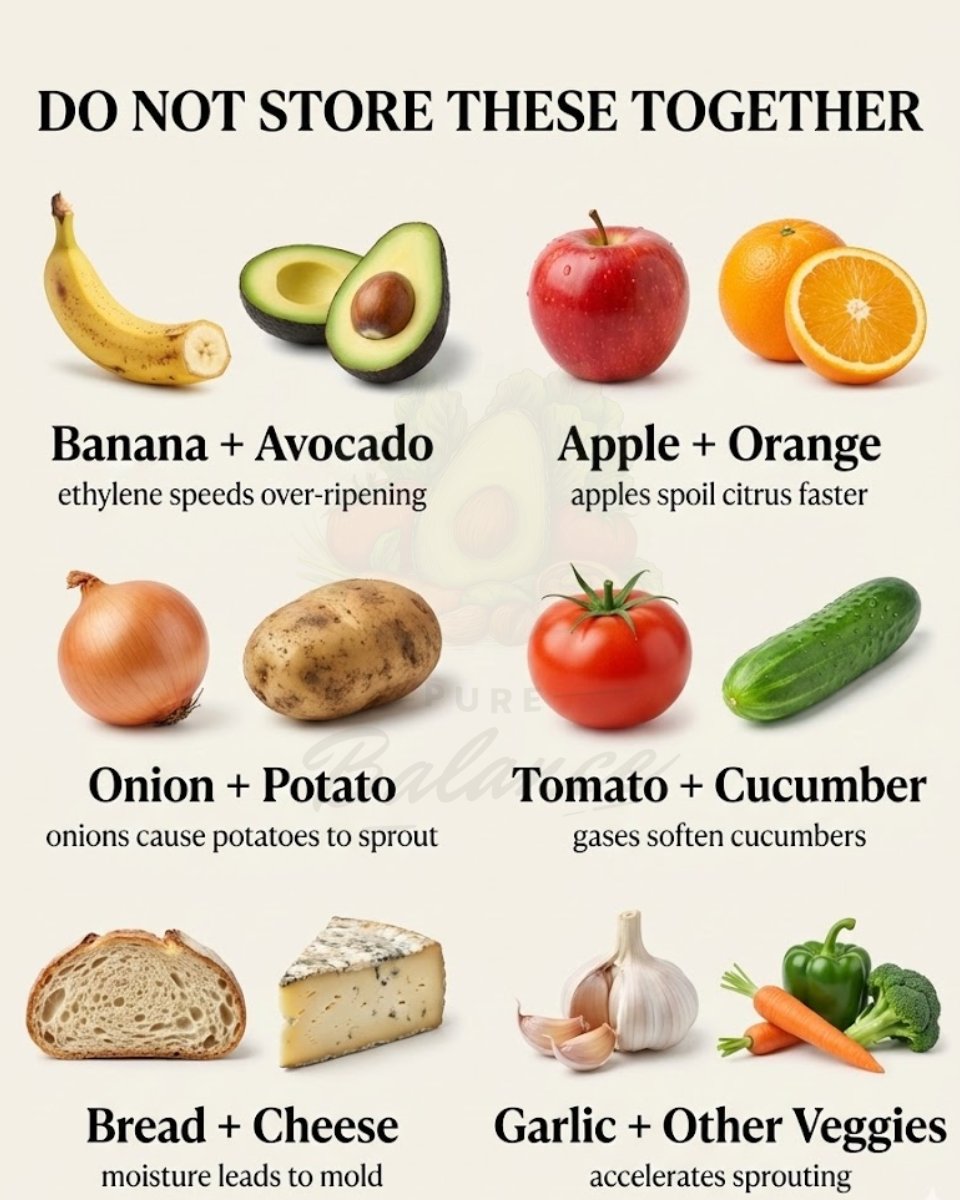
Do Not Store These Together
1. Banana + Avocado
Bananas release a lot of ethylene, and that gas can push avocados from “not ready” to “overripe” very quickly.
What happens
Avocados soften too fast, brown earlier, and can become mushy before you are ready to use them.
Store them instead
- Keep avocados away from bananas if you want them to ripen slowly.
- If you need an avocado to ripen faster, you can place it near a banana for a short time, then separate them once it softens.
2. Apple + Orange
Apples release ethylene, and this can shorten the freshness of citrus when stored closely for long periods.
What happens
Oranges can lose quality faster, and the skin may soften sooner.
Store them instead
- Keep apples in a separate drawer or separate fruit bowl.
- Store oranges with other citrus fruits, and keep airflow around them.
3. Onion + Potato
Onions release gases and moisture that can encourage potatoes to sprout and spoil faster.
What happens
Potatoes sprout sooner, soften more quickly, and can develop bad spots earlier.
Store them instead
- Store potatoes in a cool, dark, dry place with good airflow.
- Store onions separately, also in a cool and dry spot, but not in the same bin as potatoes.
- Avoid sealed plastic bags for both, because trapped moisture speeds spoilage.
4. Tomato + Cucumber
Tomatoes release natural ripening gases, and cucumbers are sensitive to them. This combination often leads to soft cucumbers.
What happens
Cucumbers can become watery, soft, and lose their crisp texture faster.
Store them instead
- Keep tomatoes at room temperature until ripe, then you can refrigerate if needed to slow further softening.
- Store cucumbers in the fridge, ideally in a breathable bag or a crisper drawer with moderate humidity.
5. Bread + Cheese
Bread and cheese have different moisture needs. When stored together, moisture can transfer and create the perfect environment for mold.
What happens
Bread molds faster, and cheese can sweat, soften, and spoil sooner.
Store them instead
- Store bread in a bread box, pantry, or freezer if you will not finish it soon.
- Store cheese wrapped properly in the fridge, using parchment or cheese paper when possible, then place it in a container that still allows a little airflow.
6. Garlic + Other Veggies
Garlic releases compounds and has a strong aroma. When stored with other vegetables, it can affect their freshness and may speed sprouting for some produce.
What happens
Some vegetables can soften sooner, sprout faster, or pick up garlic odor.
Store them instead
- Keep garlic in a cool, dry, well-ventilated space.
- Keep it separate from other vegetables, especially those stored in enclosed bins.
How to Build a “Freshness System” in Your Kitchen
If you want a simple routine, use this approach:
- Keep high-ethylene fruits like bananas and apples away from sensitive produce.
- Keep dry storage foods like onions and potatoes separated with airflow.
- Keep moisture-sensitive foods like bread away from high-moisture foods like cheese.
- Use your fridge drawers wisely, because airflow and humidity matter more than people think.
When You’ll Notice Changes
You can usually notice less sogginess and fewer “surprise” spoilage moments within 3 to 7 days. Most people see a real drop in food waste within two weeks, especially with potatoes, cucumbers, and bread.
Quick Notes and Safety Tips
Food storage is also food safety.
- Do not cut mold off bread and keep eating it. Mold can spread beyond what you see.
- Throw away potatoes that are very green, bitter, or heavily sprouted, because they may have higher levels of natural toxins.
- If any food smells off, feels slimy, or looks unusual, it is safer to discard it.
Final Takeaway
You do not need a perfect fridge or fancy containers. You just need better pairings. Separating these six “do not store together” foods can keep your kitchen fresher, reduce waste, and save money.