If your skin flares for “no reason” (breakouts, texture, redness, dullness), your gut might be part of the story. Research increasingly describes a gut–skin axis, meaning the gut microbiome, gut barrier, and inflammation signals can influence the skin. It is not magic, and it is not instant – but it is a real wellness lever for many people.
Most people never realize this works because “skin care” feels like a surface problem. But for some, the bigger win comes from daily foods that support digestion, microbial balance, and inflammation control – then the skin slowly follows.
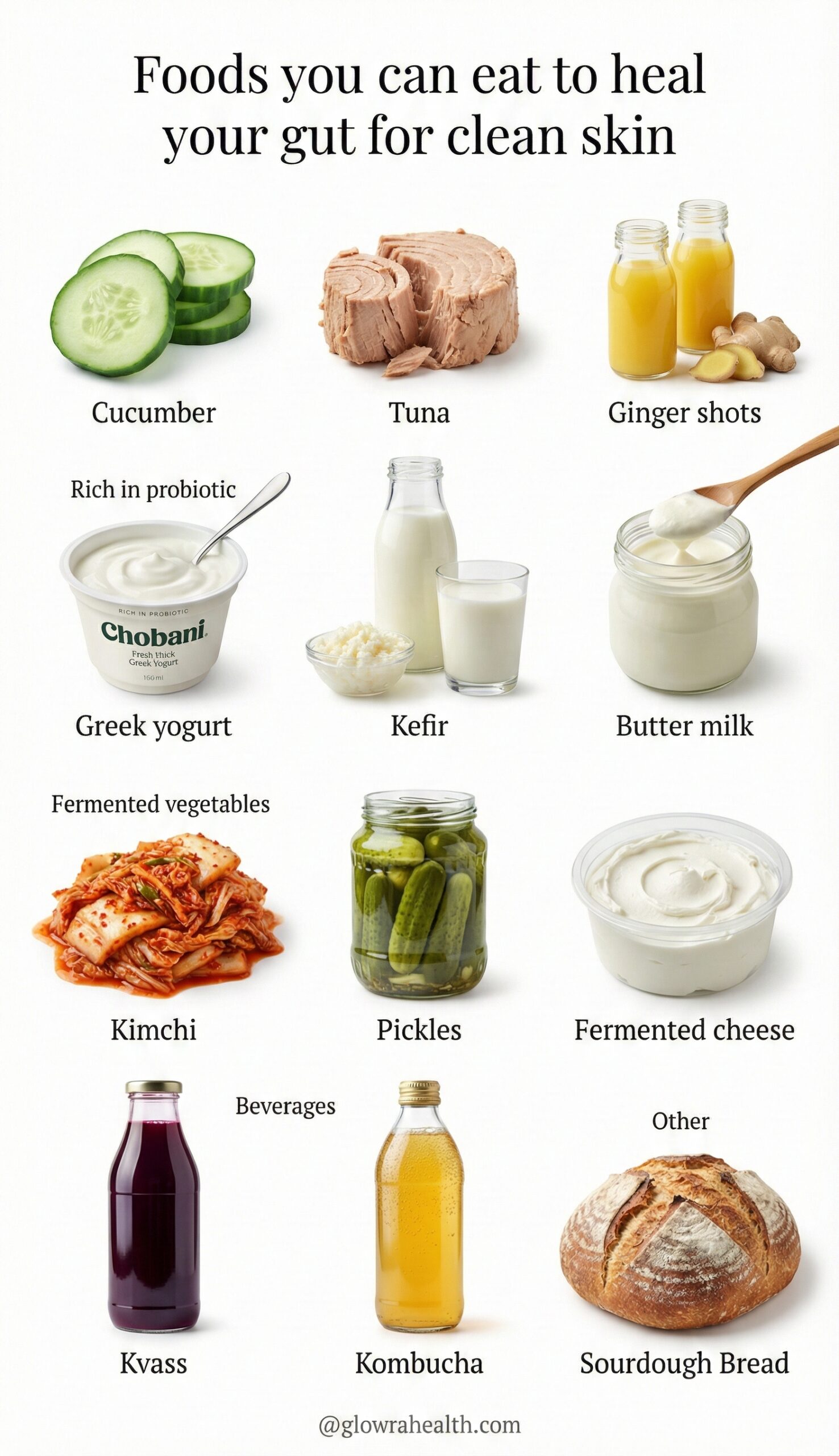
1. Cucumber
Cucumber is mostly water, which supports hydration and gentle digestion. Hydration helps the gut move smoothly and can make skin look less “tight” or dull.
How to add it:
- Slice into salads with a pinch of salt and lemon.
- Blend into a simple green smoothie base.
Tip: Wash well, especially if you eat the peel.
2. Tuna
Tuna provides protein (skin structure support) and nutrients like selenium. But tuna also comes with a mercury consideration, especially for pregnant or trying-to-conceive readers. FDA/EPA guidance notes tuna species vary: canned light tuna is generally lower, while bigeye is in “avoid.”
How to use it:
- Mix with yogurt instead of mayo for a gut-friendlier tuna salad.
- Add to rice bowls with cucumber and pickles.
Safety note: If pregnant/breastfeeding, follow fish guidance for your situation.
3. Ginger shots
Ginger is widely used for digestion comfort (especially nausea and “heavy” mornings). A small ginger shot may feel like a reset for bloating for some people, though it is not a cure-all.
How to use it:
- Take a small shot with breakfast, not on an empty stomach if you have reflux.
- Or dilute with warm water as a gentler option.
Quick caution: If you are on blood thinners or have severe reflux, go easy.

4. Greek yogurt (rich in probiotic)
Greek yogurt can provide protein plus live cultures (if labeled with live/active cultures). Fermented foods are being studied for their effects on microbiome diversity and inflammation. (Cell)
How to use it:
- Use as a base, then add cucumber + herbs as a savory bowl.
- Or pair with a small amount of fruit if you tolerate it well.
If dairy bothers you: Choose lactose-free options or skip and use kefir alternatives if tolerated.
5. Kefir
Kefir is a fermented drink that often contains a wider mix of microbes than standard yogurt (depending on the product). Many people find it easy to sip when appetite is low.
How to use it:
- Start with ¼–½ cup per day and increase slowly.
- Blend into smoothies (cucumber + kefir works surprisingly well).
Tip: If you are new to probiotics, too much too fast can cause gas.
6. Butter milk
Buttermilk is another fermented dairy option that can feel lighter than milk for some people. It may work well as a drinkable “support” with meals.
How to use it:
- Drink chilled in small servings.
- Use in dressings if you prefer it in food rather than as a drink.
Safety note: If you are lactose intolerant, it may still trigger symptoms.
7. Kimchi (fermented vegetables)
Kimchi is a classic fermented vegetable, and fermented-food diets have been shown in a controlled trial to increase microbial diversity and lower certain inflammatory markers over time.
How to use it:
- Add 1–2 tablespoons next to meals.
- Pair with rice and protein for better tolerance.
Caution: It can be spicy and high in histamine for sensitive people.
8. Pickles
Pickles can support digestion if they are naturally fermented (not just vinegar pickles). Fermented pickles may contain live microbes, while vinegar-only pickles usually do not.
How to use it:
- Add as a crunchy side to tuna or salads.
- Use small portions (salt can add up).

9. Fermented cheese
Fermented/aged cheeses provide protein and can include beneficial fermentation byproducts, but they can be high in salt and histamines.
How to use it:
- Keep portions small as a topping rather than a main.
- Pair with cucumber and a balanced meal.
If you get headaches, flushing, or acne flares: histamines may be a trigger—consider limiting.
10. Kvass (beverage)
Kvass is a traditional fermented drink (often beet-based or bread-based). It is used as a digestive beverage in some cultures.
How to use it:
- Treat it like a “gut tonic,” not a big soda replacement.
- Start with a small serving and see how your stomach responds.
Check labels: sugar levels can vary.
11. Kombucha (beverage)
Kombucha is fermented tea. Some people love it for digestion, but it can be acidic, contain added sugar, and may have trace alcohol depending on the product and fermentation. For certain groups (pregnancy, immunocompromised), caution is often advised.
How to use it:
- Choose store-bought, reputable brands.
- Limit to small servings and avoid chugging daily if it irritates your gut.
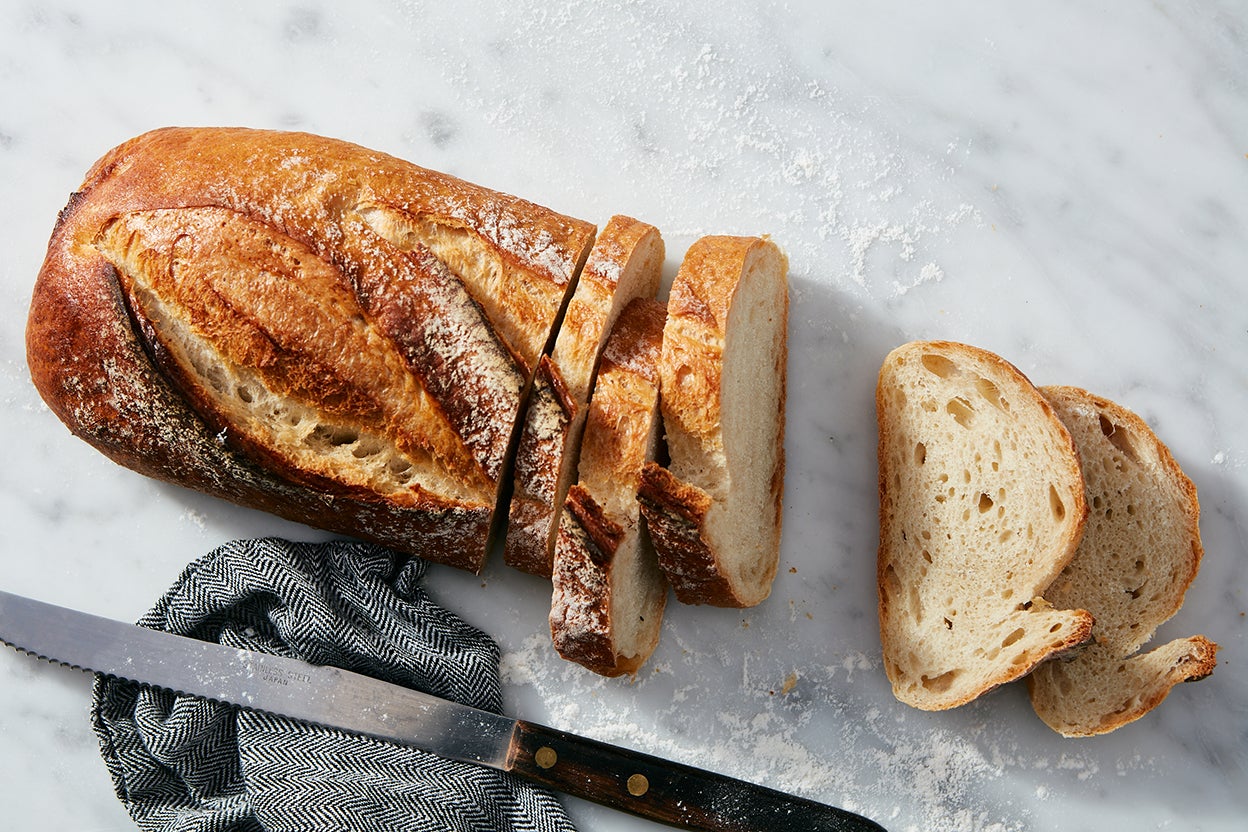
12. Sourdough Bread (other)
Sourdough is a fermented bread. Many people find it easier to digest than standard bread because fermentation changes the dough structure.
How to use it:
- Pair sourdough with protein and fermented foods (yogurt, tuna) for better balance.
- Avoid stacking it with lots of sugary add-ons if acne is your concern.
How to Build a Daily Plate Using These Foods
Try this simple rotation:
- Breakfast: Greek yogurt or kefir + cucumber on the side
- Lunch: Tuna bowl + pickles or kimchi
- Snack: Small kombucha or kvass (not both every day)
- Dinner: Protein + vegetables + 1 fermented add-on (kimchi or fermented cheese)
- Optional: Ginger shot if digestion feels sluggish
Fermented foods work best when you keep them small and consistent.
When You’ll Notice Changes (Realistic Timeline)
- 1–3 days: Many people notice digestion shifts (more gas, more regularity, less bloating) as the gut adapts.
- 2–4 weeks: Skin may look calmer if inflammation and digestion stabilize.
- 8–12 weeks: This is when “gut routine” changes often show more clearly in skin texture and breakouts (if the gut–skin axis is a factor for you).
Quick Safety Notes
- If you are pregnant, trying to conceive, or breastfeeding, follow fish guidance for tuna and be cautious with kombucha.
- If you are immunocompromised, be extra careful with unpasteurized fermented drinks/foods.
- If you have IBS, histamine sensitivity, or reflux, introduce fermented foods slowly.
Final Takeaway
Clean skin is not only about what you put on your face. If your gut is inflamed, sluggish, or reactive, your skin can reflect it. Use this list as a gentle, repeatable system: hydration foods + protein + small daily ferments.
Source Science
- Gut–skin axis overview and mechanisms (review literature). (Frontiers)
- Fermented-food diet trial: increased microbiome diversity and reduced inflammatory markers. (Cell)
- FDA/EPA fish advice (tuna categories and mercury considerations). (U.S. Food and Drug Administration)
- Kombucha cautions for certain groups (pregnancy/immunocompromised) due to variability and contamination risk. (Verywell Health)
Click to read more “12 Gut-Healing Foods That Work Better Than Supplements”