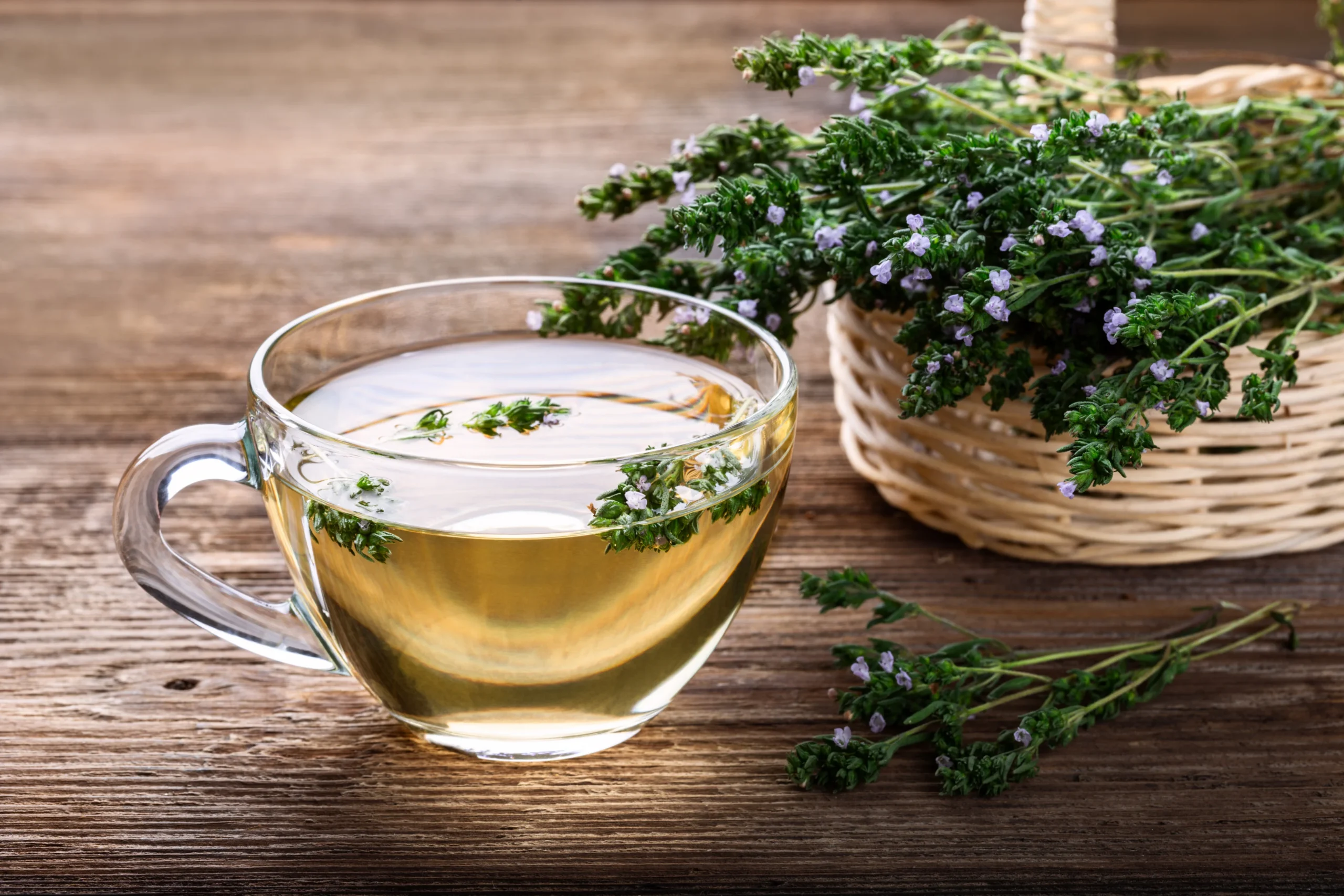
Thyme tea is often overlooked because it feels too simple. No fancy ingredients. No dramatic claims.
Yet for centuries, thyme tea has quietly been used when the body feels heavy in the chest, slow in digestion, or sensitive after illness.
If you’ve ever searched for herbal tea for cough, natural remedy for chest congestion, or gentle digestive tea, thyme tea fits into all of those needs — when used correctly.
Why Thyme Tea Works Differently From Strong Herbal Remedies
Unlike aggressive herbal treatments, thyme tea works gently and consistently.
Its natural compounds (thymol and carvacrol) support the body’s own clearing processes rather than forcing a strong reaction.
This is why thyme tea is commonly associated with:
-
herbal tea for respiratory support
-
natural cough relief at home
-
tea for digestion and bloating
It’s not meant to “cure” — it’s meant to support daily balance.
Thyme Tea Benefits for Respiratory Comfort
Thyme tea is traditionally used when breathing feels slightly tight, phlegm builds up, or the chest feels congested — especially during seasonal changes.
How it helps:
-
Supports gentle loosening of mucus
-
Calms irritated airways
-
Provides mild antimicrobial support
This explains why thyme appears often in searches related to thyme tea for cough and herbal tea for lungs.
👉 Best used warm, not hot, and sipped slowly.
Thyme Tea Benefits for Digestion
What many people don’t expect is how thyme tea supports digestion.
Thyme helps:
-
Ease bloating after meals
-
Support stomach comfort
-
Reduce fermentation-related gas
This makes it relevant for people searching tea for bloating, herbal digestion tea, or natural remedy for indigestion.
👉 Best time: after meals or when digestion feels “stuck” rather than painful.
How to Make Thyme Tea (Simple, Correct Way)
Ingredients (1 cup):
-
Fresh thyme: 1–2 sprigs (or 1 tsp dried thyme)
-
Hot water: 1 cup (not boiling)
How to prepare:
-
Place thyme in a cup.
-
Pour hot (not boiling) water over it.
-
Cover and steep for 8–10 minutes.
-
Strain and sip slowly.
Optional additions (based on need):
-
Honey → throat comfort
-
Lemon → light immune support
When NOT to Use Thyme Tea
Thyme tea is gentle, but it’s not for every situation.
Avoid or limit if:
-
You are pregnant (regular use)
-
You have known thyme sensitivity
-
You are taking strong respiratory medications (check first)
As with most herbal teas, consistency matters more than strength.
Why People Keep Coming Back to Thyme Tea
People don’t keep thyme tea because it’s trendy.
They keep it because it works quietly — especially when the body doesn’t need something harsh.
That’s why thyme tea often shows up in searches like:
-
simple herbal tea for daily use
-
natural tea for lungs and digestion
-
traditional herbal remedies still used today
Final Thought
Thyme tea isn’t a miracle.
It’s something better: reliable, gentle, and supportive when your body feels off but not broken.
Sometimes, the most effective remedies are the ones that don’t try to do too much.
Sources
-
Healthline – Thyme: Uses, Benefits & Safety
https://www.healthline.com/nutrition/thyme
-
Medical News Today – Thyme health benefits
https://www.medicalnewstoday.com/articles/266016
-
NCBI – Thymol and respiratory support
https://www.ncbi.nlm.nih.gov/pmc/articles/PMC5452224/