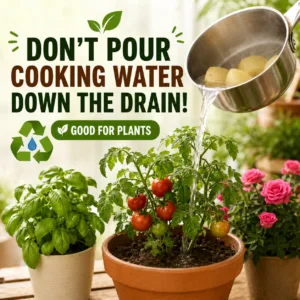
Every time you boil eggs, cook potatoes, or prepare a pot of pasta, essential nutrients, starches, and minerals seep directly into the cooking liquid. Pouring this water down the kitchen sink wastes a completely free, organic source of plant nutrition.
Repurposing kitchen cooking water not only cuts down on household waste, but it also gives your vegetable beds, potted flowering plants, and indoor houseplants a gentle, bioavailable nutrient boost without chemical fertilizers.
1. Egg-Boiling Water: Bioavailable Calcium ($Ca$)
When whole eggs are boiled in hot water, trace amounts of calcium carbonate and vital micronutrients slowly leach from the shells into the liquid.
🍅 Plants That Love It:
-
Tomatoes
-
Peppers (Bell & Chili Peppers)
-
Eggplants
💡 Why It Works & Benefits:
-
Prevents Blossom-End Rot: Nightshade family crops (tomatoes, peppers, eggplants) are notoriously vulnerable to calcium deficiency, which causes sunken, black, leathery patches at the bottom of ripening fruits.
-
Strengthens Plant Cell Walls: Calcium is a fundamental structural component of plant cellular tissue, resulting in sturdy stems, strong branches, and thick-walled, juicy vegetables.
2. Potato-Boiling Water: Potassium ($K$) & Phosphorus ($P$) Powerhouse
Potatoes release significant quantities of water-soluble potassium, phosphorus, and essential plant vitamins as they cook.
🌹 Plants That Love It:
-
Roses
-
Hydrangeas
-
Berry Bushes (Strawberries, Blueberries, Raspberries)
💡 Why It Works & Benefits:
-
Promotes Abundant Flowering: Potassium acts as a natural bloom booster, stimulating flower bud formation, intensifying petal coloration, and extending the bloom lifespan.
-
Improves Disease & Stress Resistance: Potassium regulates water movement within plant cells, making shrubs and fruiting bushes more resilient against summer heatwaves, dry spells, and fungal attacks.
3. Pasta-Boiling Water: Rich in Complex Starches
The cloudy, opaque water remaining after boiling pasta is concentrated with dissolved carbohydrates and natural starches.
🥬 Plants That Love It:
-
Leafy Greens (Lettuce, Spinach, Kale, Swiss Chard)
-
Culinary Herbs (Basil, Rosemary, Mint, Parsley)
-
Young Seedlings & Nursery Starts
💡 Why It Works & Benefits:
-
Feeds the Living Soil Food Web: While roots do not absorb complex starches directly, these starches act as instant fuel for beneficial soil bacteria and mycorrhizal fungi.
-
Enhances Nutrient Cycling: An active, well-fed population of soil microbes accelerates the breakdown of organic material, unlocking trace minerals and delivering them directly to plant roots in an easy-to-absorb form.
⚠️ 2 Critical Rules Before You Water Your Plants
-
1. Never Use Salted Water: Sodium chloride ($NaCl$) builds up rapidly in potting soil and garden beds. Excess salt dehydrates roots, draws out moisture, and causes severe fertilizer burn on leaf margins. Only reuse cooking water that was boiled with 0% added salt.
-
2. Cool Completely to Room Temperature: Pouring warm or boiling water directly onto garden soil will instantly scald tender feeder roots and wipe out beneficial soil microorganisms. Always let your cooking pots sit until the liquid reaches cool room temperature.
Quick Application Guide
-
Step 1: Strain: Remove all solid food fragments (egg shell bits, loose noodles, or potato peels) to avoid attracting fungus gnats or fruit flies.
-
Step 2: Cool: Let the liquid sit on the counter for 1 to 2 hours until completely cold.
-
Step 3: Drench: Pour the cooled liquid directly onto the soil around the root zone once a week as part of your regular watering routine.