Dark spots (also called hyperpigmentation) can show up after acne, sun exposure, hormonal shifts, or inflammation. And here’s the frustrating part: even when your skin feels “healed,” pigment can linger for weeks or months.
The good news is that fading dark spots is very doable – if you focus on the right levers. There are 9 categories that dermatology and skin-barrier science consistently supports. Below, I’ll explain how to use each one, why it works, and what to expect realistically.
What Dark Spots Are (and Why They Don’t Fade Overnight)
Dark spots happen when your skin produces or deposits extra melanin. Common triggers include:
- UV exposure (sun spots / lentigines)
- Post-inflammatory hyperpigmentation (PIH) after acne, bites, irritation
- Melasma (often hormone-related; tends to be more stubborn)
Most fading strategies work by doing one (or more) of these:
- Preventing new pigment from forming
- Speeding up turnover of pigmented surface cells
- Reducing melanin production signals
- Protecting the skin barrier so inflammation doesn’t keep pigment “on”
Consistency matters because skin renewal takes time—usually measured in weeks, not days.
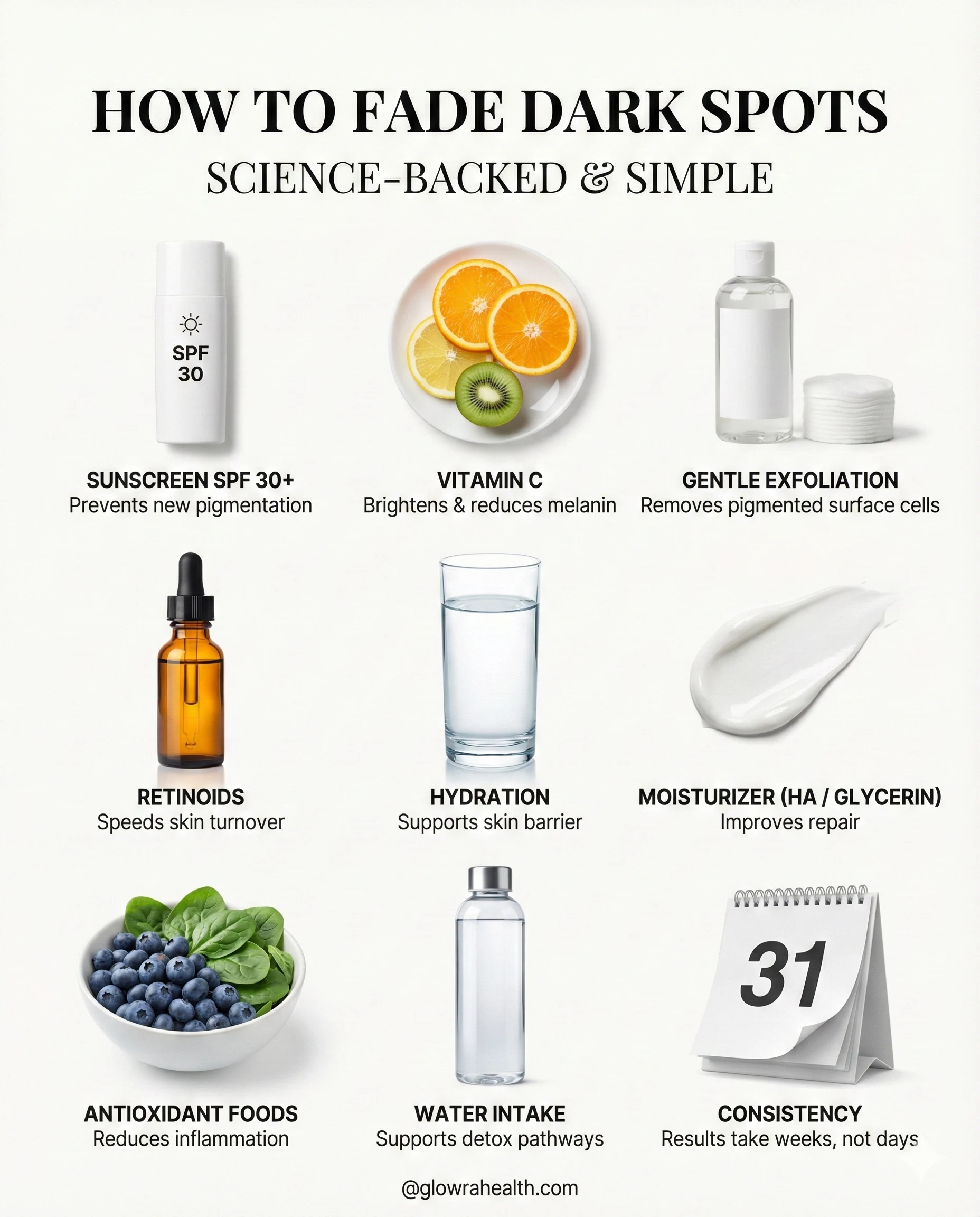
1. Sunscreen SPF 30+ (Prevents New Pigmentation)
Why it works
UV (and even visible light, especially for deeper skin tones) can trigger or worsen hyperpigmentation. Dermatology guidelines consistently recommend broad-spectrum SPF 30+ daily.
How to use it (the “results” part depends on this)
- Use broad-spectrum SPF 30 or higher every morning, even on cloudy days.
- Reapply about every 2 hours if you are outdoors, sweating, or near windows with strong light.
- If dark spots worsen easily, consider tinted sunscreen (often includes iron oxides) to help protect against visible light.
What to expect
If you skip sunscreen, your other steps can feel like they “don’t work.” With consistent SPF use, you stop fueling new pigment – so fading becomes possible.
2. Vitamin C (Brightens and Reduces Melanin Signals)
Why it works
Topical vitamin C (ascorbic acid and certain stable derivatives) can:
- act as an antioxidant (reducing oxidative stress that triggers pigmentation)
- interfere with steps in melanin formation, including tyrosinase activity
A systematic review suggests topical vitamin C can be a helpful option for melasma/photoaging, though more studies are needed for ideal concentration and protocols.
How to use it
- Apply in the morning under sunscreen (classic pairing).
- Start 3–4 mornings per week if your skin is sensitive.
- If you get stinging or dryness, reduce frequency or choose a gentler derivative.
What to expect
You may see more glow first, then gradual spot softening over 6–12 weeks, especially when paired with daily SPF.
3. Gentle Exfoliation (Removes Pigmented Surface Cells)
Why it works
“Gentle exfoliation” helps dark spots by encouraging the skin to shed pigmented surface cells more evenly. Clinical discussions around hyperpigmentation often include exfoliating acids (like AHAs) as common supportive tools, especially for surface discoloration.
How to use it safely
- Choose gentle chemical exfoliation (not harsh scrubs).
- Start 1–2 nights per week, then increase only if your skin tolerates it.
- Avoid using exfoliation on the same night as strong retinoids in the beginning (too much irritation can worsen PIH).
What to expect
Exfoliation can improve tone and texture within 2–6 weeks, but overuse can backfire by causing inflammation—especially for melanin-rich skin.
4. Retinoids (Speeds Skin Turnover + Helps Disperse Pigment)
Why it works
Topical retinoids help hyperpigmentation by increasing keratinocyte turnover and helping disperse melanin through faster renewal. They’re commonly used for pigment concerns like melasma and photodamage-related hyperpigmentation.
How to use it (retinoid success = slow introduction)
- Use at night.
- Start with a pea-sized amount for the whole face, 2 nights/week for 2–3 weeks.
- Then move to every other night if skin is calm.
- Pair with a moisturizer to reduce irritation (irritation can worsen dark spots).
What to expect
Retinoids are “slow and steady.” Expect meaningful pigmentation improvement in 8–12 weeks, sometimes longer for stubborn melasma.
5. Hydration (Supports the Skin Barrier)
Why it works
Dehydrated skin often becomes reactive. Reactive skin is more inflammation-prone, and inflammation is a major driver of post-inflammatory hyperpigmentation.
Hydration supports the skin barrier, helping your skin tolerate vitamin C, exfoliation, and retinoids with less irritation.
How to use it
- Think hydration in layers: gentle cleanser → hydrating serum/essence → moisturizer.
- If your skin feels tight after washing, your routine is likely too stripping.
What to expect
Hydration often improves comfort quickly (days to 2 weeks). It also helps prevent “setbacks” from irritation.
6. Moisturizer (Hyaluronic Acid / Glycerin) (Improves Repair)
Why it works
Moisturizers don’t “bleach” spots, but they make fading possible by supporting the barrier. Humectants like hyaluronic acid (HA) and glycerin bind water and improve hydration dynamics. Moisturizers can reduce transepidermal water loss and support barrier function.
A clinical study found a product containing HA and glycerin improved hydration and barrier function effects lasting up to 24 hours.
How to use it
- Apply moisturizer after actives (vitamin C, retinoid) and whenever skin feels dry.
- If using retinoids/exfoliants, moisturizing becomes non-negotiable.
What to expect
Better tolerance, fewer flakes, fewer “angry red patches” that can turn into new dark marks.
7. Antioxidant Foods (Reduces Inflammation)
Why it works
Oxidative stress and inflammation contribute to skin aging and pigmentation triggers. Reviews on skin aging discuss protective roles of antioxidants (vitamin C, vitamin E, polyphenols) against oxidative stress pathways.
This doesn’t mean food will erase a spot overnight. It means antioxidant-rich diets may support skin resilience and recovery over time.
How to use it
Build most meals around:
- colorful fruits/vegetables
- omega-3 rich foods
- adequate protein
What to expect
Subtle but meaningful support over months—especially if your diet was low in whole foods.
8. Water Intake (Supports Detox Pathways)
Why it helps (with realistic framing)
Hydration supports overall skin function and barrier comfort. However, “more water” is not a standalone hyperpigmentation treatment. It’s a supportive habit that helps your skin tolerate a brightening routine and recover from inflammation.
How to use it
- Sip consistently through the day.
- Pair with electrolytes if you sweat a lot.
- Watch your urine color: pale yellow is a practical target for most people.
9. Consistency (Results Take Weeks, Not Days)
Why it matters
Dark spots fade when you consistently:
- prevent new pigment (SPF)
- reduce pigment signals (vitamin C, retinoids)
- remove surface pigment gradually (gentle exfoliation)
- protect the barrier (hydration + moisturizer)
A realistic timeline
- 2–4 weeks: skin looks smoother, less dull; fewer “new” dark marks
- 6–12 weeks: noticeable fading of many PIH spots
- 3–6 months: deeper discoloration, melasma, and sunspots may improve more slowly
A Simple Routine Using These 9 Categories
Morning
- Gentle cleanse (or water rinse)
- Vitamin C
- Moisturizer (HA/glycerin)
- Sunscreen SPF 30+
Night
- Gentle cleanse
- Retinoid (2–4 nights/week to start)
- Moisturizer
- Gentle exfoliation on non-retinoid nights (1–2 nights/week)
Safety Notes (Important for Dark Spots)
- Over-exfoliating or irritating your skin can worsen pigmentation, especially PIH.
- If you are pregnant or trying to conceive, avoid certain retinoids unless your clinician approves.
- If dark spots spread quickly, itch, bleed, or look unusual, see a dermatologist.
Final Takeaway
If you only do one thing: wear SPF 30+ every day. It is the foundation that makes every brightening step work. Then add vitamin C, retinoids, and gentle exfoliation slowly—while protecting your barrier with hydration and moisturizer.
Related science sources
- American Academy of Dermatology: SPF 30+, broad-spectrum, reapplication, and visible light hyperpigmentation notes (American AcademyAcademy of Dermatology)
- Vitamin C mechanisms in melanogenesis (JAAD article) (jaad.org)
- Retinoids and pigmentation disorders (review) (Springer Nature Link)
- Hyperpigmentation management overview (includes retinoids + vitamin C regimens in context) (ScienceDirect)
- Moisturizers improve barrier function and transepidermal water loss (skin barrier review) (Karger Publishers)
- HA + glycerin moisturizer study (hydration + barrier improvement) (Dove Medical Press)
- Antioxidants and oxidative stress mechanisms in skin aging (review) (ScienceDirect)