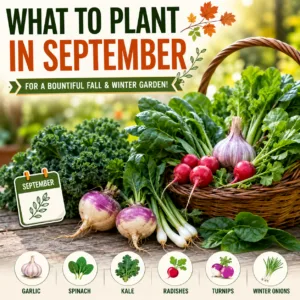
As summer’s intense heat begins to fade, September opens up one of the most rewarding planting windows of the entire gardening season. Cool-season crops thrive in temperate autumn weather, face far fewer insect pests, and often develop richer, sweeter flavors as chilly nights trigger plants to convert starches into natural sugars.
Planting these 9 hardy vegetables in September ensures fresh harvests throughout the autumn months and well into winter.
1. Garlic: The Autumn Essential
-
Why Plant in September: September is the primary planting window for garlic. Burying cloves in late summer to early fall allows root systems to establish deep into the soil before the ground freezes, setting up large, multi-clove heads for summer harvest next year.
-
How to Plant: Separate a whole bulb into individual cloves just before planting. Insert each clove pointed-end up, roughly 2 inches deep and 6 inches apart, in loose, compost-rich soil. Cover with a thick layer of straw mulch to insulate the roots through winter.
2. Spinach: Sweet & Cold-Loving
-
Why Plant in September: Spinach is prone to premature bolting during the heat of summer, but it thrives in the brisk air of early autumn, producing lush, tender, and crinkled dark-green leaves.
-
How to Plant: Direct-sow seeds 1/2-inch deep in garden beds or container troughs. September-sown spinach matures in 35 to 45 days, and established plants can easily overwinter under a simple frost cover for an early spring harvest.
3. Radishes: The 30-Day Speed Crop
-
Why Plant in September: Round globe radishes are among the fastest-growing vegetables in the garden, maturing from seed to crisp, peppery harvest in just 25 to 30 days.
-
How to Plant: Sow seeds 1/2-inch deep and thin seedlings to 2 inches apart. Consistent soil moisture ensures the roots expand rapidly without becoming woody or excessively spicy before the first hard freeze.
4. Kale: Enhanced by Frost
-
Why Plant in September: Curly and dinosaur (Lacinato) kale varieties are virtually indestructible in cold weather. In fact, a light autumn frost triggers a natural chemical process in the leaves that reduces bitterness and enhances sweetness.
-
How to Plant: Transplant young starts or direct-sow seeds in rich soil. Harvest the outer lower leaves continuously to keep the central growing tip producing fresh greens all winter long.
5. Arugula: Fast-Growing Peppery Greens
-
Why Plant in September: Arugula germinates rapidly in warm late-summer soil and grows swiftly as autumn temperatures cool, preventing the leaves from turning excessively bitter or bolting to flower.
-
How to Plant: Scatter seeds across shallow containers or garden rows, lightly raking them in. Harvest young baby greens within 3 to 4 weeks to add a peppery crunch to fresh autumn salads.
6. Mâche (Corn Salad): The Ultimate Winter Green
-
Why Plant in September: Highly prized in European culinary gardens, mâche forms small, glossy green rosettes with a tender texture and mild, nutty flavor. It is one of the most cold-hardy salad greens available, easily surviving sub-freezing temperatures under light snow.
-
How to Plant: Direct-sow seeds in mid-to-late September. Keep the seedbed evenly moist until germination; mâche will produce gourmet salad greens through December and January.
7. Turnips: Nutritious Roots & Greens
-
Why Plant in September: Fast-growing purple-top turnips provide a dual harvest: nutritious, tender green tops and sweet, crisp root bulbs ready for hearty autumn stews in 45 to 55 days.
-
How to Plant: Direct-sow seeds thinly in loose soil. Thin seedlings early so developing root bulbs have ample room to swell into round, tender globes.
8. Collard Greens: The Cold-Tolerant Staple
-
Why Plant in September: Collard greens handle both lingering late-summer warmth and freezing autumn nights with ease. The broad, thick blue-green leaves develop a tender texture and rich, sweet flavor after encountering fall frost.
-
How to Plant: Set out transplants or direct-sow seeds in full sun. Space plants 12 to 18 inches apart to allow the large leaves to fan out fully.
9. Winter Onions & Scallions: Continuous Clippings
-
Why Plant in September: Bunching scallions and cold-hardy winter onions establish dense root clusters quickly during September. They provide crisp green stems for cooking all fall and survive the winter to surge back in early spring.
-
How to Plant: Plant sets or sow seeds in well-drained raised beds or deep pots. Trim green tops as needed, leaving the base rooted in the soil for continuous regrowth.
Key Tips for a Thriving Fall Garden
-
Know Your First Frost Date: Calculate your local average first fall freeze date to select crop varieties that can reach maturity within your remaining growing window.
-
Apply Heavy Mulch: Lay down 2 to 3 inches of shredded autumn leaves, clean straw, or untreated wood shavings around plant bases to retain soil heat and prevent frost heave.
-
Use Simple Row Covers: Keep floating row covers or clear plastic tunnels on hand to drape over beds during sudden overnight cold snaps, extending your fresh harvest deep into the winter.