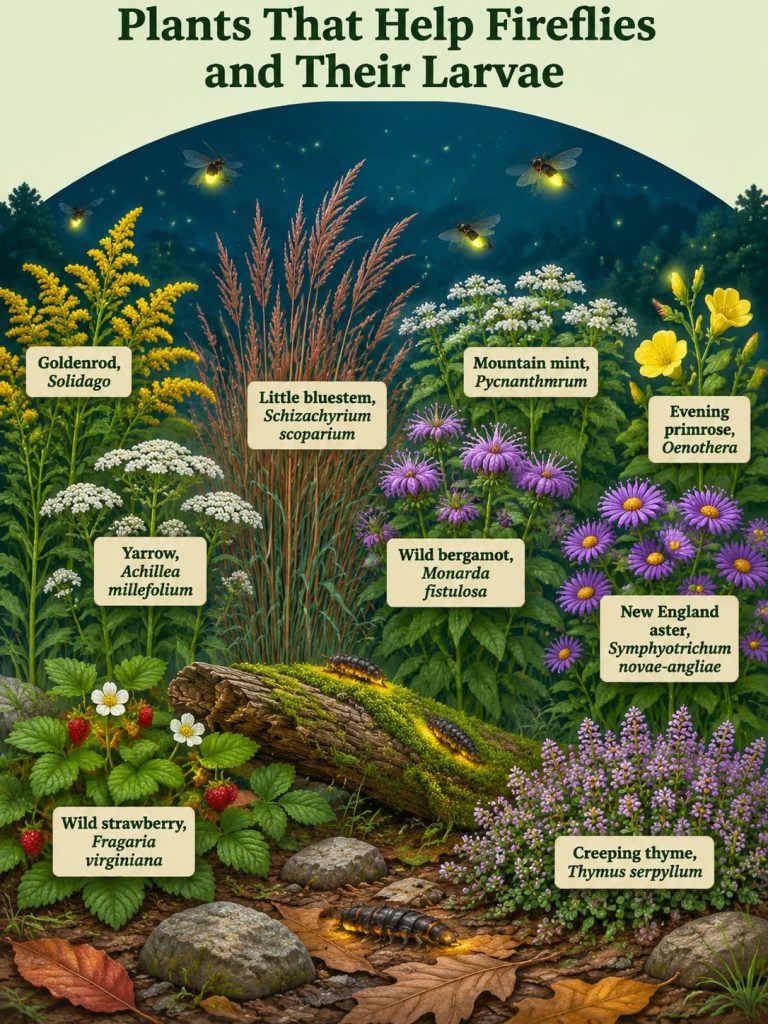
Why Fireflies Need More Than Pretty Flowers
If you have ever stood on a warm summer evening watching fireflies blink across the lawn, you already know how special they are. Many gardeners assume that a firefly-friendly yard means planting bright flowers for the adults. The truth is more practical. Most adult fireflies live only a few weeks, and many of them barely eat at all. Their real story unfolds underground and under leaves, where their larvae can spend up to two years before they ever light up.
That means the most useful thing you can do for fireflies is often the least glamorous: leave some natural cover in place and change how you mow. In this guide, you will learn how the firefly life cycle works, how to build a habitat that larvae can use, and which everyday habits make the biggest difference.
Understanding the Firefly Life Cycle
Fireflies are beetles, and their lives follow a pattern of egg, larva, pupa, and adult. Females lay eggs in or near damp soil, leaf litter, or low vegetation. The larvae that hatch are predators, feeding on soil-dwelling invertebrates such as slugs, snails, worms, and insect larvae. Many species are most active at night and spend a long stretch of their lives hidden in ground cover.
Adult fireflies have a different job. Their light is mainly used for courtship and mate finding. Because adult life is short, and many species do not feed much as adults, the habitat you create should support the larval stage first. Flowers still help with general biodiversity, but they are not the core of firefly conservation.
The exact length of the larval stage varies by species and climate. Many species spend one to two years developing, and some may take longer in cooler regions. The key point is that a firefly yard is a long-term home, not a short-term display.
Change How You Mow
Mowing is one of the biggest factors in whether fireflies can survive on your property. Frequent, close mowing removes ground cover, exposes larvae to drying sun and predators, and destroys the moist microhabitat they depend on.
Practical Mowing Changes
- Raise your mower deck to about 3 to 4 inches for lawn grass, so the blades leave a taller canopy for shelter.
- Reduce mowing frequency in the warmer months, especially in the evening hours when adults are active.
- Leave a border of tall grass and wildflowers along fence lines, the edges of woods, or the back of the yard.
- Avoid mowing or raking in late summer and fall, when eggs and larvae are most likely to be present near the surface.
You do not have to convert the entire lawn at once. Start with one strip or corner. Once you see fewer bare patches and more lingering ground cover, you can expand the unmowed area over several seasons.
Leave Leaf Litter Where It Falls
Leaf litter acts like a blanket for the soil. It holds moisture, moderates temperature, and shelters the invertebrates that larval fireflies hunt. Instead of bagging every fallen leaf, try these steps:
- Rake leaves into a loose layer under shrubs, trees, and garden borders rather than removing them completely.
- Use shredded leaves as a mulch in flower beds, keeping a layer about 2 inches thick and pulling it back from plant stems to prevent rot.
- Leave fallen logs and small brush piles in a quiet corner of the yard.
Be sure to balance this with plant health. Thick, soggy leaves piled directly against crowns, stems, or the trunks of young trees can encourage disease. Keep layers loose and moderate in depth.
Reduce Light Pollution and Chemicals
Fireflies rely on visual signals, so bright outdoor lights can interfere with courtship. Use warm-toned, shielded fixtures aimed downward, and turn off unnecessary lights during the evening flashing season. Keep in mind that bright porch lights and floodlights can make it harder for fireflies to find each other.
Pesticides are another major risk. Broad-spectrum insecticides can kill larvae and adults and reduce the prey that larvae need. If you must treat a pest problem, identify the pest first, then choose the least disruptive option and apply it precisely rather than broadcasting it across the lawn.
Common Mistakes to Avoid
- Cutting everything down in fall. Hollow stems and leaf debris often shelter overwintering insects, so wait until spring to clean up beds.
- Assuming wildflowers alone will attract fireflies. Without damp, undisturbed ground cover, larvae will not survive.
- Overwatering to keep the yard green. Excessive irrigation can wash away habitat and encourage problems, while very dry conditions reduce prey and soil moisture. Aim for consistent moisture rather than soaking.
- Using bright lights on the patio all night. This is one of the fastest ways to disrupt courtship in a small yard.
Adapting to Your Region
Firefly species differ across the United States, and so do the conditions that support them. In humid areas of the Southeast and Midwest, leaf litter tends to stay moist longer, which benefits larvae. In drier regions of the West, focus on shaded, moisture-retaining spots such as beneath shrubs and near water features. Northern gardeners may see fewer fireflies overall, but a quiet, unmowed corner can still make a meaningful difference.
USDA hardiness zones describe winter cold tolerance, not rainfall, humidity, or soil moisture, so they are not a direct guide to firefly habitat. Your local extension office can offer region-specific advice on native plants, leaf management, and local firefly species.
Your Next Step This Weekend
You do not need a large project to get started. This weekend, raise your mower deck, leave one corner of the yard unmowed, and gather a loose layer of leaves under a shrub or tree. Turn off one unnecessary outdoor light after dark. Then watch the space over the coming seasons. Patience is part of the process, and the reward of a yard that glows softly on summer evenings is well worth the wait.