Imagine a thriving garden where plants support each other, naturally deterring pests without the need for synthetic sprays. This isn’t just a dream; it’s the art and science of companion planting, a time-honored technique that transforms your garden into a balanced ecosystem. If you’ve ever felt frustrated by garden invaders or wished for a more sustainable way to protect your precious plants, you’re in the right place. By strategically pairing certain herbs and flowers with your vegetables, you can create a healthier, more resilient garden that practically manages itself.
Companion planting is more than just aesthetics; it’s a powerful tool in your gardening arsenal. It leverages the natural interactions between different plant species to provide a myriad of benefits, from enhancing growth and flavor to improving soil health. Most notably, it’s a fantastic natural method for deterring common garden pests. Let’s explore some of the easiest and most effective companion plants you can integrate into your garden this season to foster a vibrant, productive, and naturally pest-resistant space.
Understanding the Magic of Companion Planting for Pest Control
At its heart, companion planting for pest control works through several mechanisms. Some plants emit scents that confuse or repel pests, making it harder for them to locate their preferred host plants. Others act as ‘trap crops,’ luring pests away from more valuable crops. Many companion plants also attract beneficial insects like ladybugs, lacewings, and parasitic wasps, which prey on common garden pests. By creating a diverse planting scheme, you break up monocultures and provide habitats for a wider range of organisms, leading to a more balanced and resilient ecosystem.
Six Essential Companion Plants for a Thriving Garden
1. Marigolds (Tagetes spp.)
Marigolds are perhaps the most famous companion plant, celebrated for their cheerful blooms and powerful pest-deterring properties. While several species exist, French Marigolds (Tagetes patula) are particularly effective.
- Hardiness: Annual in most USDA zones; some perennial varieties in zones 9-11.
- Plant type: Annual flower.
- Exposure: Full sun (at least 6 hours).
- Height: 6-36 inches, depending on variety.
- Spread: 6-24 inches.
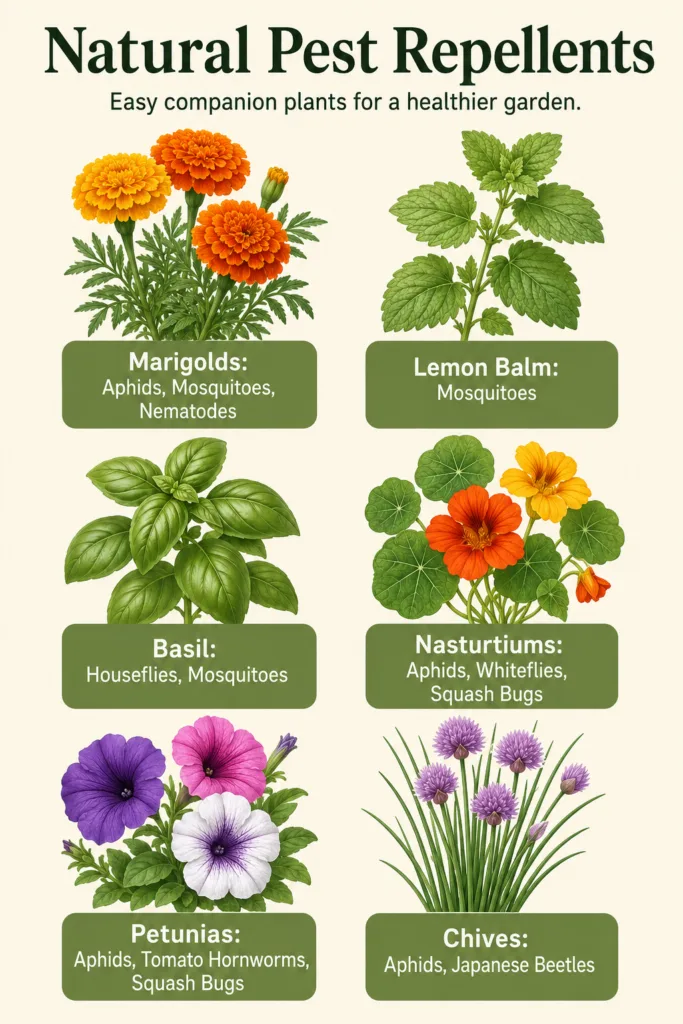
Pest Benefits: French Marigolds are renowned for repelling root-knot nematodes, microscopic soil worms that damage plant roots, especially tomatoes and potatoes. The roots release thiophenes, compounds toxic to these nematodes. Certain varieties can also deter whiteflies and other common garden pests with their strong aroma, and some can act as a trap crop for slugs, diverting them from more desirable plants.
Practical Tip: Plant French Marigolds generously around tomatoes, peppers, potatoes, and roses. Deadhead spent blooms to encourage continuous flowering.
2. Lemon Balm (Melissa officinalis)
A member of the mint family, lemon balm is a fragrant herb known for its bright, lemony scent and vigorous growth. It’s not just a delight for tea; it’s a powerful pest deterrent.
- Hardiness: Perennial in USDA zones 4-9.
- Plant type: Herbaceous perennial.
- Exposure: Full sun to partial shade.
- Height: 1-2 feet.
- Spread: 1-2 feet, can spread aggressively.
Pest Benefits: The strong citrusy aroma of lemon balm is particularly effective at repelling flying insects like mosquitoes and gnats, making your patio and garden more comfortable. Its flowers also attract beneficial pollinators.
Practical Tip: Due to its spreading nature, consider planting lemon balm in containers or in areas where its growth can be contained. Place pots near seating areas or garden entrances to maximize its repellent effects.
3. Basil (Ocimum basilicum)
More than just a culinary staple for Italian dishes, basil is a fantastic garden companion that can protect your vegetables while enhancing their flavor.
- Hardiness: Annual in all USDA zones.
- Plant type: Annual herb.
- Exposure: Full sun.
- Height: 1-2 feet.
- Spread: 1 foot.
Pest Benefits: Basil’s pungent aroma is thought to repel common garden pests such as flies and mosquitoes. Some gardeners also report success in deterring carrot flies and even asparagus beetles when planted nearby. It is famously a good companion for tomatoes, improving their growth and potentially deterring tomato hornworms.
Practical Tip: Plant basil alongside tomatoes, peppers, and in your herb garden. Pinch off flower buds regularly to encourage bushy growth and extend leaf production.
4. Nasturtiums (Tropaeolum majus)
These vibrant, easy-to-grow flowers are not only beautiful with their edible leaves and blossoms but also serve as excellent protectors for your vegetables.
- Hardiness: Annual in all USDA zones.
- Plant type: Annual flower/edible herb.
- Exposure: Full sun to partial shade.
- Height: Trailing varieties 6-12 inches, climbing up to 6 feet; Bush varieties 1-2 feet.
- Spread: 1-3 feet.
Pest Benefits: Nasturtiums are often used as a ‘trap crop’ for aphids, whiteflies, and squash bugs. These pests are highly attracted to nasturtiums, preferring them over nearby valuable crops like broccoli, cabbage, or squash. You can then monitor and remove pests from the nasturtiums, protecting your main harvest. They also attract beneficial insects.
Practical Tip: Plant nasturtiums around brassicas (cabbage, kale, broccoli) and squash plants. Regularly inspect your nasturtiums and prune any heavily infested parts to remove pests from your garden.
5. Petunias (Petunia x hybrida)
Known for their prolific blooms and cheerful colors, petunias are a popular choice for containers and flower beds, but they also offer practical pest control benefits.
- Hardiness: Annual in all USDA zones; perennial in zones 10-11 but usually grown as an annual.
- Plant type: Annual flower.
- Exposure: Full sun.
- Height: 6-18 inches, depending on variety.
- Spread: 1-3 feet.
Pest Benefits: Petunias are believed to deter a range of pests, including leafhoppers, aphids, and squash bugs, with their somewhat sticky foliage and distinct scent. Some gardeners also find them helpful near tomatoes to deter tomato hornworms. Their vibrant flowers also attract pollinators.
Practical Tip: Plant petunias along the edges of vegetable beds, especially near beans, tomatoes, and squash. Keep them well-watered and deadhead spent flowers to encourage continuous blooming.
6. Chives (Allium schoenoprasum)
A delicate member of the allium family, chives bring a mild onion flavor to your dishes and a protective aroma to your garden.
- Hardiness: Perennial in USDA zones 3-10.
- Plant type: Herbaceous perennial herb.
- Exposure: Full sun to partial shade.
- Height: 12-18 inches.
- Spread: 6-12 inches.
Pest Benefits: Like other alliums, chives emit a sulfurous compound that can deter a wide array of pests, including aphids, nematodes, and carrot rust flies. They are particularly beneficial when planted near carrots and roses, where they can help keep these common pests at bay. Chives are also reported to deter Japanese beetles from nearby plants.
Practical Tip: Plant chives near roses to help prevent black spot and deter aphids. Also, integrate them into beds with carrots, tomatoes, and fruit trees. Divide clumps every 3-4 years to maintain vigor.
General Companion Planting Tips for Success
To truly harness the power of companion planting, remember these practical tips:
- Diversify: Avoid planting large blocks of a single crop. Mix and match your companions throughout your garden beds.
- Observe and Adapt: Every garden is unique. Pay attention to what works best in your specific microclimate and with your soil conditions. Watch for pest activity and note which plant pairings seem most effective.
- Spacing: Ensure companion plants are spaced adequately so they don’t compete for light, water, or nutrients. They should complement, not hinder, each other’s growth.
- Soil Health: Companion planting works best in healthy, well-draining soil rich in organic matter. Good soil supports strong plants that are naturally more resistant to pests and diseases.
Common Mistakes to Avoid
While companion planting is incredibly beneficial, it’s not a magic bullet. Avoid these common pitfalls:
- Expecting Total Pest Eradication: Companion planting reduces pest pressure; it rarely eliminates all pests. It’s part of an integrated pest management strategy, not a guaranteed one-and-done solution.
- Ignoring Plant Needs: Always ensure each plant in your pairing receives its required sunlight, water, and nutrients. A stressed companion plant won’t be an effective helper.
- Overcrowding: Planting too many companions in a small space can lead to competition, poor airflow, and even create hiding spots for pests.
- Not Rotating Crops: Even with companion planting, it’s wise to practice crop rotation for your main vegetable crops to prevent soil-borne diseases and persistent pest cycles.
Regional and Climate Considerations
The success of these companion plants can vary depending on your specific USDA Hardiness Zone and local climate. For example:
- Zones 3-5 (Cooler Climates): Plants like marigolds, basil, nasturtiums, and petunias are typically grown as annuals, planted after the last frost date. Chives and lemon balm will be reliably perennial.
- Zones 6-8 (Temperate Climates): Most of these plants thrive here. Pay attention to summer heat; some basil varieties might bolt (go to seed) quickly.
- Zones 9-11 (Warmer Climates): Many ‘annuals’ might overwinter or behave as short-lived perennials. Watch for intense summer sun, which might require some afternoon shade for plants like basil and lemon balm.
Always check your local extension service for specific planting dates and cultivar recommendations tailored to your region’s unique growing conditions, including average last frost dates and soil temperatures.
Ready to Grow a Healthier Garden?
Embracing companion planting is a wonderful step towards a more resilient, sustainable, and enjoyable garden. By incorporating these six powerful plants into your landscape, you’re not just planting flowers and herbs; you’re cultivating a dynamic, living system that naturally protects itself. Start small, observe your results, and enjoy the beauty and bounty of a garden that works in harmony with nature. Happy planting!