Chia seeds have earned their superfood status for good reason. Packed with fiber, omega-3 fatty acids, protein, and essential minerals, these tiny powerhouses offer a wide array of health benefits. But beyond what they offer, have you ever considered if the timing of your chia seed consumption — before or with a meal — truly changes what you get from them?
It’s a common question among wellness enthusiasts: does a simple adjustment to *when* you enjoy chia seeds unlock different benefits? Just like scheduling a workout for optimal results, strategically incorporating chia seeds into your day might influence their impact on your satiety, digestion, and nutrient absorption. Let’s explore the science and practical applications behind timing your chia seed intake.
The Power of Chia Seeds: A Quick Recap
Before diving into timing, it’s worth a quick refresher on why chia seeds are so celebrated:
- Rich in Fiber: Supports digestive health, promotes satiety, and helps stabilize blood sugar.
- Omega-3 Fatty Acids: Particularly alpha-linolenic acid (ALA), beneficial for heart health and reducing inflammation.
- Plant-Based Protein: Contains all nine essential amino acids, making it a valuable source for vegetarians and vegans.
- Minerals: A good source of calcium, magnesium, and phosphorus, important for bone health.
- Antioxidants: Help protect the body from free radical damage.
Now, let’s look at how their timing might amplify these impressive qualities.
Option 1: Eating Chia Seeds Before a Meal
Imagine starting your meal feeling comfortably full, making healthier choices almost effortlessly. This is often the goal when consuming chia seeds before you eat.
How It Works
When chia seeds are soaked in liquid, they absorb up to 10-12 times their weight, forming a gel-like consistency. Consuming this gel before a meal introduces bulk into your stomach. This physically occupies space and slows down the digestive process, sending signals of fullness to your brain.
Ideal Scenarios & Benefits
- Appetite Control: The expanded chia gel can help reduce overall calorie intake by making you feel satiated, potentially aiding in weight management.
- Blood Sugar Regulation: By slowing down the absorption of carbohydrates from your subsequent meal, chia seeds may help prevent sharp spikes in blood sugar, beneficial for sustained energy levels.
- Improved Digestion: The fiber acts as a prebiotic, nourishing beneficial gut bacteria and promoting healthy bowel movements.
How to Prepare
The simplest way to enjoy chia seeds before a meal is to hydrate them. Aim to consume them about 15-30 minutes prior.
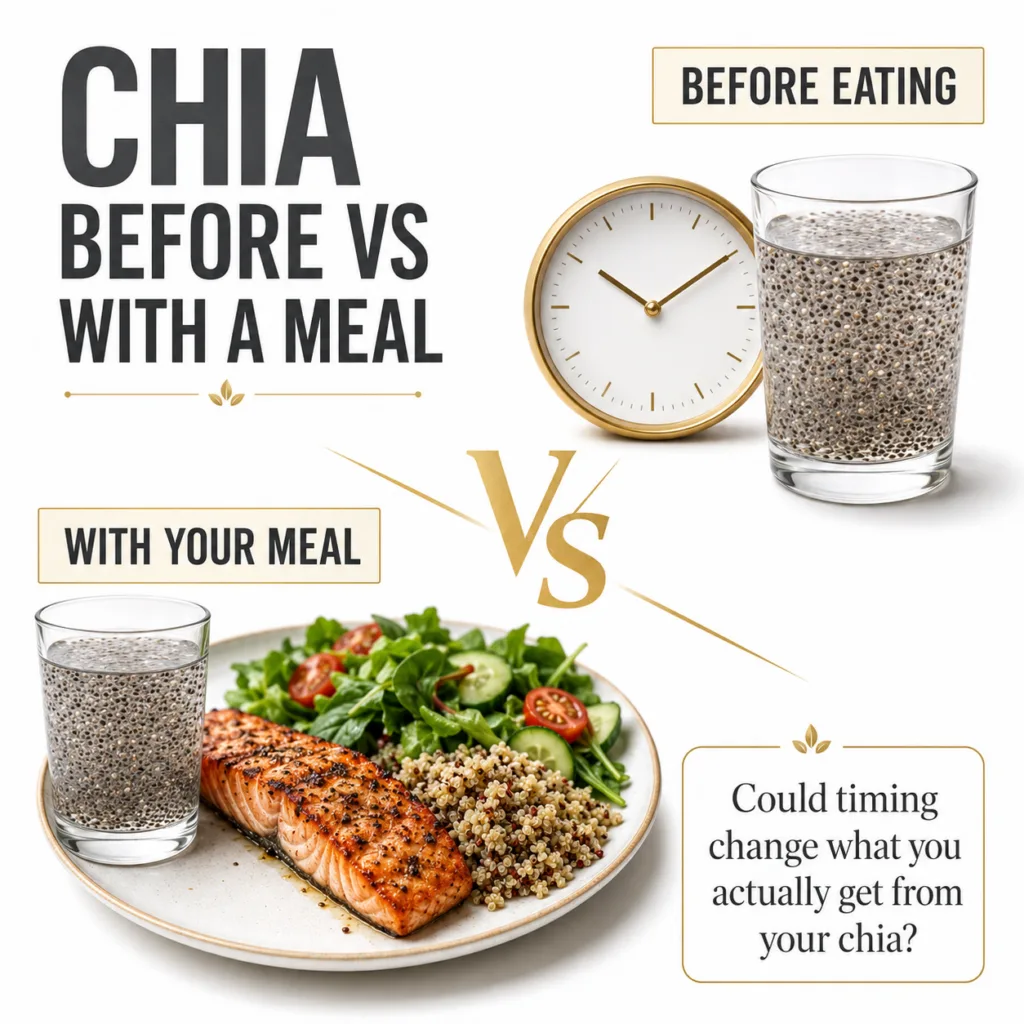 Hydrating chia seeds before a meal can help curb appetite.
- Chia Seed Water: Mix 1-2 tablespoons of chia seeds with 1 cup (240ml) of water. Stir well and let it sit for 15-20 minutes, or until it forms a gel. You can add a squeeze of lemon or lime for flavor.
- Small Chia Pudding: A small serving of plain chia pudding (made with water or unsweetened plant milk) can also serve this purpose.
Option 2: Incorporating Chia Seeds With Your Meal
Adding chia seeds directly to your meal is perhaps the most common way to enjoy them, seamlessly boosting the nutritional profile of your favorite dishes.
How It Works
When mixed with other foods, chia seeds integrate their fiber and nutrients directly into the meal matrix. This means the fiber works in tandem with the other components, potentially enhancing the overall digestive process and nutrient uptake of the entire meal.
Ideal Scenarios & Benefits
- Enhanced Nutrient Absorption: Especially when paired with healthy fats (like those in salmon or avocado), the omega-3s in chia seeds can aid in the absorption of fat-soluble vitamins (A, D, E, K) present in your meal.
- Sustained Energy: The fiber content helps to slow down the digestion and absorption of sugars from the entire meal, leading to a more gradual release of energy and preventing post-meal slumps.
- Improved Digestive Health: Adding fiber to your meal supports regularity and a healthy gut microbiome, contributing to overall digestive wellness.
- Added Texture and Flavor: Chia seeds add a subtle crunch and nutty flavor that can elevate your culinary experience.
How to Incorporate
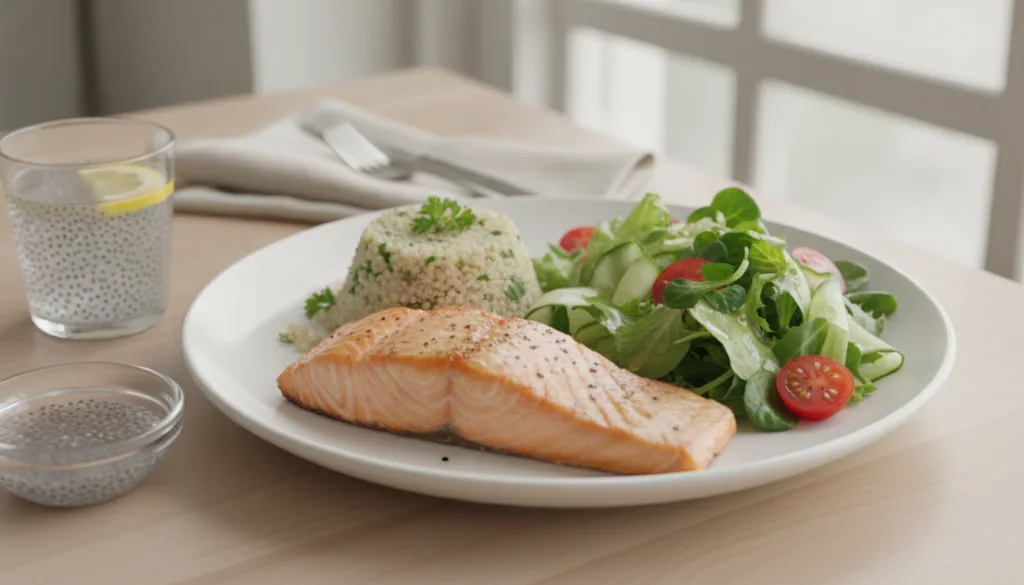 Adding chia seeds to your meal can boost its nutritional value and texture.
Chia seeds are incredibly versatile and can be sprinkled into almost anything:
- Salads: Sprinkle 1 tablespoon over your lunch or dinner salads for extra fiber and crunch.
- Yogurt or Oatmeal: Mix 1-2 tablespoons into your morning yogurt or overnight oats.
- Smoothies: Blend 1-2 tablespoons into your favorite smoothie for added thickness and nutrients.
- Baked Goods: Incorporate into muffins, breads, or energy bars.
- Main Dishes: Stir into stir-fries, stews, or even a healthy salmon and quinoa bowl, as shown in the infographic.
So, Does Timing Really Matter?
The short answer is: yes, the timing can subtly shift the primary benefits you experience from chia seeds. However, it’s not a matter of one timing being inherently