Dreaming of a garden that looks like it belongs on the cover of a magazine, but without the daunting price tag or endless maintenance? Many gardeners believe a truly stunning landscape requires a huge investment of time, money, or expertise. The truth is, you absolutely can achieve that polished, luxurious aesthetic with plants that are surprisingly robust, adaptable, and simple to care for. It’s all about making smart choices that deliver maximum impact for minimal effort.
In this guide, we’ll explore ten garden plants that effortlessly elevate your outdoor space, offering sophisticated beauty without demanding constant attention. You’ll gain practical insights into their care, helping you create a garden that not only looks expensive but also provides lasting joy and a sense of accomplishment.
The Secret to Effortless Elegance: Right Plant, Right Place
The core principle behind a beautiful, easy-care garden is selecting the right plant for the right location. This means understanding a plant’s fundamental needs—like sunlight, soil type, and water requirements—and matching them to your garden’s conditions. When plants are happy, they thrive, requiring less intervention from you. This foundational approach saves time, reduces pest and disease issues, and ensures your garden looks its best with minimal fuss. It’s the simplest way to achieve that ‘expensive’ look without a team of landscapers.
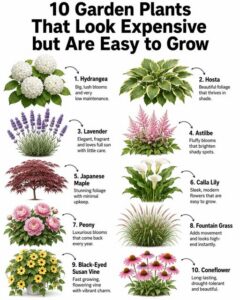
10 Luxurious-Looking, Easy-Care Garden Plants
1. Hydrangea (Hydrangea spp.)
Hydrangeas are synonymous with classic garden elegance, offering massive, show-stopping blooms in a range of colors from pure white to vibrant blues and pinks. Their lush foliage and abundant flowers create an instant sense of grandeur.
- Hardiness: USDA Zones 3–9, depending on species and cultivar.
- Plant type: Deciduous shrub.
- Exposure: Partial sun (morning sun, afternoon shade is ideal).
- Height: 3–10 feet.
- Spread: 3–10 feet.
Practical Care Tip: For most bigleaf (H. macrophylla) and smooth (H. arborescens) hydrangeas, consistent moisture is key, especially during dry spells. Mophead and lacecap varieties often bloom on old wood, so prune immediately after flowering to avoid sacrificing next year’s blooms. Oakleaf (H. quercifolia) hydrangeas offer fantastic fall color and exfoliating bark, requiring little pruning beyond shaping.
2. Hosta (Hosta spp.)
Hostas are the undisputed queens of shade gardens, prized for their incredible diversity in leaf shape, size, color, and texture. From massive blue-green leaves to delicate variegated ripples, they bring a rich, tropical understory feel that looks incredibly sophisticated.
- Hardiness: USDA Zones 3–9.
- Plant type: Perennial.
- Exposure: Partial to full shade (variegated varieties can often handle more sun).
- Height: 6 inches–3 feet.
- Spread: 1–5 feet.
Practical Care Tip: Plant hostas in rich, well-draining soil and ensure consistent moisture. A thick layer of mulch will help retain soil moisture and suppress weeds. Watch out for slugs and snails, which can be deterred with traps, hand-picking, or organic slug baits.
3. Japanese Maple (Acer palmatum)
With their delicate, often deeply lobed leaves and graceful branching structure, Japanese Maples are living sculptures that provide year-round interest. Their foliage bursts with vibrant colors in spring, offers soothing greens or reds in summer, and explodes into fiery hues in autumn, making them a stunning focal point.
- Hardiness: USDA Zones 5–9.
- Plant type: Deciduous tree or large shrub.
- Exposure: Partial sun to full sun (avoid hot afternoon sun in warmer climates).
- Height: 6–25 feet.
- Spread: 6–20 feet.
Practical Care Tip: Plant in well-draining, slightly acidic soil. Provide consistent moisture, especially during establishment and dry periods. Protect from strong winds and intense afternoon sun to prevent leaf scorch. Minimal pruning is usually required, mainly to remove dead or crossing branches.
4. Peony (Paeonia spp.)
Peonies are classic garden treasures, renowned for their enormous, fragrant blooms that signal the arrival of late spring and early summer. Their luxurious, ruffled petals in shades of pink, red, white, and yellow create an undeniable focal point of opulent beauty.
- Hardiness: USDA Zones 3–8.
- Plant type: Perennial (herbaceous) or shrub (tree peony).
- Exposure: Full sun (at least 6 hours).
- Height: 2–4 feet.
- Spread: 2–4 feet.
Practical Care Tip: Plant peony roots (with eyes facing up) no more than 1-2 inches deep; planting too deeply is the most common reason for lack of blooms. Provide well-draining soil and support for their heavy flowers to prevent them from flopping over in rain or wind. They are incredibly long-lived once established.
5. Fountain Grass (Pennisetum alopecuroides)
Ornamental grasses like Fountain Grass add movement, texture, and a contemporary flair to any garden. Their arching foliage and fluffy, bottlebrush plumes catch the light beautifully, creating a dynamic and sophisticated backdrop for other plants.
- Hardiness: USDA Zones 5–9.
- Plant type: Perennial grass.
- Exposure: Full sun.
- Height: 2–4 feet.
- Spread: 2–3 feet.
Practical Care Tip: Plant in full sun with well-draining soil. Fountain Grass is drought-tolerant once established and requires very little maintenance beyond cutting back the foliage to about 4-6 inches in late winter or early spring before new growth appears.
6. Lavender (Lavandula angustifolia)
Lavender offers a sensory feast with its captivating fragrance, delicate purple flower spikes, and silvery-green foliage. It evokes images of tranquil Mediterranean landscapes, bringing a touch of refined elegance and a calming aroma to your garden.
- Hardiness: USDA Zones 5–9 (some varieties hardier or less so).
- Plant type: Evergreen sub-shrub/perennial.
- Exposure: Full sun.
- Height: 1–3 feet.
- Spread: 1–3 feet.
Practical Care Tip: Lavender thrives in full sun and well-draining, even poor, soil. It dislikes wet feet, so avoid overwatering. Prune after the first flush of flowers to encourage rebloom and maintain a tidy, compact shape. A more significant shaping prune in early spring can rejuvenate older plants.
7. Boxwood (Buxus sempervirens)
For classic structure and formality, Boxwood is unparalleled. Its dense, small, evergreen leaves create perfectly manicured hedges, elegant borders, or sophisticated topiary, providing year-round green architecture that looks undeniably high-end.
- Hardiness: USDA Zones 5–8 (some varieties to 4).
- Plant type: Evergreen shrub.
- Exposure: Full sun to partial shade.
- Height: 2–10 feet (depends on variety and pruning).
- Spread: 2–10 feet.
Practical Care Tip: Plant in well-draining soil and provide consistent moisture during establishment. Boxwoods benefit from a light shearing once or twice a year to maintain their shape, typically in late spring after new growth hardens, and again in late summer if needed. Avoid heavy pruning in late fall, which can encourage new growth susceptible to winter damage.
8. Black-Eyed Susan (Rudbeckia hirta)
Bringing cheerful, vibrant splashes of color, Black-Eyed Susans are a staple for a reason. Their bright yellow or orange petals with dark brown centers create a lively, naturalistic look that fills borders with abundant blooms, making the garden feel full and inviting.
- Hardiness: USDA Zones 3–9. Often grown as an annual, short-lived perennial, or biennial.
- Plant type: Perennial/biennial/annual.
- Exposure: Full sun.
- Height: 2–3 feet.
- Spread: 1–2 feet.
Practical Care Tip: These sun-loving beauties thrive in average, well-draining soil and are quite drought-tolerant once established. Deadhead spent flowers regularly to encourage continuous blooming throughout the summer and into fall. They readily self-seed, ensuring a continuous display in your garden.
9. Coneflower (Echinacea purpurea)
Coneflowers offer a sophisticated take on the classic daisy, with their distinctive central cones and often drooping petals in shades of purple, pink, white, and yellow. They are pollinator magnets and add a graceful, naturalistic touch to borders and meadows.
- Hardiness: USDA Zones 3–9.
- Plant type: Perennial.
- Exposure: Full sun to partial shade.
- Height: 2–4 feet.
- Spread: 1–2 feet.
Practical Care Tip: Plant coneflowers in full sun and well-draining soil. They are highly drought-tolerant once established. Deadhead spent blooms to encourage more flowers, or leave some for winter interest and to provide seeds for birds. Avoid over-fertilizing, which can lead to leggy growth.
10. Sedum (Hylotelephium spectabile or Sedum telephium)
Often referred to as Stonecrop, Sedum varieties offer incredible drought tolerance and architectural appeal. Their fleshy leaves and robust flower heads, which often change color through the season, provide striking texture and late-season interest when many other plants are fading.
- Hardiness: USDA Zones 3–9.
- Plant type: Perennial succulent.
- Exposure: Full sun.
- Height: 6 inches–2 feet.
- Spread: 1–2 feet.
Practical Care Tip: Sedums require full sun and excellent drainage; they will rot in consistently wet soil. They are virtually maintenance-free once established. Cut back dead flower stalks in late winter or early spring just before new growth emerges. They are fantastic in rock gardens, borders, and containers.
Common Mistakes to Avoid for an Effortless, Elegant Garden
Even with easy-care plants, a few common missteps can hinder your garden’s potential. Avoiding these can save you time and frustration:
- Ignoring Sunlight Needs: Placing a sun-loving plant in deep shade or a shade-lover in scorching sun will inevitably lead to stress, poor growth, and potential demise. Observe your garden’s light patterns throughout the day and year.
- Overwatering (or Underwatering): Most plants prefer consistent moisture but despise constantly soggy roots. Before watering, stick your finger an inch or two into the soil; if it feels dry, it’s likely time to water. Drought-tolerant plants, especially, suffer from too much water.
- Poor Soil Preparation: While many of these plants are adaptable, good drainage is crucial for almost all of them. Amending heavy clay soils with compost improves drainage and aeration, giving roots a healthy environment.
- Forgetting to Mulch: A 2-3 inch layer of organic mulch (like shredded bark or compost) around your plants is a game-changer. It conserves soil moisture, regulates soil temperature, and suppresses weeds, reducing your watering and weeding chores significantly.
Adapting to Your Climate: Regional Gardening Tips
The beauty of gardening in the United States lies in its diverse climates. While USDA Hardiness Zones provide a baseline for winter cold tolerance, remember to consider other factors:
- Zones 3-5 (Northern Climates): Prioritize selecting the hardiest cultivars. Ensure adequate winter protection for borderline perennials, such as a thick layer of mulch. Planting early in the season allows plants maximum time to establish before winter.
- Zones 6-8 (Temperate Climates): This broad range allows for a wide variety of plants. Pay attention to summer heat and humidity, which can affect some plants like Japanese Maples (preferring some afternoon shade). Ensure good air circulation to prevent fungal issues.
- Zones 9-11 (Southern/Warmer Climates): While winters are mild, intense summer heat and drought can be challenges. Select heat-tolerant varieties and consider providing afternoon shade or consistent irrigation during the hottest months. Focus on plants that thrive in longer growing seasons.
Local Cooperative Extension offices are invaluable resources for region-specific planting dates, pest advice, and cultivar recommendations.
Cultivate Your Dream Garden
Creating a beautiful, high-end garden doesn’t have to be complicated or costly. By choosing plants like Hydrangeas, Hostas, Japanese Maples, Peonies, and ornamental grasses, along with other elegant, easy-care varieties, you can build a stunning landscape that reflects your taste without consuming all your spare time. Embrace the principle of ‘right plant, right place,’ provide thoughtful care, and watch your garden transform into a luxurious haven. Get ready to enjoy the beauty and tranquility you’ve always dreamed of, with less effort and more joy.