Have you ever paused to consider how your usual sleep position might be quietly influencing your digestion? It’s a fascinating thought, isn’t it? For many of us, the way we settle down for the night is simply a habit, but a subtle shift in how you rest could potentially support greater comfort and a more restful night, especially when it comes to your digestive well-being.
We spend a significant portion of our lives asleep, and this time isn’t just for resting our minds; our bodies are busy with repair, rejuvenation, and, yes, digestion. While diet and lifestyle are primary players in digestive health, your sleep posture might be a lesser-known factor that deserves a closer look.
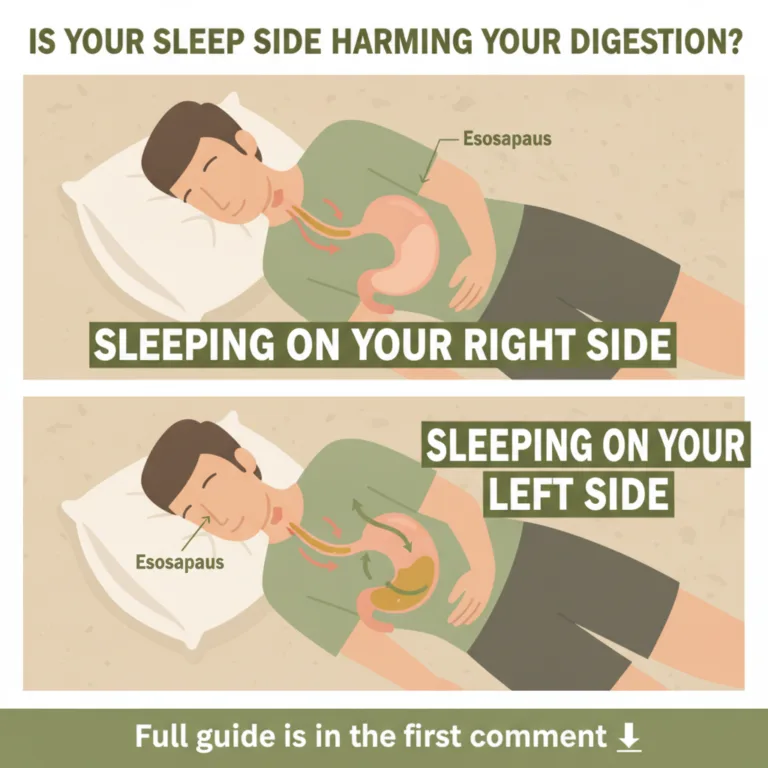
Understanding Digestion and Sleep
Our digestive system is a complex network that works tirelessly, even while we sleep. During the day, it processes food, absorbs nutrients, and eliminates waste. At night, while its activity slows, it continues to work on the food consumed earlier, and also focuses on repair and maintenance.
The position you adopt for several hours each night can influence how gravity interacts with your internal organs, potentially affecting the ease with which food moves through your digestive tract and how digestive juices flow.
The Potential Impact of Right-Side Sleep on Digestion
When you sleep on your right side, certain aspects of your anatomy come into play that may not be as conducive to optimal digestion for everyone. Here’s why:
- Stomach Position: Your stomach is shaped like a J, with the lower esophageal sphincter (LES) at the top and the pyloric sphincter at the bottom. When you lie on your right side, the stomach’s natural curve allows stomach acids to potentially pool against the LES, which is the valve that prevents stomach contents from flowing back into the esophagus. This might contribute to feelings of heartburn or acid reflux.
- Gravity’s Role: On your right side, gravity may work against the natural flow of digestion from the stomach into the small intestine, potentially slowing down the emptying of the stomach. This could lead to a feeling of fullness or discomfort.
- Bile and Pancreatic Juices: The bile duct and pancreatic duct both connect to the small intestine on the right side of the body. Some theories suggest that right-side sleeping could potentially impede the optimal flow of these important digestive fluids, though more research is needed in this area.
For individuals prone to acid reflux, heartburn, or general indigestion, sleeping on the right side might inadvertently exacerbate these symptoms. Many people report finding more relief when they switch to their left side.
Why Left-Side Sleep May Support Digestive Wellness
Conversely, sleeping on your left side may offer a more harmonious alignment for your digestive system:
- Gravity’s Ally: On the left side, gravity can become your ally. Your stomach and pancreas are positioned more favorably, potentially allowing food waste and digestive enzymes to move more smoothly through the stomach and into the small intestine. This can help support more efficient digestion and may reduce the likelihood of morning indigestion.
- Reduced Acid Reflux: Studies and anecdotal evidence suggest that sleeping on the left side can help reduce symptoms of heartburn and acid reflux. This is thought to be because the left-side position keeps the stomach contents below the esophagus’s opening, making it harder for acid to escape.
- Lymphatic Drainage: The body’s lymphatic system, which plays a crucial role in immunity and waste removal, primarily drains into the thoracic duct, located on the left side of the body. Sleeping on the left side may support more efficient lymphatic drainage, contributing to overall well-being.
Tips for Transitioning to Left-Side Sleep
If you’re a habitual right-side sleeper and want to explore the potential benefits of switching, here are a few gentle tips:
- Pillow Power: Place a body pillow behind your back to prevent you from rolling onto your right side. A pillow between your knees can also add comfort.
- Strategic Bedding: Try arranging your pillows or even a rolled-up blanket strategically to create a comfortable