One of the most rewarding moments in gardening is seeing a raised bed come alive not just with plants, but with balance. Leaves overlap without competing, insects buzz around flowers that protect nearby crops, and the soil stays healthy season after season. This harmony rarely happens by accident. It happens through companion planting, one of the oldest and most effective gardening tips used in organic gardening and sustainable farming.
There are several companion planting ideas for raised beds, showing how certain crops support each other when grown together. Whether you manage a backyard garden or a small homestead with livestock and poultry, companion planting can increase yields, reduce pest problems, and simplify daily farm care.
Let’s explore how these plant partnerships work and how they can transform your gardening routine into a thriving ecosystem.
What is Companion Planting?
Companion planting (aka intercropping) is the idea that growing a particular combination of vegetables, flowers, and herbs near one another in the garden can offer a number of symbiotic benefits to one or both of the plants. These compatible plants are considered “friends”, while other plants may be less compatible or antagonistic when planted together.
Potential benefits of companion planting include increased pollination, larger crop yields, improved nutrient cycling, and reduced disease and pest pressure – resulting in less need for pesticides and chemical fertilizers too. Companion planting also enhances biodiversity and beauty in the garden!
Why Companion Planting Works
Companion planting is built on a simple principle: plants influence each other. Some plants repel pests, others attract beneficial insects, and some improve soil conditions for their neighbors. By grouping crops thoughtfully, gardeners create natural defenses and healthier growth environments.
This approach fits perfectly with organic gardening and sustainable farming, because it reduces the need for chemical pesticides and synthetic fertilizers. Instead of treating problems after they appear, companion planting prevents them before they begin.
Raised beds are particularly well suited for this strategy. Their defined space allows careful planning and makes it easier to manage plant relationships.
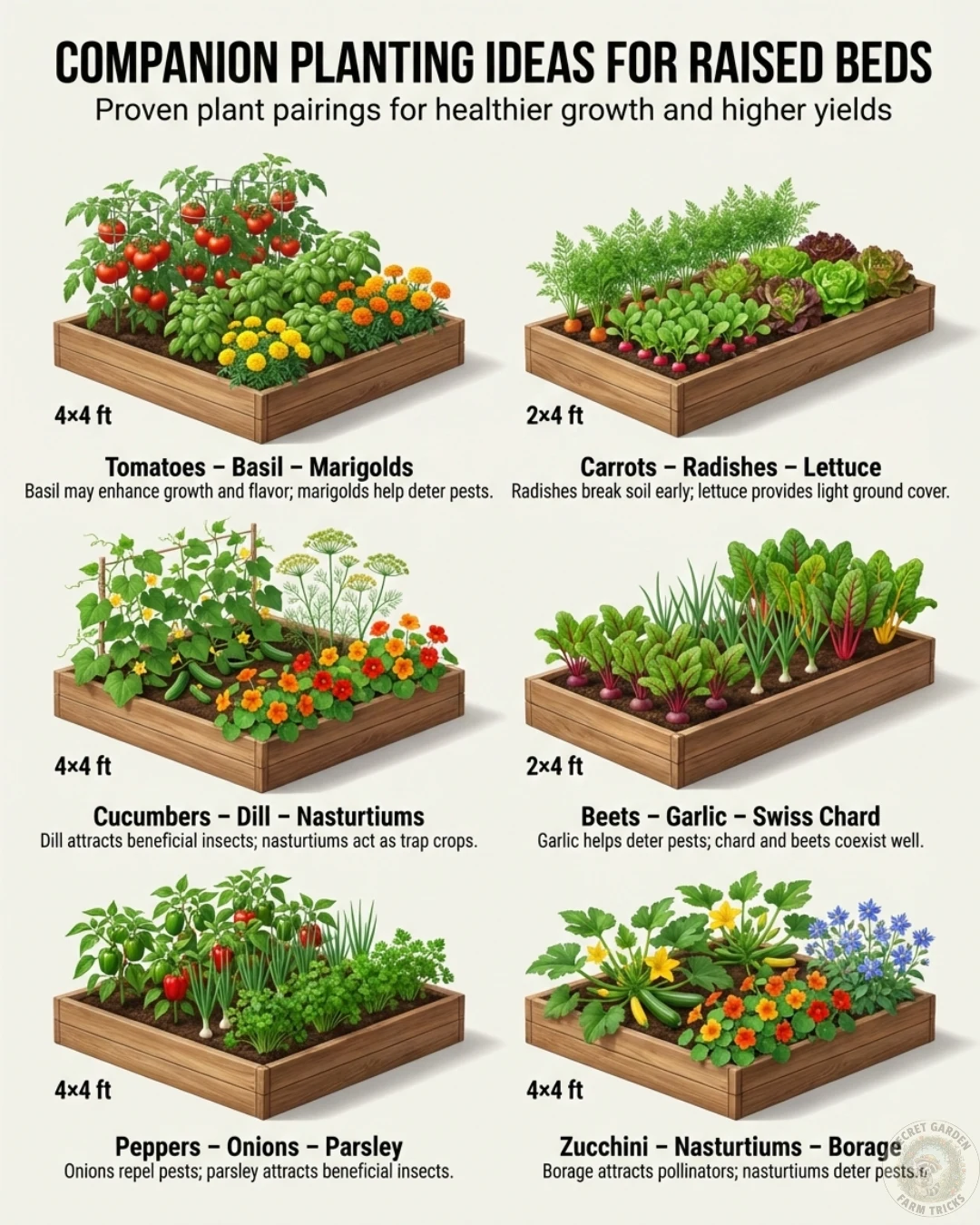
1. Tomatoes, Basil, and Marigolds: A Classic Garden Partnership
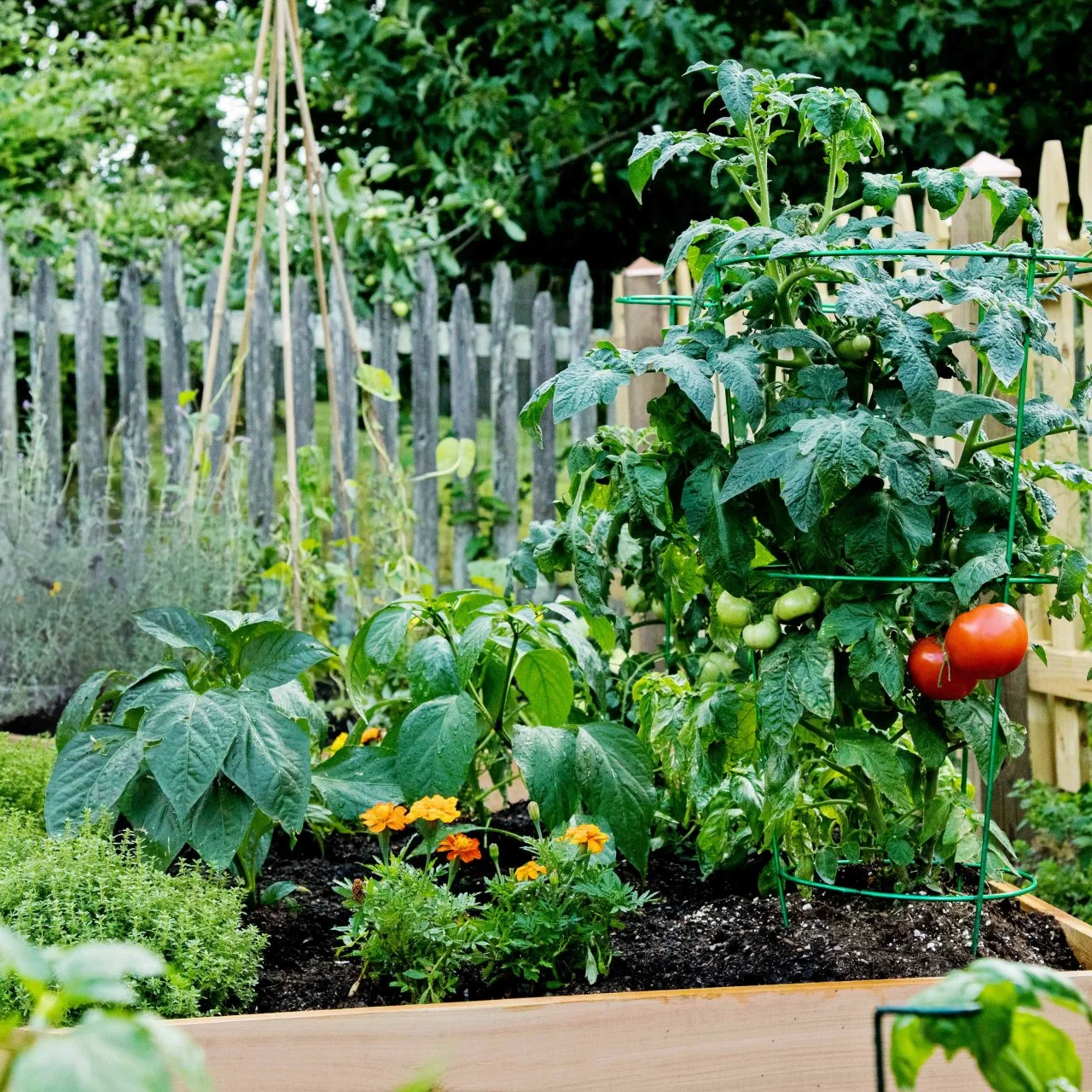
One of the most famous combinations in companion planting is tomatoes, basil, and marigolds.
Tomatoes thrive when grown alongside basil. Many gardeners believe basil enhances the flavor of tomatoes while also repelling insects such as thrips and whiteflies. Marigolds add another layer of protection. Their roots release compounds that discourage soil pests, and their flowers attract pollinators and beneficial insects.
In raised beds, this trio works beautifully because tomatoes grow vertically while basil and marigolds fill the surrounding space. This layered structure maximizes productivity in a small area—an essential principle in sustainable farming.
2. Carrots, Radishes, and Lettuce: A Smart Use of Space
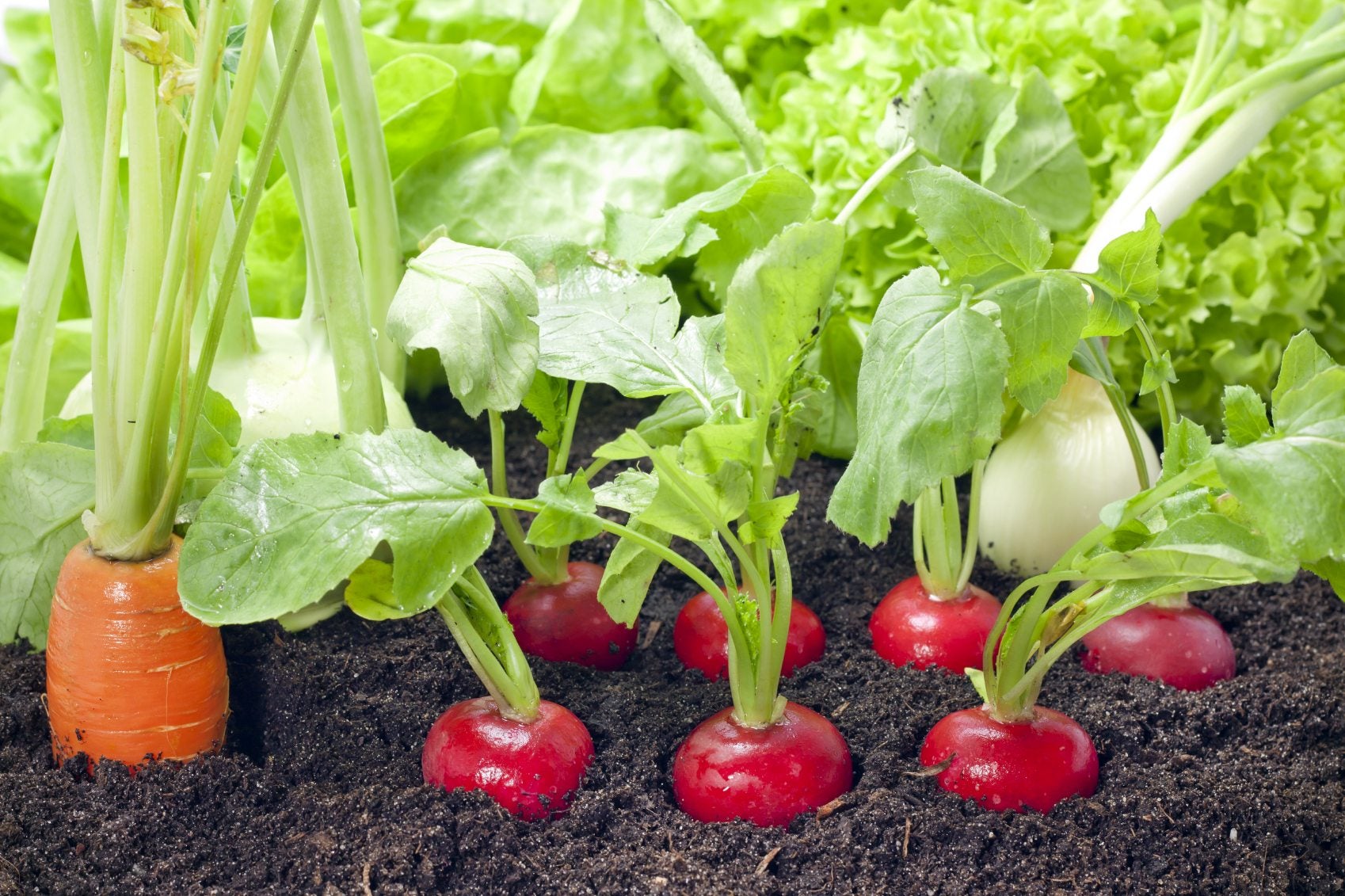
Another effective companion planting strategy involves carrots, radishes, and lettuce.
Radishes germinate quickly and help break up the soil as they grow. This loosens the ground for slower-growing carrots, which prefer soft soil for straight roots. Lettuce spreads across the surface, acting as a living mulch that shades the soil and conserves moisture.
This arrangement demonstrates an important gardening tip: pairing crops with different growth speeds and root depths allows you to harvest multiple crops from the same bed without overcrowding.
For small farms practicing efficient land use, these layered plantings can significantly increase harvest productivity.
3. Cucumbers, Dill, and Nasturtiums: Natural Pest Control
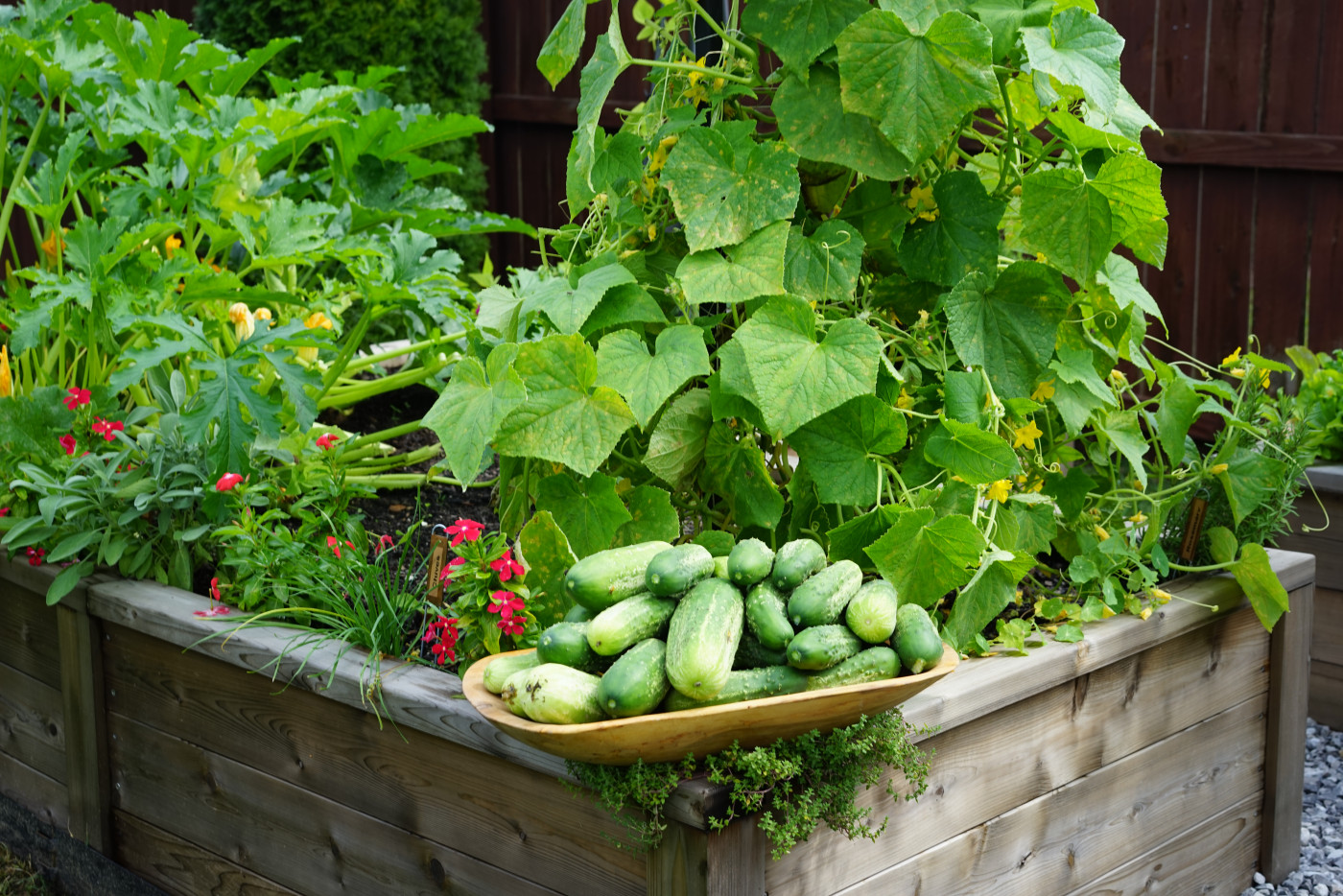
Cucumbers often struggle with pests such as aphids and beetles. Companion planting offers a natural solution.
Dill attracts beneficial insects like ladybugs and parasitic wasps, which feed on common garden pests. Nasturtiums serve as trap crops—drawing harmful insects away from cucumbers.
This partnership is especially valuable for gardeners committed to organic gardening. Instead of spraying pesticides, you create a habitat where beneficial insects do the work for you.
In raised beds, cucumbers can also be trained up trellises, leaving room beneath for dill and nasturtiums to spread.
4. Beets, Garlic, and Swiss Chard: Soil-Friendly Companions
Some plant pairings work because they coexist peacefully without competing for nutrients.
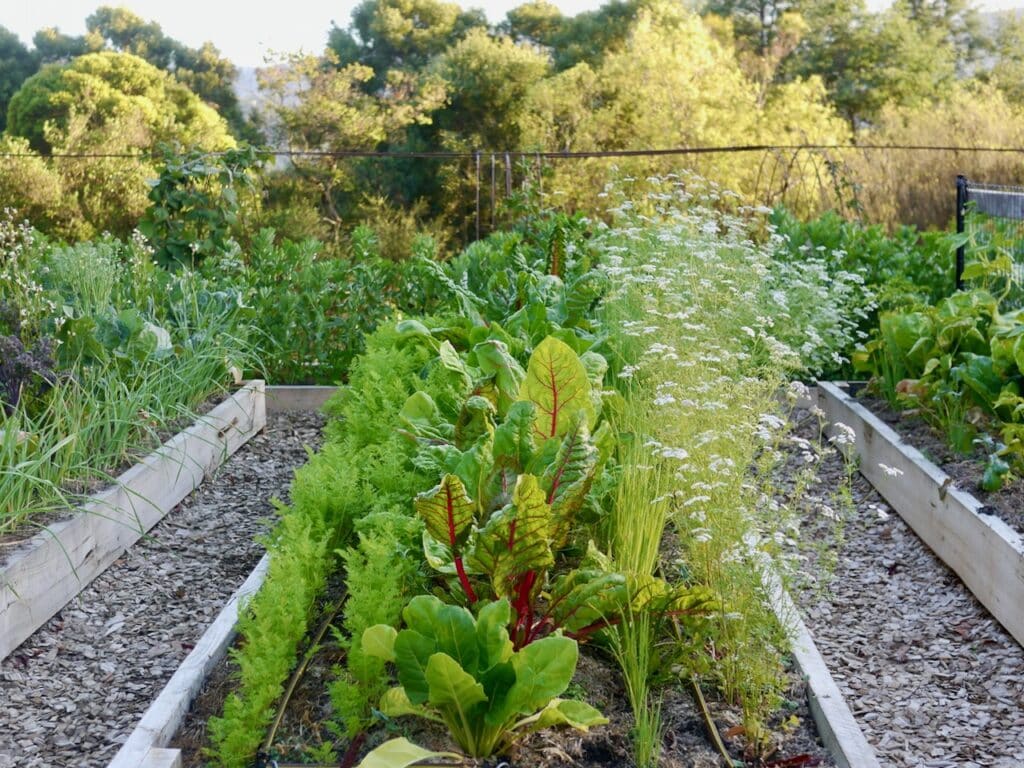
Beets, garlic, and Swiss chard share similar soil preferences and grow well together in compact spaces. Garlic provides an added benefit by repelling certain insects and fungal issues.
These crops also have complementary root systems. Beets develop below ground, chard grows leafy greens above, and garlic uses vertical space efficiently.
Such combinations are valuable for gardeners focused on sustainable farming practices, because they maintain soil health while producing diverse harvests.
5. Peppers, Onions, and Parsley: Protection and Pollination
Peppers are another crop that benefits greatly from companion planting.
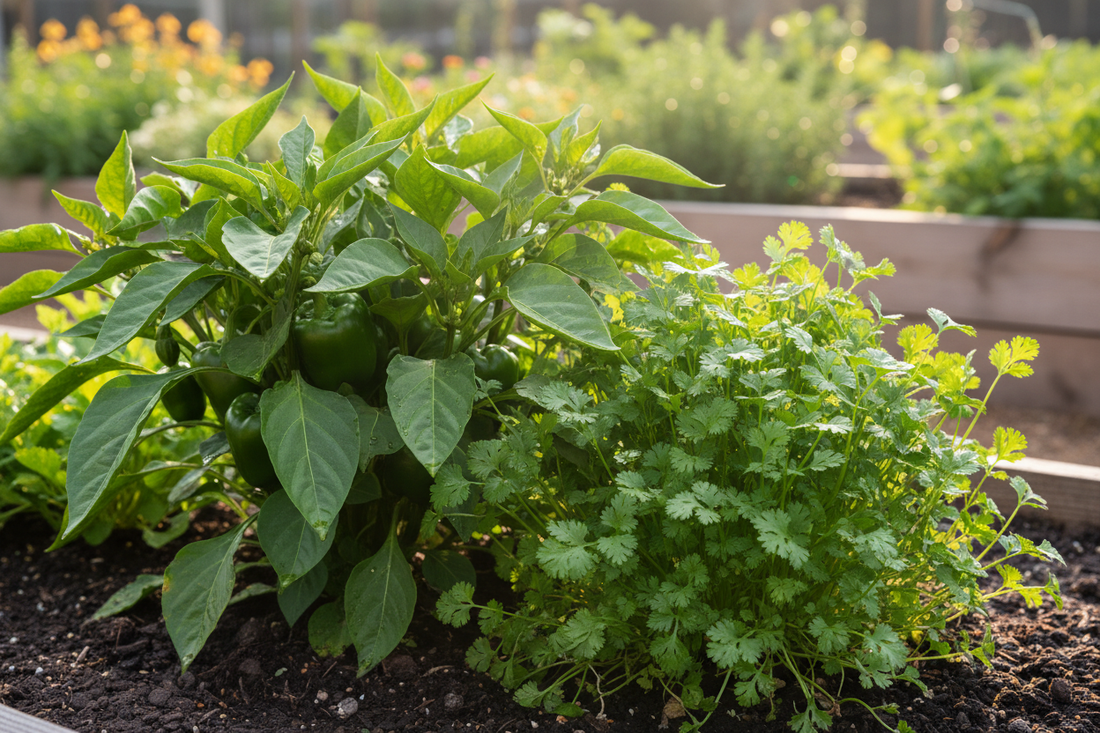
Onions release strong natural compounds that repel pests such as aphids and beetles. Parsley attracts beneficial insects, improving pollination and supporting garden biodiversity.
In raised beds, peppers form the central crop while onions and parsley occupy the surrounding space. This balanced planting design helps maintain plant health while maximizing production.
Farmers who grow vegetables for both family consumption and livestock feed often find these integrated beds particularly efficient.
6. Zucchini, Nasturtiums, and Borage: Supporting Pollinators
Pollinators are essential for crops like zucchini. Without bees and other pollinating insects, fruit production can drop dramatically.
Borage is famous for attracting bees, making it one of the most valuable companion plants in the garden. Nasturtiums help deter pests while adding vibrant color and edible flowers.
When planted alongside zucchini in raised beds, these companions create an environment that encourages pollination and discourages harmful insects.
For sustainable farming systems, supporting pollinators benefits not only vegetable crops but also fruit trees and pasture plants.

Integrating Companion Planting with Livestock Management
Gardening and livestock management are closely connected on many farms. Companion planting can support this relationship.
For example:
- Chickens can forage around raised beds, eating insects without damaging crops.
- Vegetable trimmings can supplement poultry feed.
- Compost made from animal bedding enriches raised bed soil.
These cycles are central to sustainable farming. Healthy soil grows healthy crops, which feed animals, whose manure returns nutrients to the soil.
The more integrated your system becomes, the more efficient and productive it will be.
Practical Gardening Tips for Raised Bed Companion Planting
If you’re planning your own raised beds, keep these simple guidelines in mind:
Plan before planting. Sketch your bed layout so taller plants do not shade smaller ones.
Mix flowers with vegetables. Many flowers attract beneficial insects and protect crops naturally.
Rotate crops yearly. This prevents soil depletion and reduces disease buildup.
Feed the soil regularly. Compost and organic matter keep companion plant systems productive.
These small habits build stronger gardens over time.
Creating a Thriving Garden Ecosystem
Companion planting reminds us that gardening is not about controlling nature it’s about cooperating with it.
When plants support each other, pest problems decrease, soil improves, and harvests increase. Raised beds become miniature ecosystems where every plant plays a role.
For gardeners and farmers alike, this approach strengthens both productivity and sustainability. It transforms daily work from routine maintenance into thoughtful stewardship of the land.
And as any experienced grower knows, the most satisfying harvests come not just from healthy plants but from a garden that works as a living, balanced system.