There’s a quiet shift happening in modern gardening. More farmers, homesteaders, and backyard growers are discovering that containers can sometimes outperform traditional garden beds. It might seem counterintuitive at first — after all, plants evolved in the ground. But with the right conditions, container gardening can create a controlled environment where plants thrive faster, cleaner, and more productively.
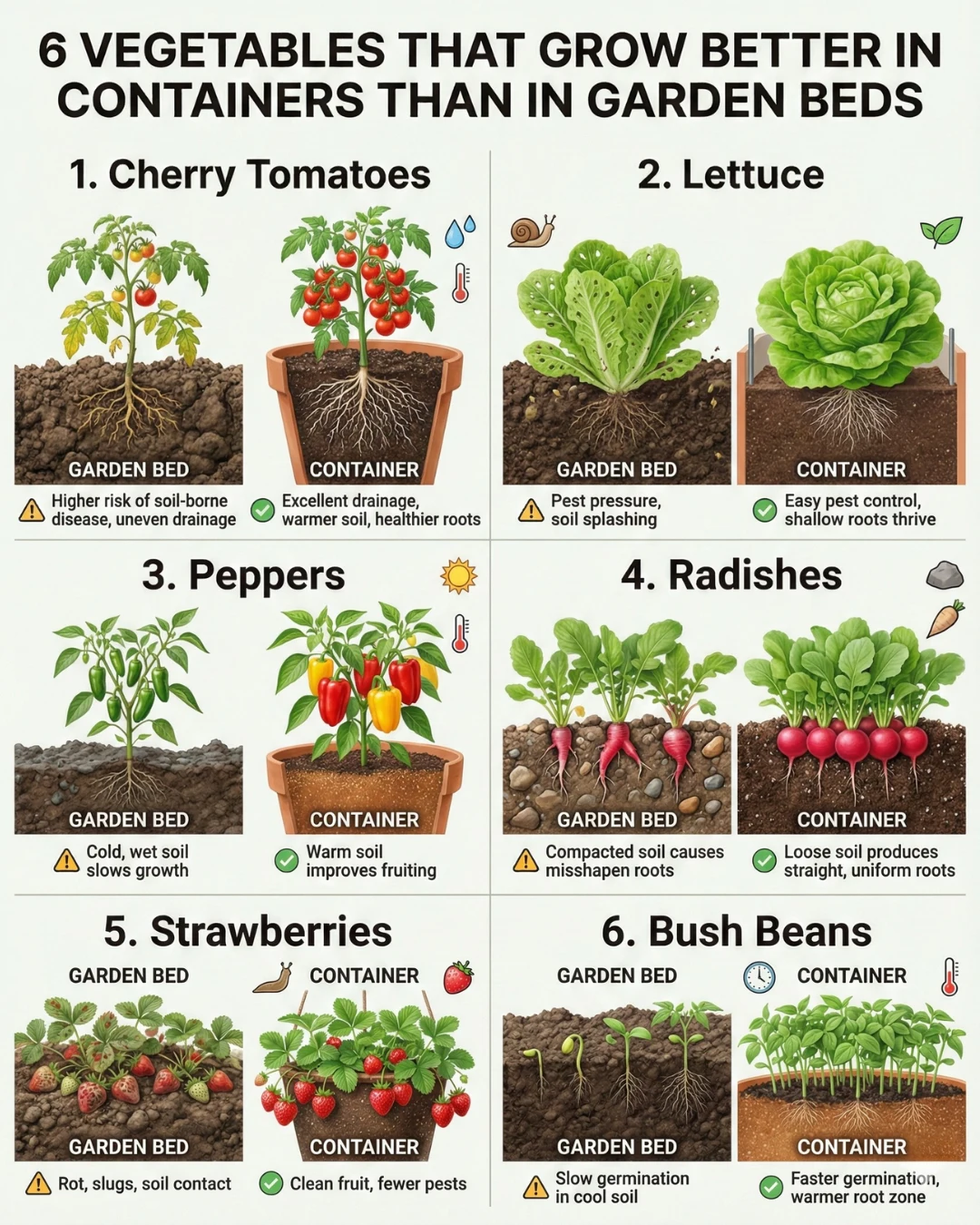
Here are six vegetables that often grow better in containers than in garden beds: cherry tomatoes, lettuce, peppers, radishes, strawberries, and bush beans. Understanding why these crops respond well to container environments can transform your gardening routine and even improve your broader farm care system.
When paired with thoughtful soil management, livestock integration, and sustainable farming practices, container gardening becomes more than a convenience — it becomes a powerful tool in building a resilient, productive homestead.
Why Container Gardening Works So Well
One of the most valuable gardening tips seasoned growers share is this: control leads to consistency.
Garden beds are exposed to many variables — compacted soil, uneven drainage, pests, temperature fluctuations, and soil-borne diseases. Containers allow growers to manage these variables more precisely.
Container gardening offers several advantages:
- Better drainage control
- Warmer soil temperatures in spring
- Reduced soil-borne disease risk
- Easier pest management
- Improved root-zone monitoring
For farmers practicing organic gardening and sustainable farming, containers also allow targeted fertilization and water management, reducing waste and improving plant health.
Cherry Tomatoes: Healthier Roots and Better Drainage
Cherry tomatoes are among the most rewarding container crops.
In traditional garden beds, tomatoes often struggle with uneven drainage or soil pathogens that accumulate over seasons. Containers allow growers to provide well-draining soil mixes, which protect roots from rot and encourage vigorous growth.
Another advantage is soil warmth. Containers warm faster in spring, giving tomatoes an early growth boost.
Practical Tips
- Use a container at least 5 gallons in size.
- Add compost-rich potting mix with perlite for drainage.
- Provide strong vertical support like cages or trellises.
- Water deeply but allow slight drying between watering.
Many small-scale farmers even place tomato containers near chicken coops where reflected warmth helps extend the growing season.

Lettuce: Easier Pest Control and Cleaner Leaves
Lettuce thrives in shallow soil and cool conditions, making it an ideal container crop.
In garden beds, lettuce is highly vulnerable to slugs, soil splashing, and pest pressure. Containers elevate the crop, reducing access for ground pests and keeping leaves clean.
Practical Tips
- Use wide, shallow containers with loose soil.
- Harvest outer leaves frequently to extend production.
- Place containers in partial shade during hot weather.
This approach aligns well with sustainable farming because it minimizes pesticide use while maintaining steady harvests.
.jpg)
Peppers: Warm Soil Means Better Fruit
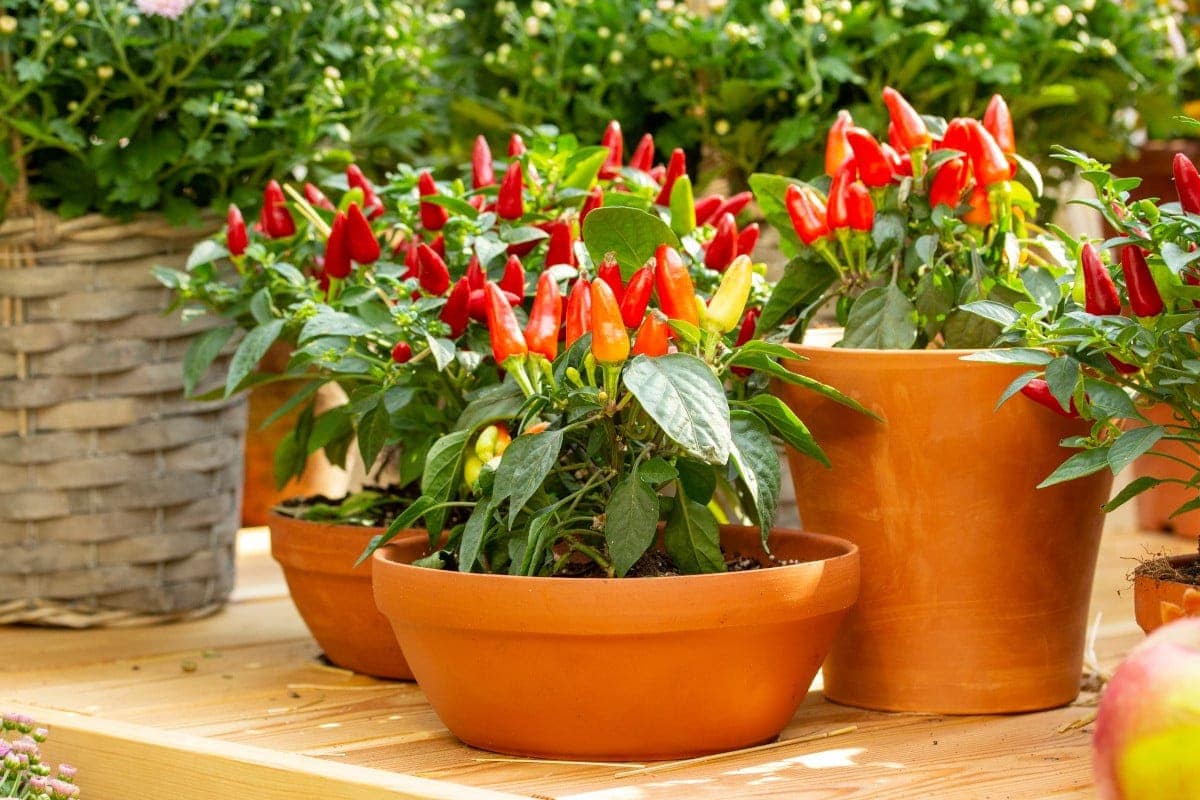
Peppers love warmth — both in the air and in the soil.
Garden beds often remain cool longer, slowing pepper growth. Containers warm more quickly, creating a root environment peppers prefer.
Warmer roots translate into stronger flowering and fruiting.
Practical Tips
- Choose dark containers that absorb heat.
- Use rich organic potting mix with compost.
- Provide 6–8 hours of sunlight daily.
- Fertilize lightly but regularly with balanced organic fertilizer.
On farms where livestock manure is composted, pepper containers can benefit from small amounts of well-aged manure mixed into the soil.
Radishes: Perfect Roots Need Loose Soil
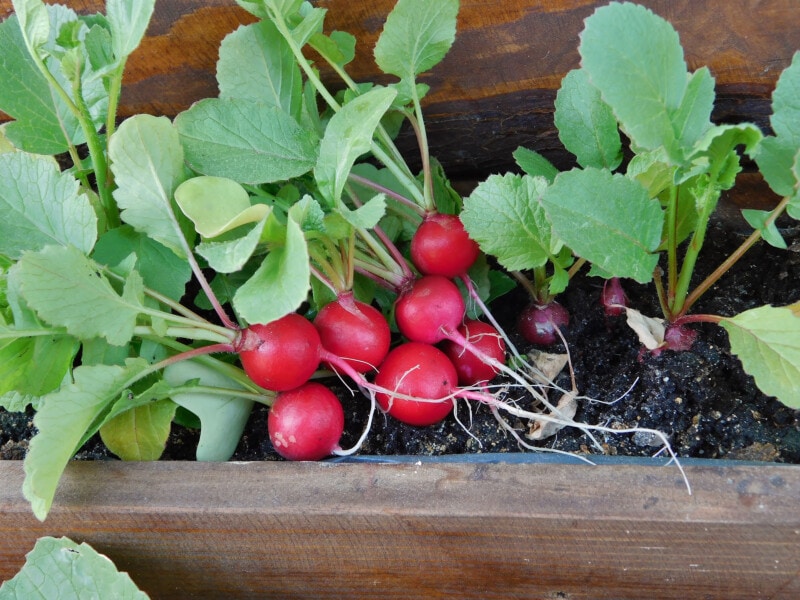
Radishes grow quickly but require loose soil to develop straight roots.
Garden beds often become compacted, especially in heavily walked or clay-heavy soils. Containers allow growers to maintain fluffy, aerated soil where radishes form uniform bulbs.
Practical Tips
- Use light soil mixes with sand or perlite.
- Sow seeds directly in containers.
- Harvest promptly to avoid woody texture.
Radishes are also excellent succession crops. Containers allow quick replanting cycles every few weeks.
Strawberries: Cleaner Fruit and Fewer Pests
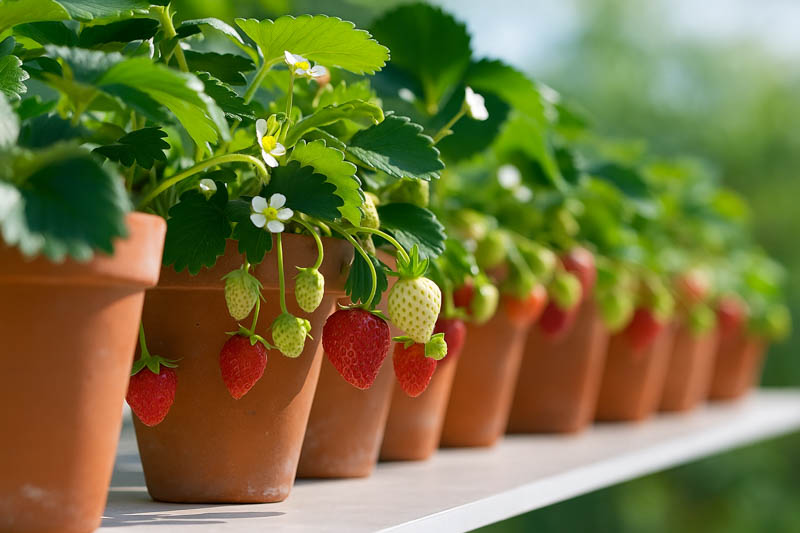
Strawberries illustrate one of the greatest advantages of container gardening: keeping fruit off the soil.
In garden beds, strawberries often rot when fruit contacts damp soil. Slugs and insects also find them easily.
Containers elevate berries, improving airflow and keeping fruit cleaner.
Practical Tips
- Use hanging baskets or wide pots.
- Ensure good drainage.
- Remove runners to concentrate energy on fruit production.
Some farmers place strawberry containers near pollinator-friendly flowers, improving yields naturally.
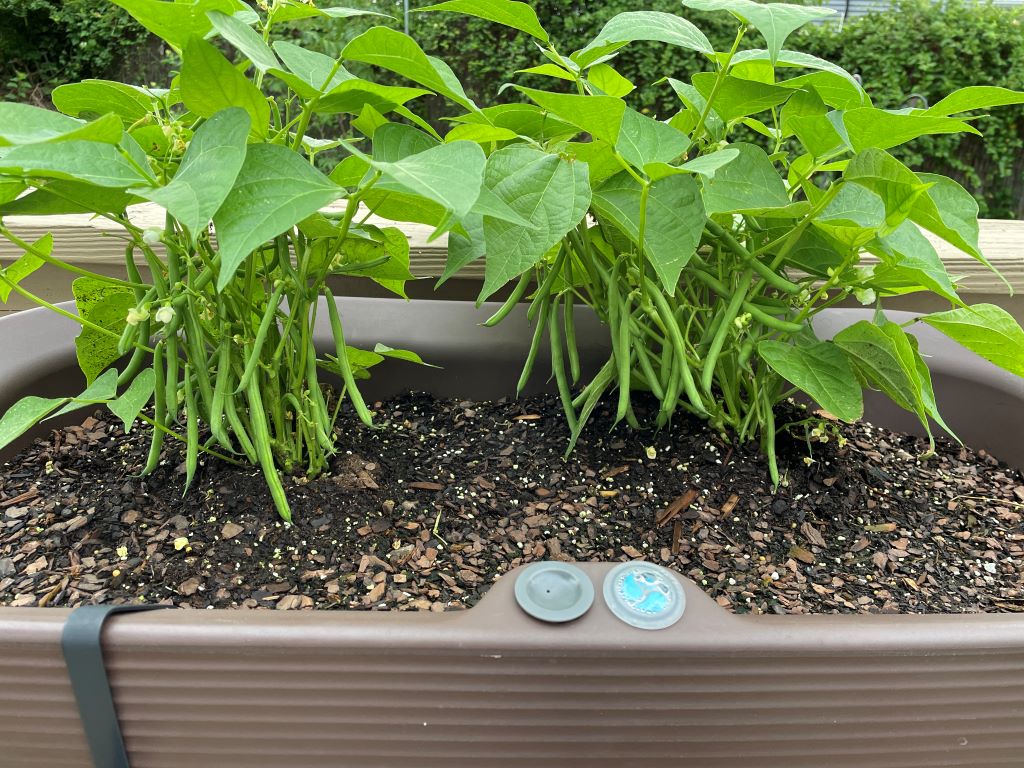
Bush Beans: Faster Germination and Warmer Roots
Bush beans are surprisingly effective in containers.
In garden beds, cool spring soil slows germination. Containers warm faster, allowing beans to sprout quickly and grow vigorously.
Practical Tips
- Use containers at least 10 inches deep.
- Plant seeds directly once temperatures warm.
- Harvest regularly to encourage continued production.
Bush beans also contribute to soil health by fixing nitrogen — making them a valuable component in organic gardening systems.
Integrating Container Gardening with Farm Care
Container gardening doesn’t exist separately from farm care or livestock management. In fact, it can complement both.
For example:
- Chickens can eat excess vegetable trimmings.
- Compost from livestock bedding enriches container soil mixes.
- Portable containers allow crops to move away from grazing animals.
This integration supports sustainable farming systems where resources cycle efficiently.
Farmers who practice this approach often find their workloads decrease while productivity increases.
Soil Health Still Matters in Containers
Even though containers isolate plants from native soil, soil health remains essential.
A good container mix should include:
- Compost for nutrients
- Coconut coir or peat moss for moisture retention
- Perlite or sand for drainage
- Organic fertilizer for steady feeding
Replenishing soil each season ensures long-term productivity.
Just like in traditional agriculture, healthy soil creates resilient plants.
Final Thoughts: Small Spaces, Big Harvests
Container gardening proves that productivity isn’t determined by land size — it’s determined by strategy.
By understanding which vegetables grow better in containers, farmers and gardeners gain flexibility. Crops can be moved, protected, and optimized in ways traditional beds cannot always provide.
Combined with thoughtful livestock management, compost use, and organic gardening practices, container gardening becomes part of a larger sustainable farming ecosystem.
The goal isn’t simply to grow vegetables.
It’s to build a system where soil, plants, animals, and people support one another — season after season.
And sometimes, the most productive farm practices begin not in the ground, but in a humble container on the porch.