Morning routines do not need to be complicated to be helpful.
Sometimes the most effective habit is simply starting the day with a drink that helps you rehydrate, wake up your digestion, and ease into the morning.
There are 9 morning healthy drinks, each with a slightly different purpose. Some are mainly about hydration. Some are traditional wellness drinks. Others offer fiber, antioxidants, or plant compounds that may support digestion or steady energy.
Most people never realize this, but the best morning drink is not the “trendiest” one. It is the one your body tolerates well and that you can actually repeat.
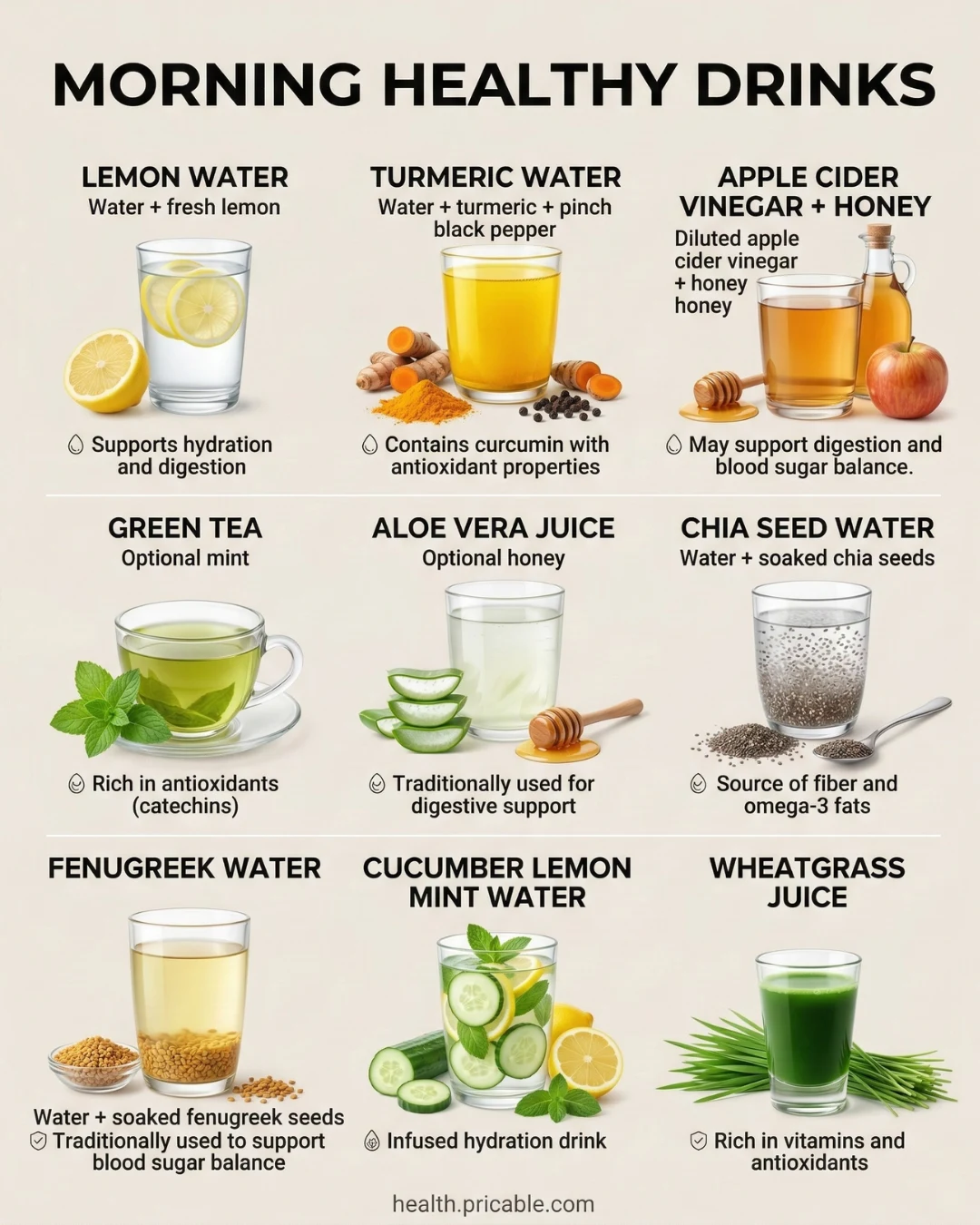
1. Lemon Water
What it is: Water + fresh lemon
Lemon water is one of the simplest morning drinks because it mainly helps with hydration, and hydration alone can improve how you feel first thing in the morning. Lemon also adds flavor, which makes it easier for many people to drink water consistently. (NCCIH)
Why it may help
- Supports morning hydration
- May feel refreshing if plain water is hard to drink
- A gentle option before breakfast
Easy way to make it
Squeeze fresh lemon into a glass of room-temperature or warm water.
Quick note
If you have reflux, ulcers, or sensitive teeth, lemon water may irritate symptoms.
2. Turmeric Water
What it is: Water + turmeric + a pinch of black pepper
Turmeric contains curcumin, the compound most associated with its antioxidant and inflammation-related research. NCCIH notes curcumin is turmeric’s primary active ingredient, and combining curcumin with piperine from black pepper can improve bioavailability. (NCCIH)
Why it may help
- Adds antioxidant plant compounds
- Fits well into an anti-inflammatory eating pattern
- Warm turmeric water can feel soothing in the morning
Easy way to make it
Stir ¼ to ½ teaspoon turmeric powder into warm water and add a pinch of black pepper.
Quick note
This is a supportive drink, not a treatment. It will not “fix” inflammation overnight.
3. Apple Cider Vinegar + Honey
What it is: Diluted apple cider vinegar + honey
This drink is often promoted for digestion and blood sugar support. The key word is may. Some people like it because the diluted acidity feels stimulating before breakfast, but it is not essential for good digestion.
Why it may help
- Can encourage you to drink more fluid in the morning
- Some people feel it helps appetite awareness
- Honey can make it easier to tolerate
Easy way to make it
Mix 1 to 2 teaspoons apple cider vinegar into a large glass of water, then add a little honey if desired.
Quick note
Do not drink vinegar undiluted. It can irritate the throat and may be harsh on teeth and reflux-prone stomachs.

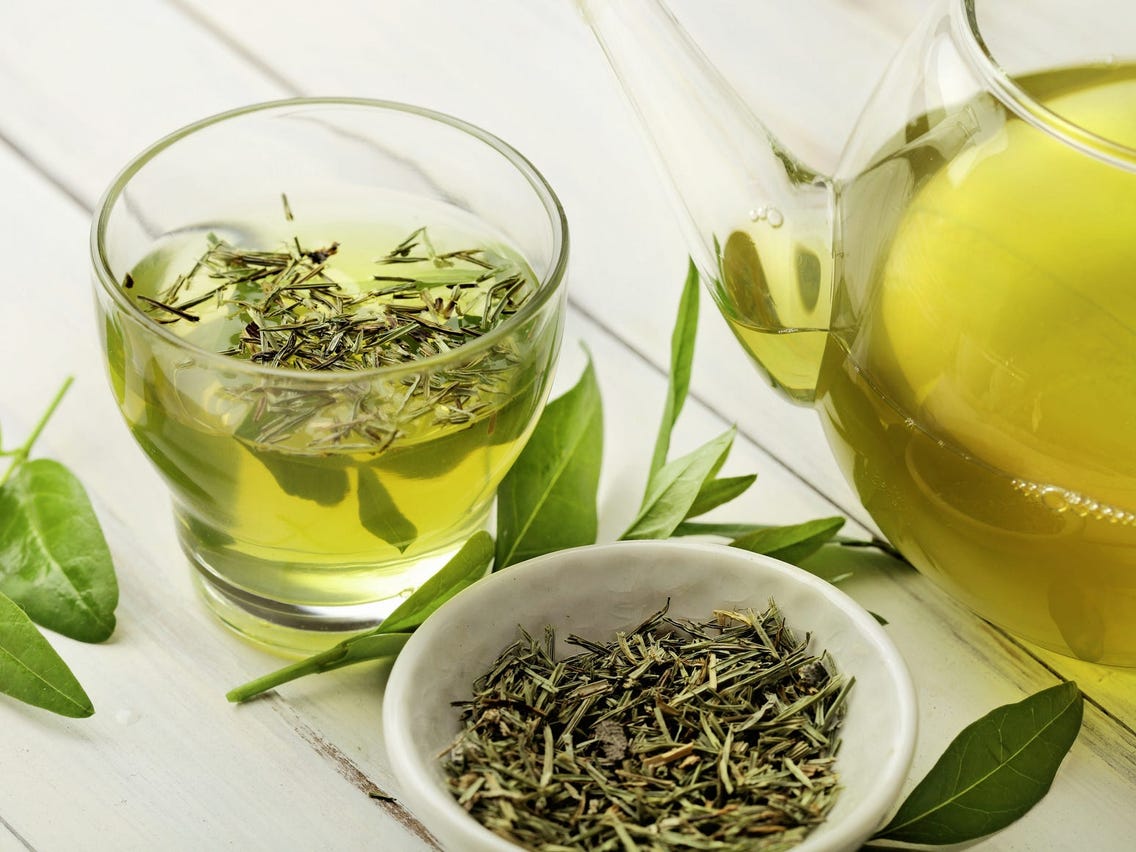
4. Green Tea
What it is: Green tea, with optional mint
Green tea is rich in catechins, a group of polyphenols that are thought to contribute to many of tea’s health-related effects. NCCIH notes green tea contains polyphenols and is commonly used for alertness and general wellness. (NCCIH)
Why it may help
- Provides gentle caffeine for morning focus
- Rich in antioxidant compounds
- Often feels lighter than coffee
Easy way to make it
Steep a green tea bag or loose tea in hot, not boiling, water for 2 to 3 minutes.
Quick note
If caffeine makes you shaky or worsens reflux, drink it after food or choose a weaker brew.
5. Aloe Vera Juice
What it is: Aloe vera juice, with optional honey
Aloe is traditionally used for digestive support, but safety matters here. NCCIH says short-term oral use of aloe gel may be safe, while aloe latex can cause cramps and diarrhea, and aloe leaf extracts have been linked to more serious problems. (NCCIH)
Why it may help
- Some people use it for digestive comfort
- Can feel soothing when used in small amounts
Easy way to make it
Use a reputable store-bought aloe drink or carefully prepared food-grade aloe gel, diluted in water.
Quick note
This is not a good “more is better” drink. Avoid products containing aloe latex.
6. Chia Seed Water
What it is: Water + soaked chia seeds
Chia seeds provide fiber and plant omega-3 fat in the form of ALA. NIH notes plant foods such as chia contain omega-3 fatty acids, and Harvard highlights chia seeds for fiber, protein, and unsaturated fats. (National Institutes of Health)
Why it may help
- Adds fiber to your morning
- Can help you feel fuller
- Supports a more balanced breakfast routine
Easy way to make it
Soak 1 tablespoon chia seeds in water for at least 15 to 20 minutes before drinking.
Quick note
Drink extra water through the morning. Fiber works best with adequate fluids.
7. Fenugreek Water
What it is: Water + soaked fenugreek seeds
Fenugreek water is a traditional drink often used to support blood sugar balance and digestion.
Why it may help
- A traditional choice for gentle digestive support
- Some people like it as part of a low-sugar morning routine
Easy way to make it
Soak fenugreek seeds overnight, then drink the water in the morning.
Quick note
If you take diabetes medication, be cautious with frequent use because fenugreek may affect blood sugar.

8. Cucumber Lemon Mint Water
What it is: Water infused with cucumber, lemon, and mint
This is mainly a hydration drink, and that is exactly why it works so well. It is light, refreshing, and easier to sip than plain water for many people.
Why it may help
- Encourages morning hydration
- Feels cooling and gentle
- Easy to prepare ahead
Easy way to make it
Add cucumber slices, lemon slices, and mint leaves to cold water and let it sit for 15 to 30 minutes.
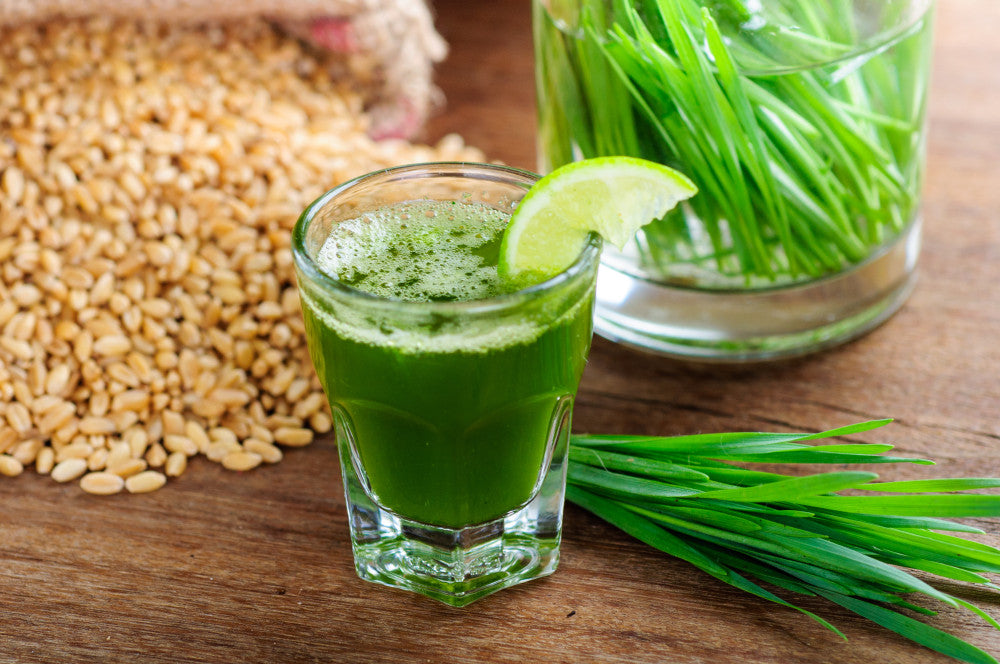
9. Wheatgrass Juice
What it is: Fresh or prepared wheatgrass juice
Wheatgrass is commonly promoted as vitamin-rich and antioxidant-rich. It can fit into a whole-food wellness routine, but it is best thought of as an add-on, not a miracle cure.
Why it may help
- Adds concentrated plant compounds
- Can be part of a nutrient-focused morning ritual
Easy way to make it
Quick note
The taste is strong, and it may upset sensitive stomachs if taken on an empty stomach.
If you want to prepare fresh wheatgrass juice yourself, you definitely need a slow juicer or a manually operated juicer.
How to Choose the Best Morning Drink for You
A simple guide helps:
- For hydration: lemon water or cucumber lemon mint water
- For antioxidants: green tea or turmeric water
- For fiber: chia seed water
- For traditional digestive support: aloe vera juice or fenugreek water
Final Takeaway
These morning healthy drinks can support a better start to the day, but none of them replaces sleep, balanced meals, or overall healthy habits. Start with one that feels easy, keep it simple, and let consistency matter more than hype.
Safety Note
If you have reflux, stomach sensitivity, diabetes, kidney disease, or take regular medication, be careful with vinegar, aloe, turmeric, and fenugreek. Food-based wellness habits should feel supportive, not harsh.