Uncovering Your Iron Sources: Plant vs. Animal Power!
Iron is a vital mineral that plays a crucial role in our health, from carrying oxygen in our blood to supporting energy levels. Many people wonder about the best sources of iron, especially when comparing plant-based options to animal-based foods.
This article will dive deep into the world of iron, exploring the differences between heme and non-heme iron, providing a detailed comparison of iron-rich foods, and offering practical tips to maximize your absorption. Whether you’re a vegetarian, an omnivore, or simply looking to boost your iron intake, you’ll find valuable insights here to help you make informed dietary choices.
The Iron Essential: Why It Matters
Iron is essential for producing hemoglobin, a protein in red blood cells that transports oxygen from your lungs to tissues throughout your body. It’s also involved in energy production, immune function, and brain development. Without enough iron, you might experience fatigue, weakness, shortness of breath, and impaired cognitive function, a condition known as iron-deficiency anemia.
Plant Iron vs. Animal Iron: Understanding the Differences
When it comes to dietary iron, not all sources are created equal. Iron comes in two main forms: heme iron and non-heme iron.
Heme Iron (Animal Sources)
Heme iron is found exclusively in animal products like meat, poultry, and seafood. It’s highly bioavailable, meaning your body absorbs it easily and efficiently. About 15-35% of heme iron is typically absorbed from the diet.
Non-Heme Iron (Plant & Animal Sources)
Non-heme iron is found in plant foods such as vegetables, fruits, grains, nuts, and legumes. It’s also present in animal products alongside heme iron. Non-heme iron is less bioavailable than heme iron, with an absorption rate typically ranging from 2-20%. Its absorption can be influenced by many factors, both enhancers and inhibitors.
Iron-Rich Foods: A Comparison Chart
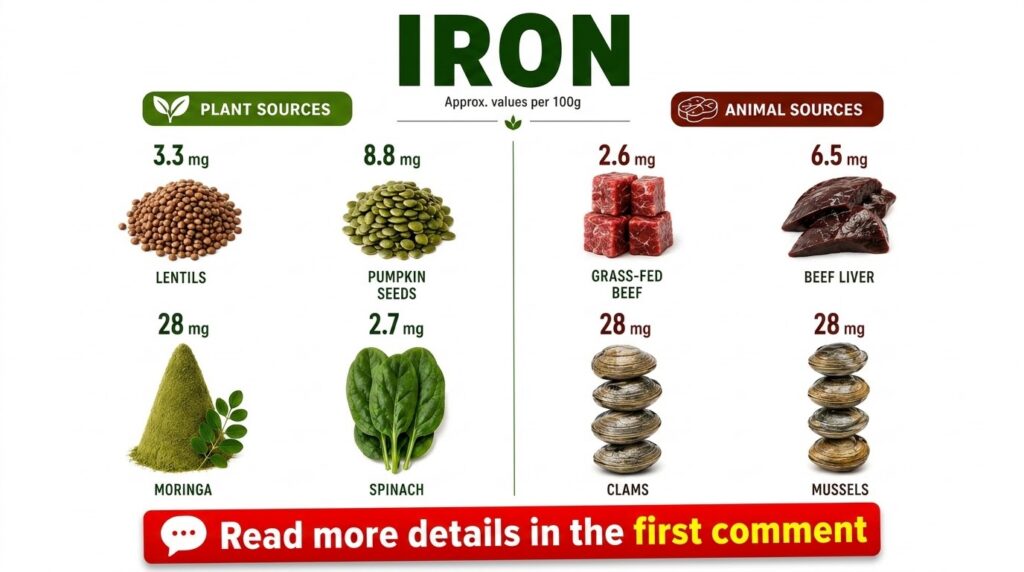
Let’s look at some popular plant and animal foods and compare their iron content, along with other key nutrients, per 100 grams (approximately).
Here’s a snapshot of common iron sources:
| Food (100g) | Type | Calories | Protein (g) | Carbs (g) | Fat (g) | Fiber (g) | Iron (mg) | Main Nutrients | Best Benefit |
|---|---|---|---|---|---|---|---|---|---|
| Lentils (cooked) | Plant | 116 | 9 | 20 | 0.4 | 8 | 3.3 | Folate, Potassium | Digestive Health |
| Pumpkin Seeds | Plant | 574 | 24 | 18 | 49 | 6 | 8.8 | Magnesium, Zinc | Heart Health |
| Spinach (cooked) | Plant | 23 | 3 | 3.6 | 0.4 | 2.2 | 2.7 | Vitamin K, Vitamin A | Bone Health |
| Moringa Powder | Plant | 375 | 25 | 37.5 | 6.25 | 18.75 | 28.0 | Vitamin C, Calcium | Antioxidants |
| Grass-Fed Beef (cooked) | Animal | 200 | 26 | 0 | 10 | 0 | 2.6 | Zinc, B Vitamins | Muscle Building |
| Beef Liver (cooked) | Animal | 135 | 20 | 4 | 5 | 0 | 6.5 | Vitamin A, B12 | Energy & Vision |
| Clams (cooked) | Animal | 148 | 26 | 5 | 2 | 0 | 14.0 | Vitamin B12, Selenium | Thyroid Health |
| Mussels (cooked) | Animal | 172 | 24 | 7 | 4 | 0 | 6.7 | Omega-3s, Zinc | Brain & Heart Health |
Beyond the Numbers: Absorption and Boosters
While the chart shows the amount of iron present in food, what really matters is how much your body can actually absorb. This is where the story gets interesting, especially for non-heme iron.
Boosting Non-Heme Iron Absorption
- Vitamin C: Consuming non-heme iron with a source of Vitamin C (like citrus fruits, bell peppers, tomatoes, or broccoli) can significantly increase its absorption. For example, add bell peppers to your lentil soup!
- Cooking in Cast Iron: Cooking acidic foods in cast iron cookware can leach small amounts of iron into your meal, enhancing your intake.
Inhibitors of Iron Absorption
- Phytates: Found in whole grains, legumes, nuts, and seeds. Soaking, sprouting, or fermenting these foods can reduce phytate levels.
- Oxalates: Present in some vegetables like spinach, beet greens, and rhubarb. While spinach is a good source of non-heme iron, the oxalates can slightly hinder its absorption.
- Tannins: Found in tea and coffee. It’s often recommended to consume these beverages between meals rather than with them if you’re concerned about iron absorption.
- Calcium: High amounts of calcium (from dairy products or supplements) can inhibit the absorption of both heme and non-heme iron.
Taste and Culinary Versatility
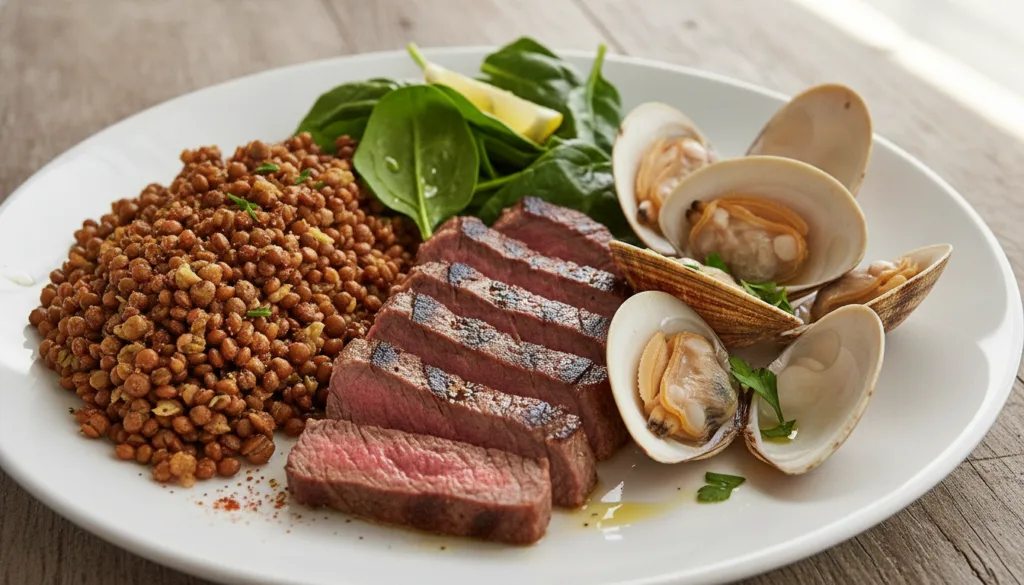
Both plant and animal iron sources offer incredible versatility in the kitchen. From hearty lentil stews and spinach salads to succulent beef dishes and flavorful clam chowder, there are countless ways to incorporate these nutrient-dense foods into your diet. Exploring diverse cuisines can introduce you to new and exciting ways to prepare iron-rich meals.
Who Should Prioritize Which Sources?
Your dietary choices and individual needs will largely determine which iron sources you prioritize.
For Vegetarians/Vegans
Focus on a wide variety of plant-based iron sources, and always pair them with Vitamin C-rich foods. Techniques like soaking legumes and cooking in cast iron can be particularly helpful.
For Omnivores
A balanced approach incorporating both heme and non-heme iron sources is often the easiest way to meet your iron needs. Enjoying a range of plant foods with smaller portions of animal proteins can provide both types of iron and a broad spectrum of other nutrients.
For Specific Needs
Pregnant women, individuals with heavy menstrual cycles, athletes, and those with diagnosed iron deficiency may have higher iron requirements. Consulting a healthcare professional or a registered dietitian is recommended to determine the best strategy for your specific situation.
Practical Tips for Optimal Iron Intake
- Pair Iron with Vitamin C: Always include a Vitamin C source with your non-heme iron meals (e.g., add berries to your oatmeal, squeeze lemon juice over spinach).
- Soak and Sprout: Prepare legumes and grains by soaking, sprouting, or fermenting to reduce phytates and improve iron absorption.
- Cook with Cast Iron: Use cast iron pans for cooking to add a small amount of dietary iron to your food.
- Limit Inhibitors: Consume tea, coffee, and high-calcium foods between meals, not with your main iron-rich dishes, if you’re concerned about absorption.
- Eat a Varied Diet: Incorporate a diverse range of iron-rich foods from both plant and animal kingdoms to ensure you get all essential nutrients.
FAQs
- Which form of iron is better absorbed?
Heme iron, found in animal products, is generally better absorbed by the body than non-heme iron from plant sources. - Can vegetarians get enough iron?
Yes, vegetarians can absolutely get enough iron by consuming a variety of plant-based iron sources and implementing strategies to enhance non-heme iron absorption, like pairing with Vitamin C. - What foods block iron absorption?
Foods high in phytates (whole grains, legumes), oxalates (spinach, rhubarb), tannins (tea, coffee), and high calcium foods can inhibit iron absorption. - How much iron do adults need daily?
Recommended daily iron intake varies by age, sex, and life stage. Adult men typically need 8 mg, while adult women (pre-menopausal) need 18 mg. - Are iron supplements necessary?
Iron supplements should only be taken under the guidance of a healthcare professional, as excessive iron can be harmful. It’s generally best to try to meet your iron needs through diet first. - Does cooking affect iron content in food?
Cooking can sometimes slightly reduce iron content, but proper cooking methods can also make certain nutrients more accessible. Using cast iron cookware can actually add iron to food.
Conclusion
Whether you prefer plant-based or animal-based foods, achieving adequate iron intake is entirely possible with a little knowledge and strategic meal planning. Heme iron from animal sources offers high bioavailability, while non-heme iron from plants provides a wealth of other nutrients and can be optimized for absorption with simple techniques like pairing with Vitamin C. By understanding the differences and applying practical tips, you can confidently meet your body’s iron needs and support your overall well-being.
Ready to explore more healthy eating insights? Dive into our other articles for delicious recipes and nutrition guides!
This content is for educational purposes only and should not be considered medical advice. Consult a qualified healthcare professional for personalized dietary recommendations.
Explore More Healthy Eating Content:
- High Protein Breakfast Ideas
- Healthy Smoothie Recipes
- Best Foods for Gut Health
- Foods to Boost Your Immune System