You eat, feel full for a moment, and then get hungry again not long after.
By mid-afternoon, your energy drops, your focus fades, and sweet snacks start sounding a little too good.
Many people blame themselves when this happens. They assume it is a lack of discipline. But in many cases, the real issue is much simpler: the meal was not structured in a way that supports blood sugar stability.
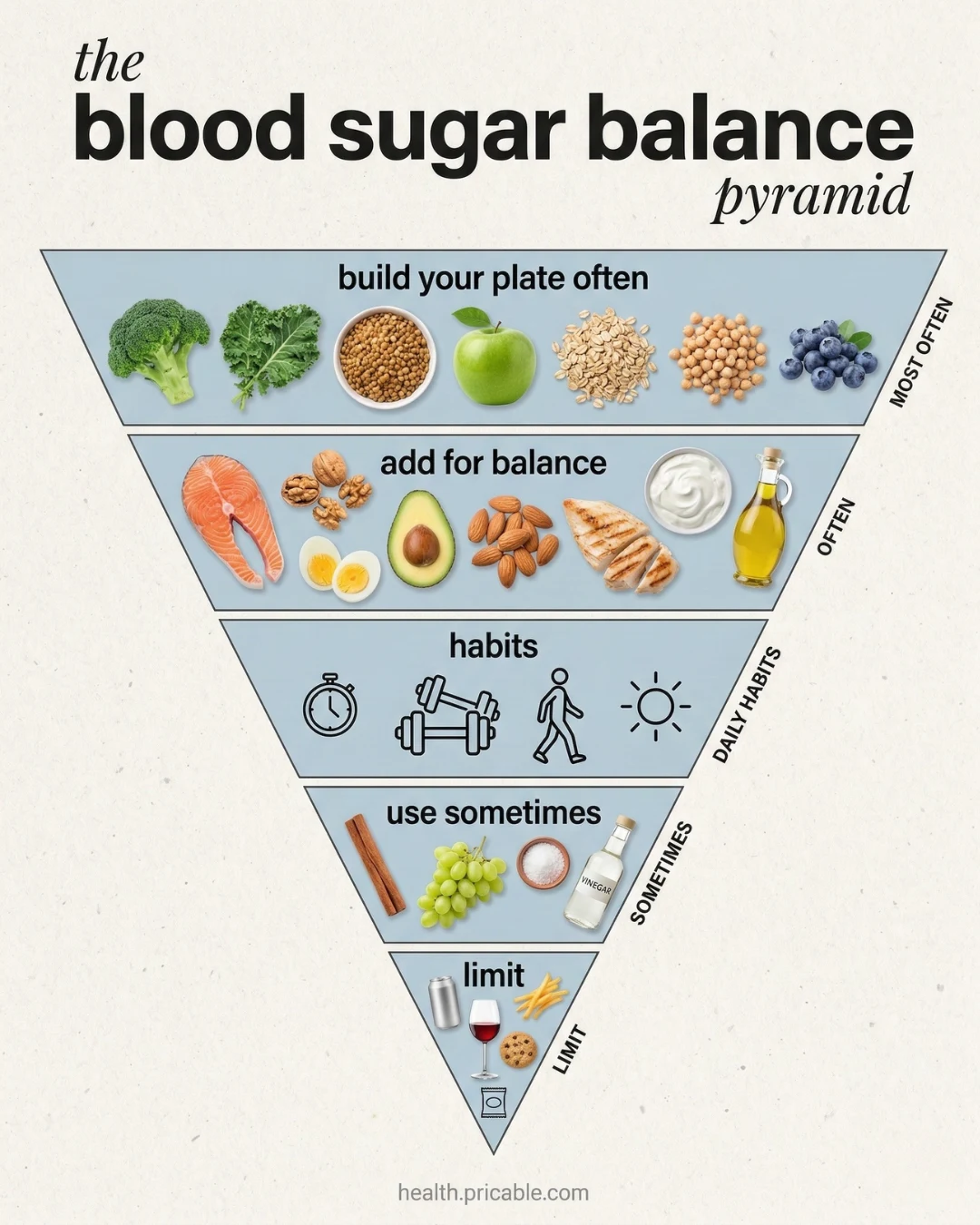
That is what makes the blood sugar balance pyramid such a useful concept. It does not ask you to fear carbohydrates, count every gram, or follow a rigid meal plan. Instead, it offers something much more sustainable: a visual guide to which foods should form the foundation of your meals, which foods improve balance, which daily habits matter, and what is best kept in smaller amounts.
The beauty of this model is that it is helpful for far more than diabetes prevention. Stable blood sugar affects everyday life in very practical ways. It influences energy, concentration, hunger, cravings, mood, and long-term metabolic health. In other words, this is not only about blood sugar. It is about how you feel from morning to evening.
Why Blood Sugar Stability Matters More Than People Realize
Blood sugar is often treated like a medical topic, but it shapes very ordinary daily experiences.
When a meal is built around fast-digesting foods with very little fiber, protein, or fat, glucose can rise quickly. Your body then responds by releasing insulin to bring it back down. That rise-and-fall pattern can leave you feeling sleepy, snacky, foggy, or unsatisfied soon after eating.
On the other hand, when a meal contains more fiber, protein, and healthy fat, digestion tends to slow down. Glucose enters the bloodstream more gradually, which often leads to a steadier, more comfortable energy curve.
This is why blood sugar balance is not just about avoiding sugar. It is about building meals that help your body respond more smoothly.
People often notice the difference in very practical ways:
they stay full longer, feel less desperate for sweets, snack less impulsively, and have more consistent energy through the day.
The Foundation of the Pyramid: Fiber-Rich Foods You Should Build Around Most Often
The widest part of the pyramid is the section labeled “build your plate often.” That is important, because it tells you where the foundation of your meals should begin.
In the image, that top layer includes foods such as broccoli, kale, lentils, apples, oats, chickpeas, and blueberries. From a nutrition perspective, that is a strong foundation because these foods tend to be rich in fiber, antioxidants, and slower-digesting carbohydrates.
Fiber plays a major role here. It slows digestion, helps delay glucose absorption, and improves fullness after meals. That is one reason a bowl of plain oats often feels much more stable than a sugary pastry, and why lentils or chickpeas tend to keep you satisfied longer than refined starches on their own.
These foods also add something else that matters: nutrient density. Broccoli and kale bring vitamin C, folate, and plant compounds. Lentils and chickpeas provide both fiber and plant protein. Apples and blueberries offer natural sweetness, but with a structure that is very different from juice or candy.
This part of the pyramid reminds us of a very useful principle: if you want meals to feel more stable, start by anchoring them in fiber-rich whole foods, especially vegetables, legumes, oats, and whole fruits.
The Second Layer: Protein and Healthy Fats Make the Meal Hold Together
A common mistake in “healthy eating” is building meals that look clean but do not actually satisfy. A bowl of fruit, a plain salad, or a serving of oats without anything else may sound nutritious, but it often lacks the staying power needed to keep hunger and cravings under control.
That is where the second tier of the pyramid comes in. The section labeled “add for balance” includes foods like salmon, walnuts, eggs, avocado, almonds, chicken, yogurt, and olive oil.
This layer matters because blood sugar balance is not built on fiber alone. Meals usually work best when they also contain protein and healthy fats.
Protein helps slow gastric emptying and supports satiety. Healthy fats improve meal satisfaction and can make food feel more complete instead of “light but unsatisfying.” Together, they reduce the chance that you will feel hungry again too quickly.
A simple example makes this easy to understand.
An apple by itself may hold you for a short time. But an apple with almonds is usually much more satisfying. Plain oats may leave some people hungry within an hour or two, but oats with yogurt and walnuts tend to feel more stable.
This is one of the most practical lessons in blood sugar-friendly eating: you do not always need to remove foods. Often, you simply need to add what is missing.
The Middle of the Pyramid: Daily Habits Matter Just as Much as Food
One of the smartest parts of this graphic is that it does not stop at ingredients. It includes a full layer for habits.
That reflects a deeper truth in nutrition: blood sugar is not controlled by food alone. It is heavily influenced by movement, sleep, rhythm, and light exposure.
The icons in this section suggest:
meal timing, strength training, walking or daily movement, and sunlight or circadian support.
This matters because your body handles food differently depending on the state it is in. Strength training improves how muscles use glucose. Walking after meals can help reduce post-meal spikes. Consistent sleep and exposure to morning light can support appetite hormones and insulin sensitivity.
In other words, even a well-built plate can feel less effective if your sleep is poor and you are barely moving. On the other hand, small habit improvements often make nutrition “work better” without needing extreme changes.
This is why the pyramid feels more realistic than many diet graphics. It recognizes that metabolic health is shaped by both meals and lifestyle rhythm.
The “Use Sometimes” Layer: Helpful Extras, Not the Main Strategy
Lower in the pyramid is the “use sometimes” section, which includes things like cinnamon, grapes, salt, and vinegar.
These foods and additions are not harmful in themselves. In fact, some may be useful in certain contexts. Cinnamon often appears in discussions about blood sugar support. Vinegar may help some people when used with meals. Grapes are nutritious, even if they are easier to overeat than berries. Salt is necessary in the diet, though the right amount varies by person.
Still, the pyramid places them here for a reason. They are supportive details, not the foundation.
This is an important distinction. Many people get distracted by wellness hacks and forget the basics. They want to know whether cinnamon or vinegar will “fix” blood sugar while ignoring the fact that their meals are built around refined carbs and low-protein snacks.
The lesson here is simple: extras can help, but they only matter once the base of the meal is solid.
The Bottom Tier: Foods to Limit If You Want More Stable Energy
At the narrow bottom of the pyramid are foods to limit, including sugary drinks, alcohol, fries, cookies, and heavily processed snack foods.
These foods tend to have a few things in common: they are usually low in fiber, easy to overeat, less filling than whole foods, and more likely to create a quick rise and fall in energy.
That does not mean they must disappear forever. A professional nutrition approach is not built on fear or perfection. But it is reasonable to recognize that these foods do not make a strong foundation if your goal is steady energy, better appetite control, and fewer cravings.
Put simply, they can fit occasionally.
They just work best when they are not carrying the whole pattern.
How to Apply the Pyramid in Real Life
The most useful way to use this pyramid is not to memorize every food in it. It is to remember the structure behind it.
Start with fiber-rich plant foods.
Then add protein.
Then include healthy fat.
That may look like: oats with yogurt and walnuts, lentils with broccoli and eggs, salmon with kale and olive oil, or an apple with almonds as a snack.
Once meals are built this way more consistently, many people find that they stop thinking about food quite so much. Hunger becomes calmer. Energy feels steadier. Cravings lose some of their urgency.
That is what real blood sugar balance often looks like in daily life. Not perfect glucose curves. Just a body that feels more stable and less reactive.
When You May Notice a Difference
This kind of meal structure often helps sooner than people expect.
Within a few days, you may notice fewer crashes and less random snacking.
Within a couple of weeks, appetite may feel more predictable and meals may keep you full longer.
Over the following month or two, energy, cravings, and meal control often become easier to manage, especially if sleep and movement improve alongside food quality.
The key is consistency, not intensity.
Final Takeaway
What makes the blood sugar balance pyramid so useful is that it turns nutrition into something practical.
It reminds you to build meals around fiber-rich whole foods, strengthen them with protein and healthy fats, protect your progress with daily habits, use “extras” like cinnamon or vinegar in perspective, and keep highly processed foods lower in the routine.
That is not a restrictive way to eat.
It is a steadier one.
And for many people, steady is exactly what the body has been asking for.