Protein is often seen as “healthy” no matter the source.
But what most people don’t realize is:
👉 Different protein foods take very different amounts of time to digest.
And that difference can directly affect:
-
how full you feel
-
whether you get bloated
-
how your energy levels behave after eating
Fast vs Slow Digestion — What It Really Means
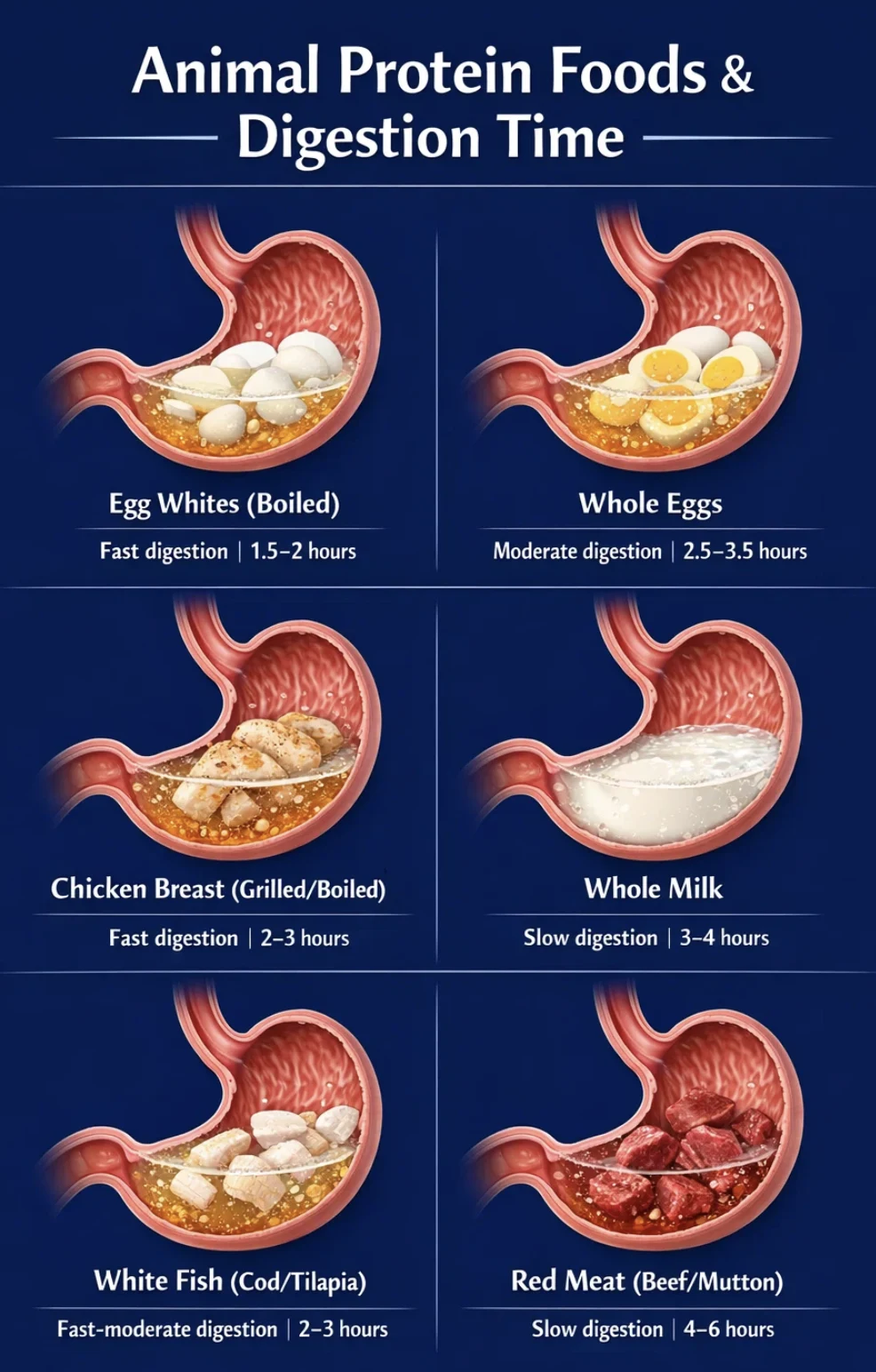
The digestion times in the image show a clear pattern:
-
Egg whites: ~1.5–2 hours
-
Chicken breast: ~2–3 hours
-
White fish: ~2–3 hours
👉 These are faster-digesting proteins
-
Whole eggs: ~2.5–3.5 hours
-
Milk: ~3–4 hours
👉 These sit in the moderate range
-
Red meat: ~4–6 hours
👉 This is slow digestion
But here’s the key insight:
👉 Digestion time isn’t about “good vs bad”
👉 It’s about how your body handles the load
Why Faster Proteins Feel “Lighter”
Foods like egg whites, chicken, and white fish are:
-
lower in fat
-
easier to break down
-
quicker to leave the stomach
This means:
-
less heaviness after meals
-
faster energy availability
-
lower chance of bloating (for most people)
👉 That’s why they’re often better for:
-
breakfast
-
post-workout meals
-
or when your stomach feels sensitive
Why Whole Eggs and Milk Take Longer
When you eat whole eggs or drink milk, you’re not just consuming protein.
You’re also getting:
-
fats
-
additional compounds that slow digestion
This makes the process:
-
more gradual
-
more sustained
👉 The upside:
-
longer-lasting fullness
👉 The downside:
-
can feel heavy if your digestion is already slow
Why Red Meat Feels “Heavy” (And It’s Not Just Your Imagination)
Red meat takes the longest to digest because:
-
it’s denser
-
higher in fat (depending on the cut)
-
requires more stomach acid and enzymes
This leads to:
-
longer stomach retention
-
more digestive effort
👉 That “heavy” feeling after steak?
That’s literally your body still working on it hours later.
The Mistake Most People Make
People often mix multiple slow-digesting foods in one meal:
-
red meat + dairy
-
fatty protein + fried food
👉 This stacks digestion time → leading to:
-
bloating
-
sluggishness
-
discomfort
A Smarter Way to Use This Information
Instead of avoiding foods, use timing strategically:
✔ eat faster-digesting proteins when you need energy or lightness
✔ use slower proteins when you want to stay full longer
✔ avoid stacking too many heavy foods in one meal
The Bigger Picture
Your body doesn’t just react to what you eat.
👉 It reacts to how long that food stays in your system
And understanding digestion time can help you:
-
reduce discomfort
-
improve energy
-
eat more intentionally
Final Thought
Not all protein is equal — not in calories, not in digestion, and not in how your body feels afterward.
👉 The goal isn’t to choose one “best” protein.
It’s to match the right type of protein to the right moment.