Boost Your Vitamin D Naturally: Top Foods & Benefits
Vitamin D, often called the “sunshine vitamin,” plays a crucial role in our overall health. While our bodies can produce it when exposed to sunlight, many people don’t get enough, especially during colder months or due to indoor lifestyles. A deficiency can impact everything from your mood to your immune system.
In this article, we’ll explore why Vitamin D is so vital, how it works in your body, and most importantly, how you can naturally boost your levels through smart food choices and other practical tips. Get ready to discover delicious ways to support your well-being!
The Essential Benefits of Vitamin D
Vitamin D is more than just a vitamin; it acts like a hormone in the body, influencing numerous systems. Ensuring you have adequate levels can bring a host of health advantages:
- Bone Health: It’s critical for calcium absorption and phosphorus regulation, which are vital for strong bones and teeth. Without enough Vitamin D, your body can’t properly absorb calcium, leading to weaker bones and an increased risk of osteoporosis.
- Immune System Support: Research suggests Vitamin D plays a key role in modulating the immune system, helping your body fight off infections and reducing inflammation.
- Mood Regulation: Some studies indicate a link between Vitamin D levels and mood, with deficiencies sometimes associated with symptoms of depression. Maintaining optimal levels may help support mental well-being.
- Muscle Function: It contributes to normal muscle function, which is important for everyday movement and preventing falls, especially in older adults.
- Heart Health: Emerging research points to Vitamin D’s potential role in supporting cardiovascular health, though more studies are needed.

Understanding Vitamin D’s Role
When your skin is exposed to ultraviolet B (UVB) rays from the sun, it produces Vitamin D. This Vitamin D then travels to your liver and kidneys, where it’s converted into its active form, calcitriol. This active form is what your body uses to perform all its vital functions.
For adults, the recommended daily allowance (RDA) for Vitamin D is 600 international units (IU), or 15 micrograms (mcg). However, some experts suggest higher intakes may be beneficial, especially for certain populations. It’s always best to consult with a healthcare professional for personalized recommendations.
Top Food Sources of Vitamin D
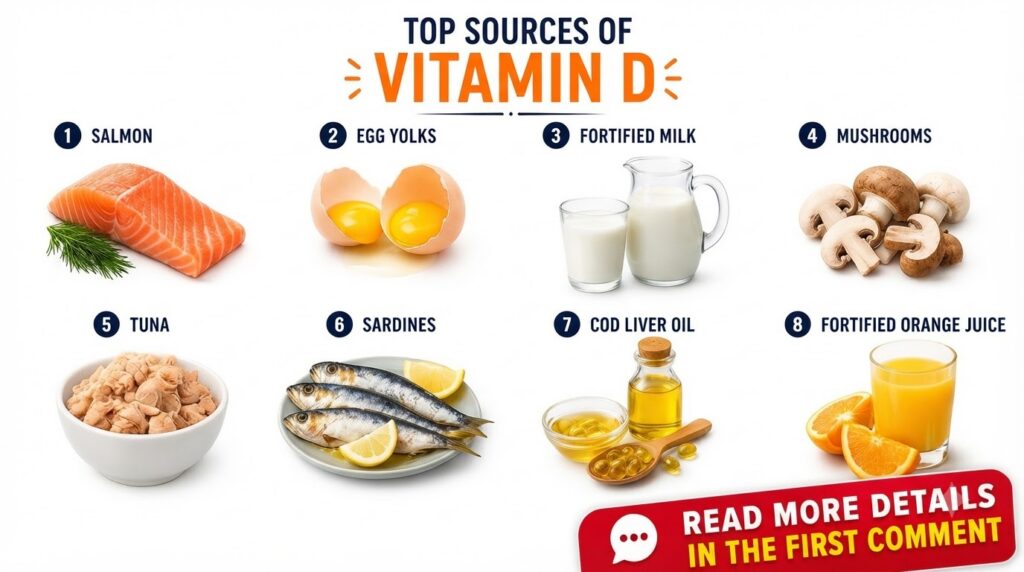
While sunlight is a primary source, incorporating Vitamin D-rich foods into your diet is an excellent way to maintain healthy levels, especially when sun exposure is limited. Here are some of the best natural and fortified options:
Fatty Fish
- Salmon: One of the best natural sources, a 3.5-ounce (100-gram) serving of cooked salmon can provide a significant portion of your daily Vitamin D.
- Sardines: These small, oily fish are not only packed with Vitamin D but also omega-3 fatty acids.
- Mackerel: Another fatty fish that offers a good amount of Vitamin D.
- Cod Liver Oil: Historically used as a supplement, it’s incredibly rich in Vitamin D and Vitamin A.
Fortified Foods
- Cow’s Milk: Many dairy and non-dairy milks (like almond or soy milk) are fortified with Vitamin D. Check the label!
- Orange Juice: A refreshing option, some brands of orange juice are fortified with Vitamin D, similar to milk.
- Cereals and Oatmeal: Many breakfast cereals and instant oatmeal packets are fortified, making them an easy way to start your day with a boost.
- Yogurt: Similar to milk, some yogurts are fortified with Vitamin D.
Other Sources
- Egg Yolks: While not as high as fatty fish, egg yolks contain a moderate amount of Vitamin D.
- Mushrooms: Certain types of mushrooms, especially those exposed to UV light (like some shiitake or portobello), can contain Vitamin D2.

Potential Risks: Deficiency and Excess
While boosting Vitamin D is important, it’s also crucial to understand the risks associated with both too little and too much.
Vitamin D Deficiency
Long-term Vitamin D deficiency can lead to several health issues:
- Rickets in Children: This condition causes soft and weak bones, leading to bowed legs.
- Osteomalacia in Adults: Similar to rickets, it causes bone softening, muscle weakness, and bone pain.
- Increased Risk of Illness: A weakened immune system can make you more susceptible to infections.
- Fatigue and Depression: Persistent tiredness and low mood can be symptoms of low Vitamin D.
Vitamin D Toxicity (Hypervitaminosis D)
Excessive intake of Vitamin D, usually from high-dose supplements rather than food or sun exposure, can be harmful:
- Calcium Buildup (Hypercalcemia): Too much Vitamin D can lead to dangerously high calcium levels in the blood, causing nausea, vomiting, weakness, frequent urination, and kidney problems.
- Kidney Damage: Severe hypercalcemia can lead to kidney stones and kidney failure.
Always follow recommended dosages for supplements and consult a healthcare professional before starting any new regimen.
Practical Tips for Boosting Your Vitamin D
Incorporating Vitamin D into your daily routine doesn’t have to be complicated. Here are some simple tips:
- Embrace Fatty Fish: Aim to eat fatty fish like salmon, mackerel, or sardines a couple of times a week. Try grilling, baking, or adding them to salads.
- Check Labels for Fortification: When buying milk, orange juice, or cereals, look for products fortified with Vitamin D.
- Consider Egg Yolks: Don’t toss the yolk! Enjoy whole eggs in your breakfast or as a snack.
- Explore Mushrooms: Look for UV-exposed mushrooms at your grocery store, or try leaving fresh mushrooms in direct sunlight for a short period before cooking to increase their Vitamin D content.
- Smart Sun Exposure: During warmer months, spend 10-30 minutes in direct sunlight a few times a week, ensuring your face, arms, and legs are exposed. Remember to be mindful of sun protection to avoid sunburn.
- Consult Your Doctor: If you suspect a deficiency, ask your doctor for a blood test. They can recommend appropriate supplementation if needed.

FAQs About Vitamin D
Q: Can I get enough Vitamin D from the sun alone?
A: It depends on several factors, including your location, skin type, time of year, and amount of skin exposed. In many regions, especially during winter, sun exposure alone is often not enough to maintain optimal levels.
Q: Are Vitamin D supplements always necessary?
A: Not always, but they can be very helpful for those with limited sun exposure or dietary intake. A blood test can determine if you have a deficiency and if supplementation is appropriate for you.
Q: What’s the difference between Vitamin D2 and D3?
A: Vitamin D3 (cholecalciferol) is the form produced in the skin from sunlight and found in animal-based foods. Vitamin D2 (ergocalciferol) is found in plant foods like mushrooms and is also used in some fortified products. Vitamin D3 is generally considered more effective at raising and maintaining Vitamin D levels in the body.
Q: Can vegans get enough Vitamin D?
A: It can be more challenging for vegans as many natural sources are animal-based. However, fortified plant-based milks, cereals, and UV-treated mushrooms can help. Vegan Vitamin D3 supplements derived from lichen are also available.
Q: How long does it take to correct a Vitamin D deficiency?
A: It varies by individual and the severity of the deficiency. With consistent supplementation or increased dietary intake, it can take several weeks to a few months to raise levels. Regular monitoring with a healthcare provider is recommended.
Q: Does cooking reduce Vitamin D in foods?
A: While some nutrients can be lost during cooking, Vitamin D is relatively stable. Most standard cooking methods will not significantly reduce its content in foods like fish.
Conclusion
Vitamin D is a powerhouse nutrient that impacts everything from your bones to your immune system. By consciously incorporating Vitamin D-rich foods like fatty fish, fortified dairy, and certain mushrooms into your diet, and getting smart sun exposure, you can naturally boost your levels and support your overall health.
Remember, a balanced approach is key. If you’re concerned about your Vitamin D levels, always consult with a healthcare professional. Start exploring these delicious options today and take a proactive step towards a healthier you!
This content is for educational purposes only and should not be considered medical advice. Consult a qualified healthcare professional for personalized dietary recommendations.
Explore More Healthy Eating Content:
- Healthy Breakfast Ideas for Busy Mornings
- Understanding Gut Health: Best Foods for a Happy Gut
- The Power of Omega-3s: Benefits and Top Food Sources