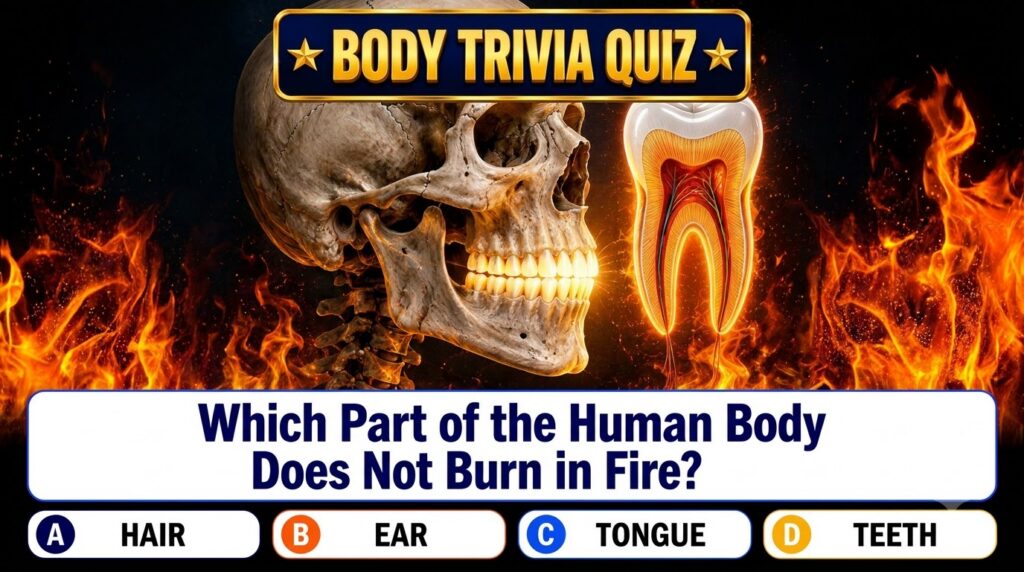
Remember that viral trivia question making the rounds? The one challenging you to identify the one part of the human body that fire surprisingly can’t conquer? We all know fire is a powerful force, capable of reducing almost anything to ash. So, it’s natural to assume our soft tissues, our bones, even our hair, would all succumb to intense heat.
Many of you might have guessed cartilage, or perhaps certain internal organs. But the truth is far more fascinating, delving into the incredible resilience of our own biology, a fact often utilized in forensic science. Imagine extreme conditions, intense heat – what remains? What holds clues to our identity even when all else is gone? Prepare to have your mind blown!
The Fiery Reveal: An Unsung Hero of Resilience
After much anticipation, the answer to our fiery riddle, the part of the human body that exhibits incredible resistance to fire, is…
Option D: Teeth!
That’s right! While fire can devastate most biological tissues, your pearly whites stand strong. This fact often surprises people, but there’s a fascinating scientific explanation behind it.
The Science Behind Teeth’s Tenacity
What makes teeth so remarkably resistant to extreme heat? The secret lies in their unique composition, particularly the outer layer known as enamel.
-
Enamel: The Body’s Hardest Substance
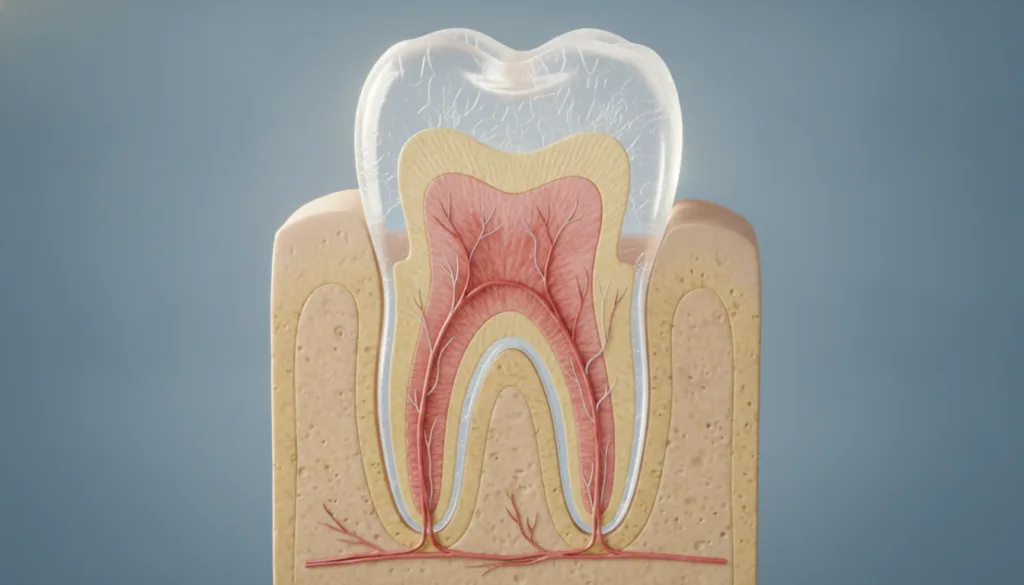
Dental enamel is the hardest biological substance in the human body. It’s composed almost entirely of calcium phosphate minerals, primarily hydroxyapatite. This highly mineralized structure is incredibly dense and has a very high melting point, making it exceptionally resistant to both physical damage and extreme temperatures.
-
Dentin and Pulp: The Inner Layers
Beneath the enamel lies dentin, which is less dense but still very hard, and then the pulp, which contains nerves and blood vessels. While the softer inner pulp and dentin can eventually be affected by prolonged heat, the protective enamel shell provides significant insulation and structural integrity, allowing the tooth to retain much of its form even after intense exposure to fire.
-
Forensic Significance: Clues from the Past
This incredible resilience makes teeth invaluable in forensic science. In tragic events involving fires, explosions, or other extreme trauma where other remains are severely damaged, teeth often survive largely intact. Forensic odontologists (dental experts) can use dental records – including fillings, crowns, root canals, and unique dental anomalies – to identify individuals. Each person’s dental structure is as unique as a fingerprint, making teeth crucial identifiers when other methods are impossible.
-
Cremation Context: An Enduring Testimony
Even in crematories, where bodies are subjected to temperatures exceeding 1,400 degrees Fahrenheit (760 degrees Celsius), teeth frequently survive the initial burning process, often requiring further processing to reduce them to finer ash alongside the calcified bone fragments. This is a testament to their extraordinary heat resistance.
Keep Challenging Your Brain!
Isn’t the human body an amazing marvel of nature? There are so many incredible facts and secrets hidden within us. We hope you enjoyed this brain-teaser and learned something new about the surprising durability of your own teeth!
Did you guess correctly? Share your thoughts and any other fascinating body trivia you know in the comments below! And don’t forget to challenge your friends with this mind-bending fact!