Cucumbers are generous plants when their basic needs are met: warm soil, steady moisture, rich growing medium, and enough vertical or horizontal room to grow. But if you want cucumbers to move from “doing okay” to producing heavily and consistently, companion planting can make a real difference.
The best cucumber companions do not all serve the same purpose. Some draw in bees and other pollinators. Some help create a more balanced garden ecosystem. Some make good use of space around the vines. Others simply share similar growing conditions, which makes the bed easier to manage.
A strong cucumber planting often includes nasturtiums, dill, calendula, marigolds, radishes, beans,… These plants help support pollinator activity, improve bed diversity, and make the area around cucumbers more productive and easier to care for.
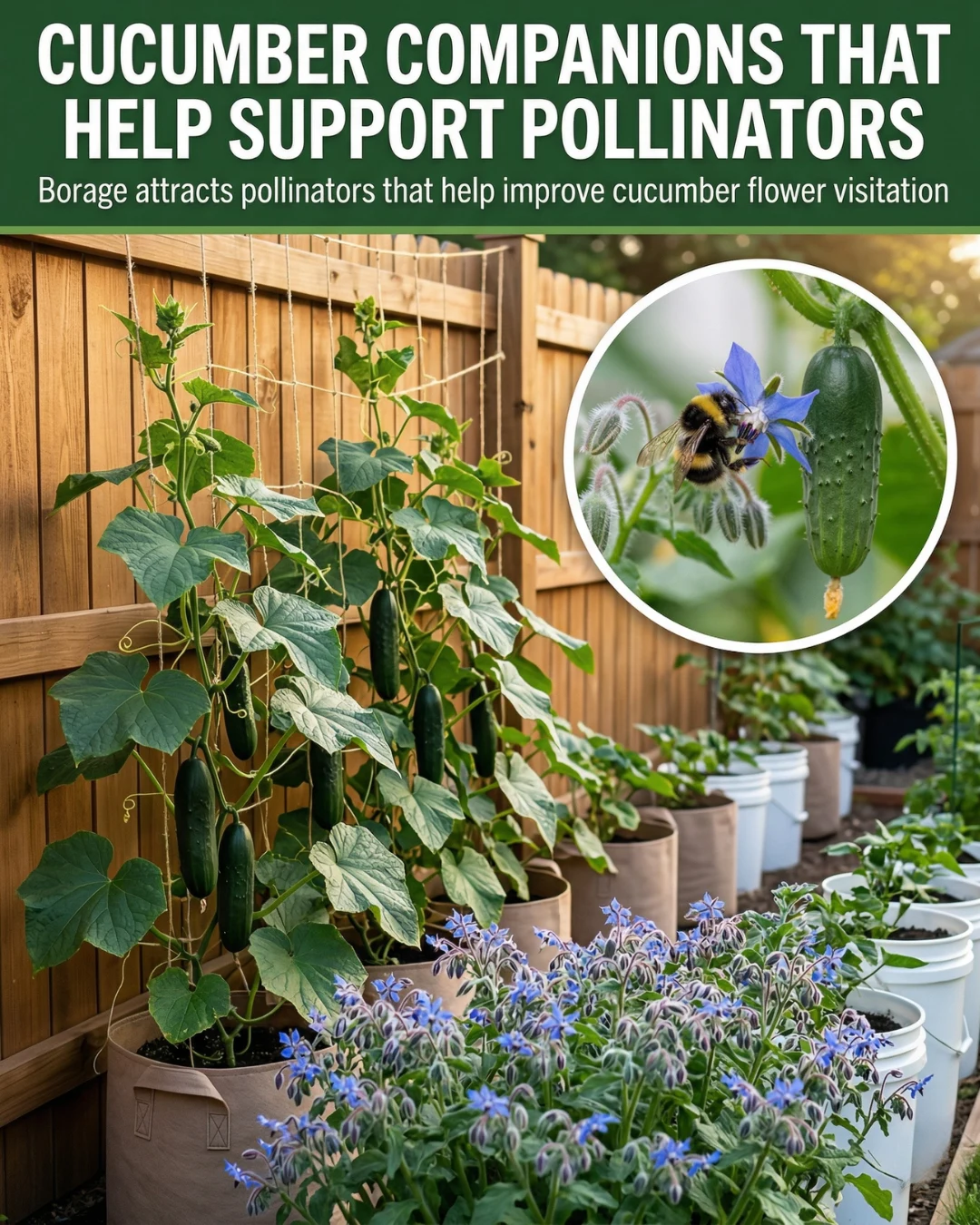
Why pollinators matter so much for cucumber production
Cucumber plants produce flowers that need attention from insects. Male flowers provide pollen. Female flowers, which have the tiny immature cucumber behind the bloom, need that pollen moved effectively if the fruit is to develop well.
When pollination is poor, several things can happen:
- small fruits begin forming and then yellow or abort
- cucumbers develop unevenly or become misshapen
- harvest volume drops
- the plant keeps flowering, but results feel disappointing
This is why a cucumber patch can look healthy and still underperform. Strong vines alone do not guarantee a strong crop. Flower visitation matters.
Pollinators are especially active when the garden offers more than one reason to visit. A plain row of cucumbers may get some traffic. A mixed bed with nectar-rich companion flowers pulls insects in more consistently and keeps them returning.
Why Companion Planting With Cucumbers Actually Works
Before we get into the plant-by-plant breakdown, it helps to understand the ‘why.’ Companion planting isn’t magic – it’s ecology. Plants interact with each other through their root systems, the chemicals they release, the insects they attract, and the shade or support they provide.
For cucumbers specifically, companion planting addresses a few key challenges:
- Pest Control: Aphids, cucumber beetles, and spider mites love cucumbers as much as we do.
- Soil Improvement: Cucumbers are heavy feeders and benefit from nitrogen-fixing neighbors.
- Attract Pollinators: They rely on pollinators, so anything that attracts bees is a win.
- Prevent Disease: Cucumbers are susceptible to fungal disease — good airflow and certain aromatic plants help keep that in check.
The Best Cucumber Companion Plants
Let’s get into the good stuff — the plants that will genuinely help your cucumbers thrive.
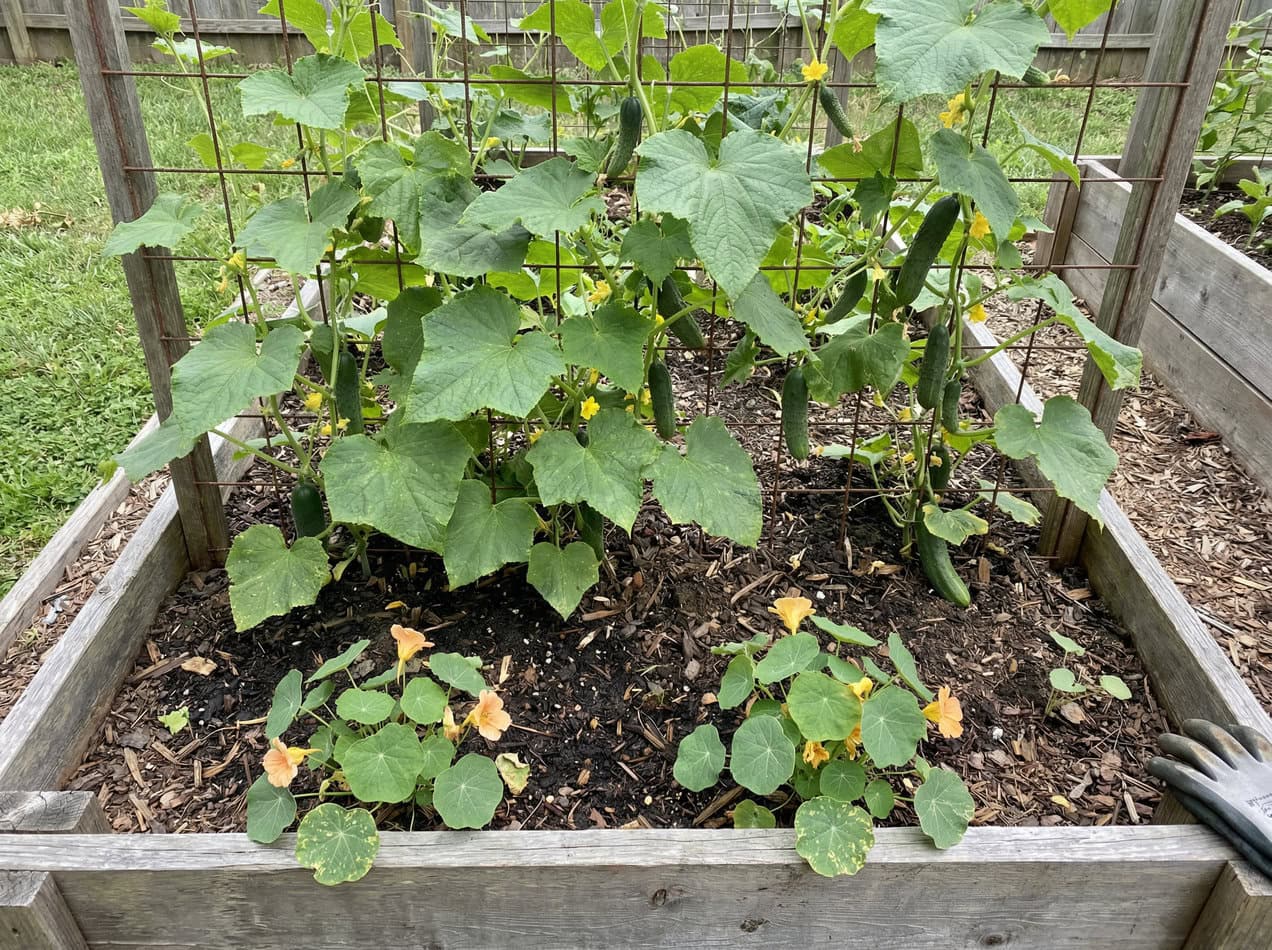
1. Nasturtiums: colorful, useful, and easy around cucumber beds
Nasturtiums are one of the most practical companion flowers for vegetable gardens because they are attractive, edible, and easy to grow.
Why they pair well with cucumbers
They fill low spaces well, add bright flowers that attract helpful insects, and soften the edges of a cucumber bed without demanding a lot of specialized care.
How to use them
Let them trail around the outer edge of a raised bed or container grouping. They work especially well where cucumbers are grown vertically on a trellis.
Practical tip
Choose trailing nasturtiums if you want living ground cover, or compact types if space is limited.
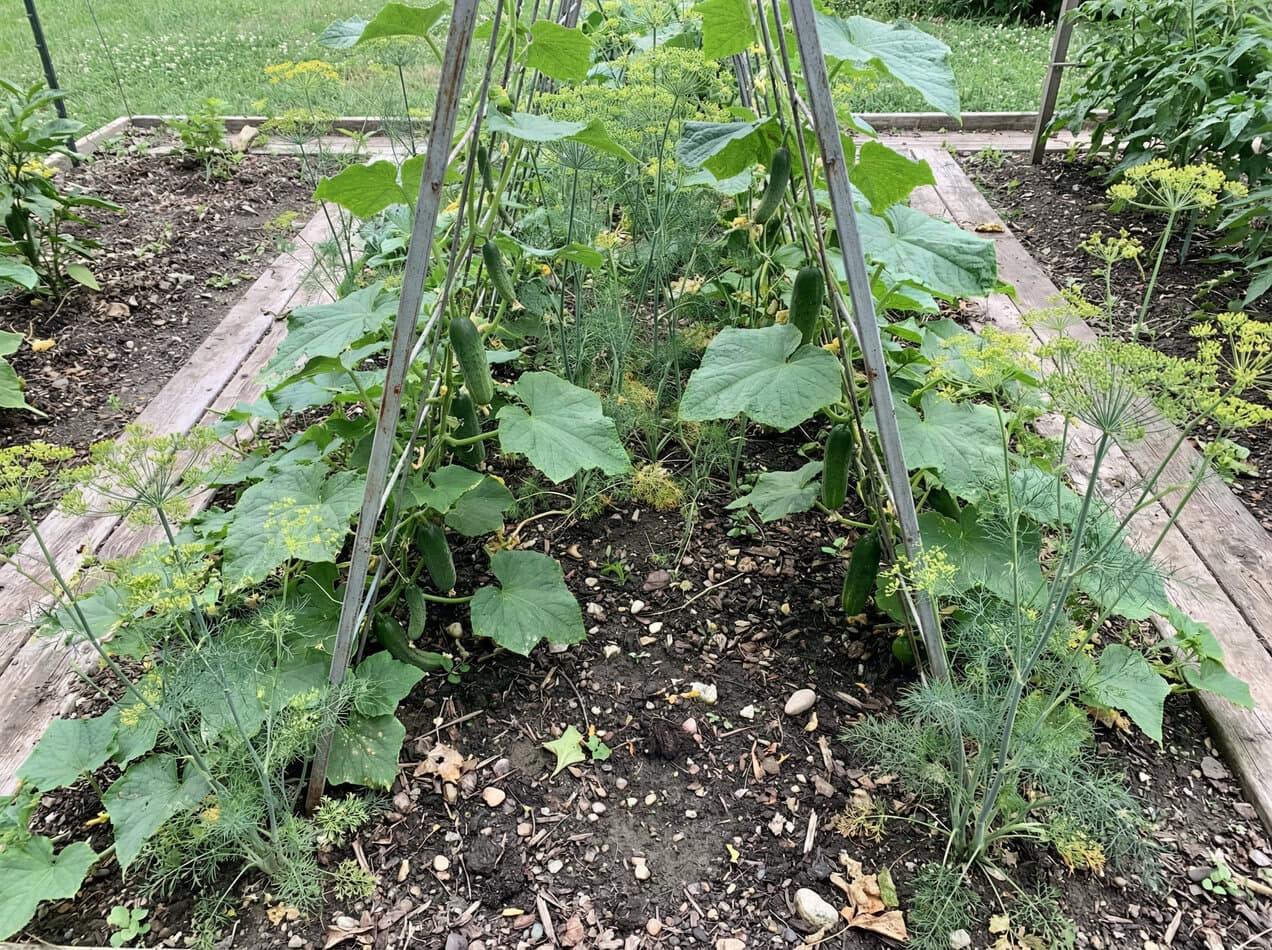
2. Dill: excellent for beneficial insects and bed diversity
Dill is one of the most useful herbs to keep near many vegetables, cucumbers included.
Why it helps
When dill is allowed to flower, it attracts a range of beneficial insects and pollinators. This helps create a more active and balanced garden environment around the cucumbers.
How to plant it
Keep dill near the bed rather than directly in the root zone of heavily growing cucumber vines. It grows upright and does not take up much horizontal space.
Practical tip
Sow dill in succession if you want flowers over a longer period. A single sowing may bloom and fade faster than you expect.
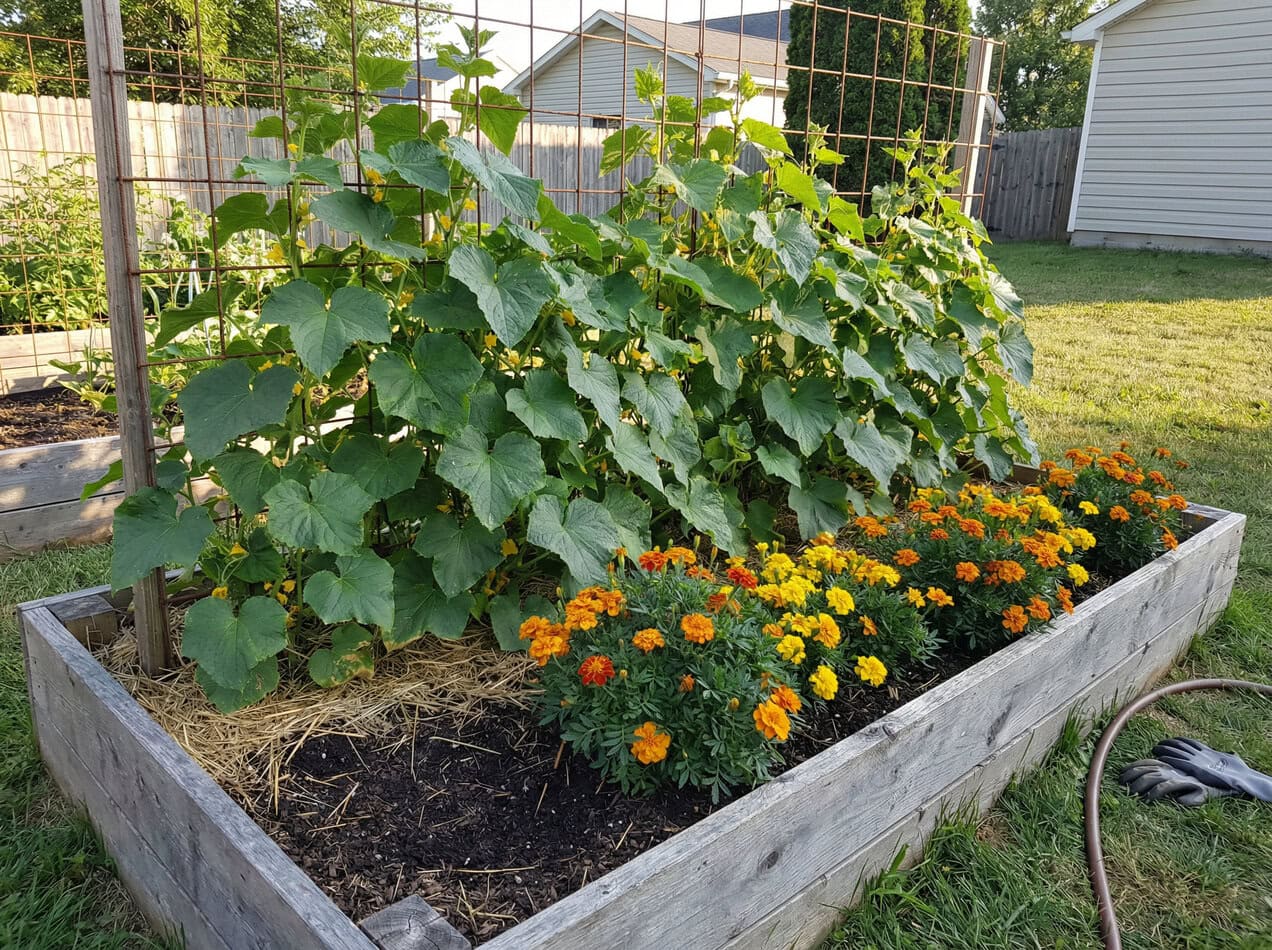
3. Marigolds — The Garden’s All-Purpose Bodyguard
Marigolds belong in every vegetable garden, and cucumbers are no exception. Their scent confuses and deters aphids, whiteflies, and even nematodes in the soil. French marigolds (Tagetes patula) are particularly effective — they secrete a compound from their roots called alpha-terthienyl, which suppresses root-knot nematodes.
They’re also just cheerful. Your cucumber bed will look great, and your cucumbers will thank you.
- Plant type: Annual flowering
- Benefit: Deters aphids, whiteflies, and soil nematodes
- Best variety: French marigolds (Tagetes patula)
4. Beans — The Nitrogen Fixers
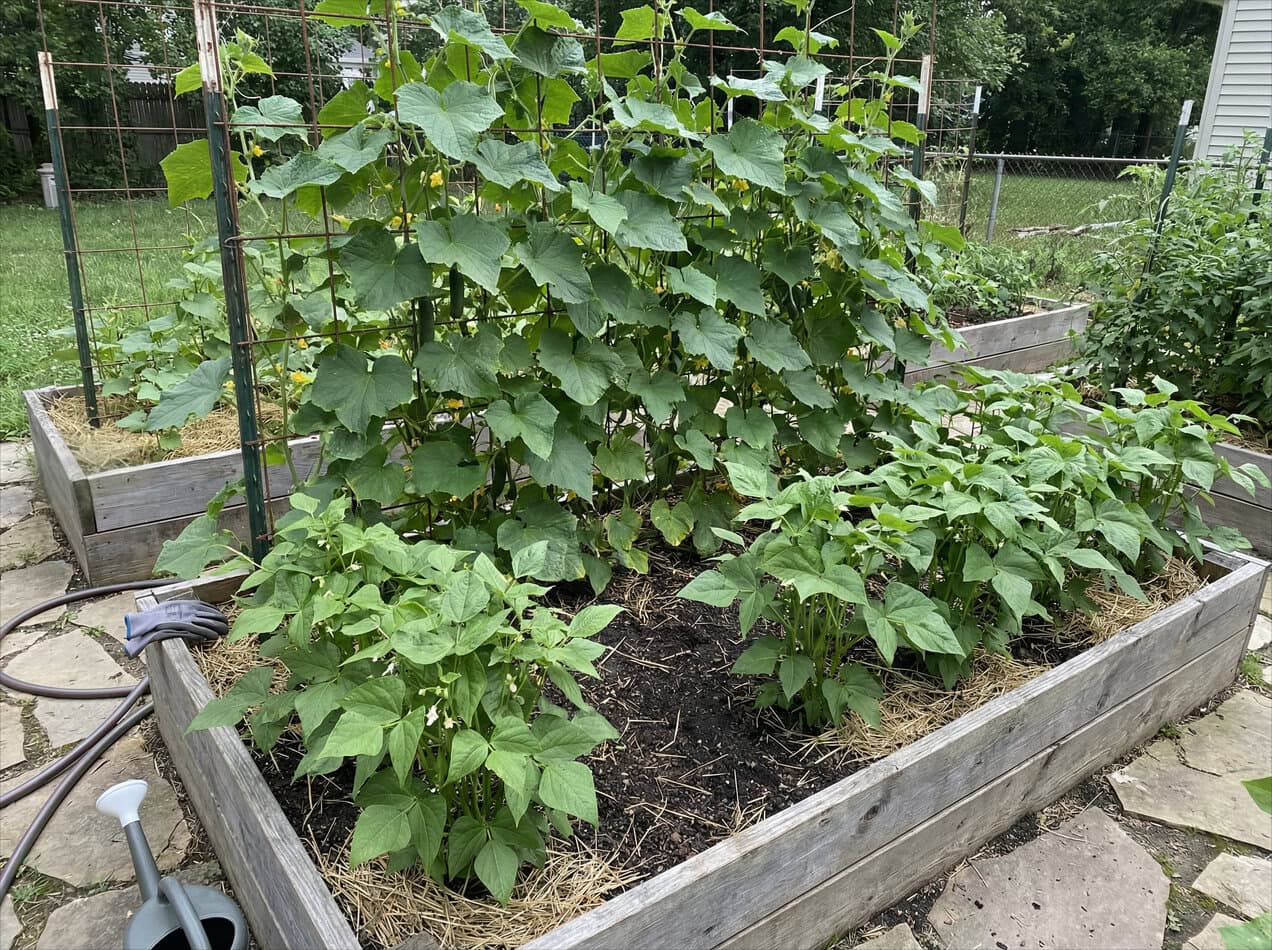
Cucumbers are heavy nitrogen feeders. Beans, particularly pole beans, fix atmospheric nitrogen into the soil, essentially fertilizing the bed for free. This is one of those pairings where both plants are pulling their weight — cucumbers benefit from the improved soil, and beans don’t mind sharing space with a vining neighbor.
Plant pole beans on the north side of your cucumber trellis so they don’t shade out your cucumbers, and let them do their quiet, nitrogen-fixing thing all season.
- Plant type: Annual vegetable
- Benefit: Fixes nitrogen in the soil, improves fertility
- Tip: Plant on the north side to avoid shading
5. Radishes — The Cucumber Beetle Deterrent
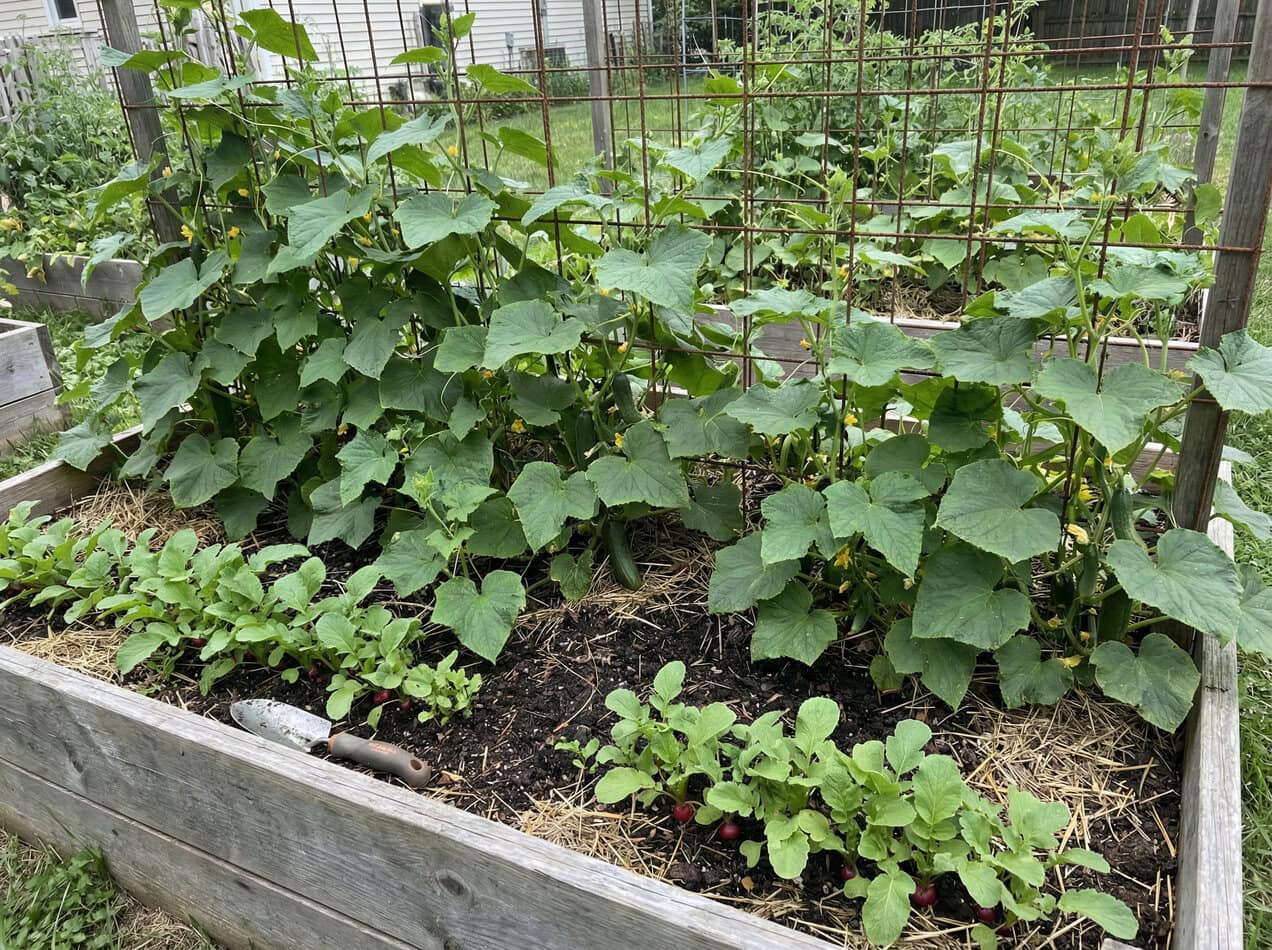
Radishes have a long history as companion plants, and with cucumbers, they earn their keep twice over. First, they help deter cucumber beetles — one of the most destructive cucumber pests. Second, they’re fast-maturing, so you can harvest them before they compete with your cucumbers for space.
Some gardeners also use radishes as a trap crop for flea beetles. They’re doing a lot of heavy lifting for a small, humble root vegetable.
- Plant type: Annual vegetable
- Benefit: Deters cucumber beetles, fast-maturing
- Bonus: You get radishes to eat!
6. Sunflowers — The Trellis and the Pollinator Hotel
Tall sunflowers can serve as a natural trellis for cucumber vines if planted correctly, and their large open flowers are absolute bee magnets. More bees mean better pollination, which directly translates to more cucumbers.
Just be mindful of spacing — sunflowers are tall and can block significant sunlight if planted on the south side of your bed. Plant them to the north or east and let your cucumbers bask.
- Plant type: Annual flowering
- Benefit: Attracts pollinators, can provide natural trellis support
- Watch out for: Shading — plant thoughtfully

7. Oregano (USDA Zones 5-10)
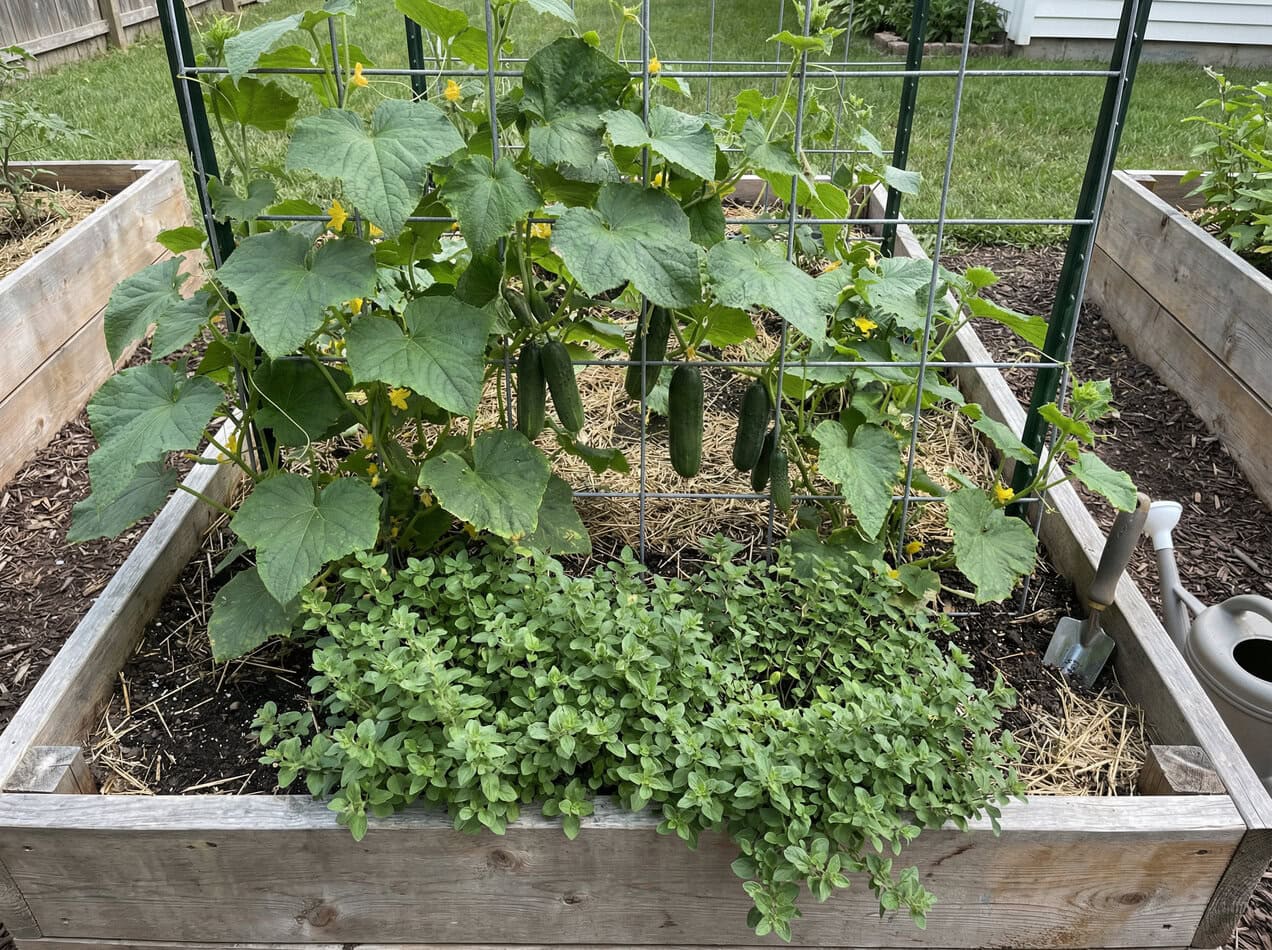
Oregano is an excellent companion herb for warm-season plantings because it stays relatively low, smells wonderful, and fits easily into mixed edible beds.
Why it pairs well
It appreciates similar sunny conditions and can spill around the edge of a bed or container while cucumbers climb upward.
How to plant it
Keep oregano along the edge rather than directly under dense cucumber growth.
Practical tip
Trim it regularly so it stays compact and does not become woody or overly competitive.
8. Lettuce: useful for cooler edges and early-season productivity
Lettuce may not be the first cucumber companion people think of, but it can be very useful in the right setup.
Why it helps
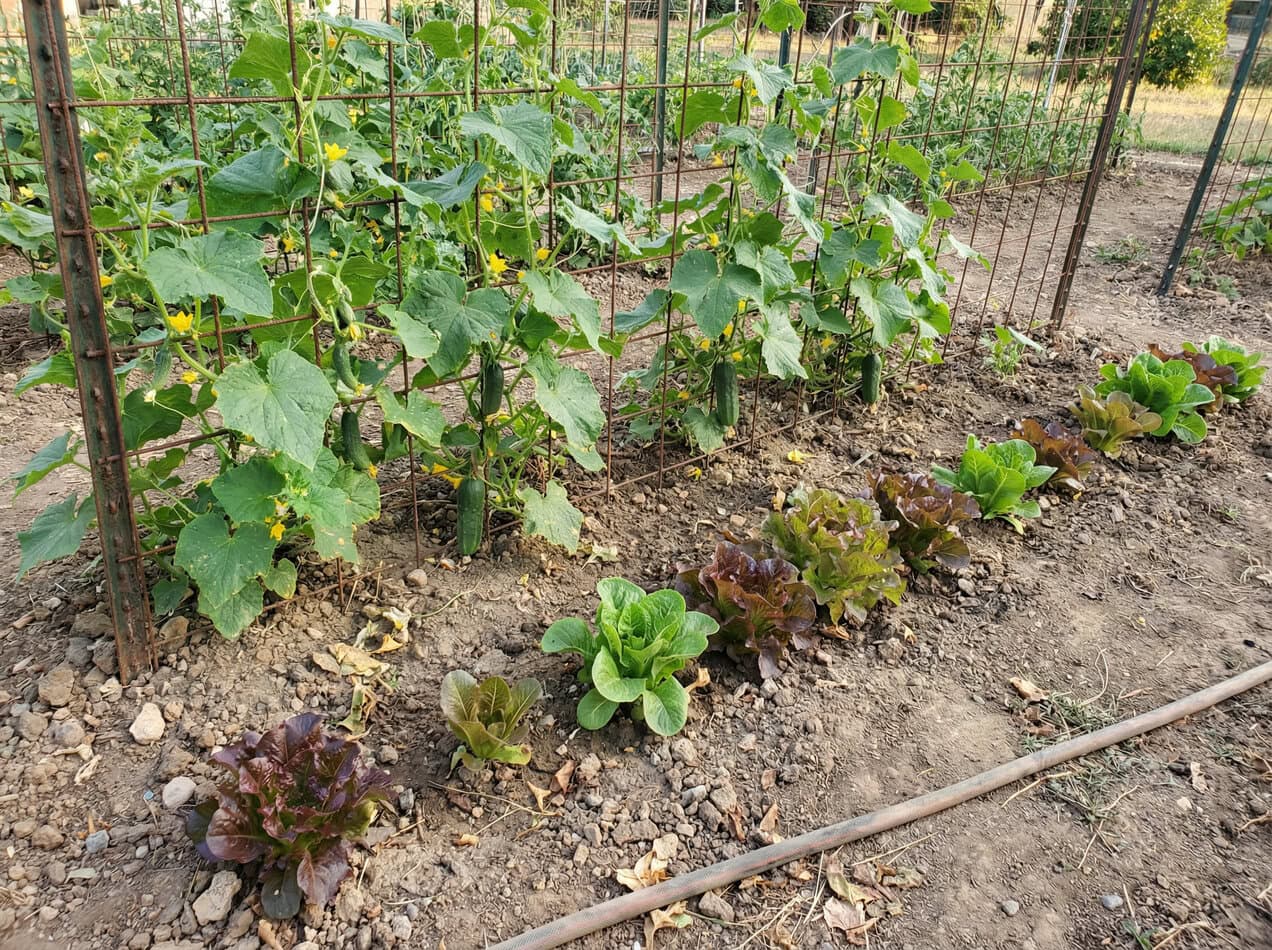
Lettuce grows quickly and occupies low space near the base of the bed. It can be harvested before cucumber vines fully take over.
How to use it
Plant lettuce in the outer edge of a cucumber bed, especially in spring when the cucumbers are still small and the weather is mild.
Practical tip
This works best early in the season or in spots where the lettuce gets some relief from strong afternoon heat.
9. Borage: the best pollinator companion for cucumbers
If you plant only one cucumber companion, make it borage.
Borage is one of the strongest pollinator-attracting plants for the vegetable garden. Its blue, star-shaped flowers draw bees constantly, and that extra traffic helps increase cucumber flower visitation.
Why it works so well
Cucumbers benefit from repeated pollinator visits over time. Borage keeps bees moving through the area, which improves the odds that cucumber flowers are pollinated well and regularly.
How to plant it
Place borage near the edge of the cucumber bed or in nearby containers if space is tight. Give it room, because it can become broad and leafy.
Practical tip
Do not tuck borage too tightly under the cucumber vines. Keep it close enough to attract pollinators, but not so close that airflow becomes crowded.

10. Calendula: bright flowers with real garden value
Calendula is one of those flowers that earns its place. It looks cheerful, grows easily, and supports a busier pollinator-friendly garden.
Why it works near cucumbers
Its flowers help bring in useful insect activity, and its tidy habit makes it easy to place around the edges of beds or containers.
How to use it
Plant calendula near pathways, bed corners, or in front of trellised cucumbers where it gets enough sun without being smothered.
Practical tip
Deadhead regularly if you want longer bloom and a tidier appearance.

Cucumber Companion Plants to Avoid (Keep These Far Away)
Just as important as knowing what to plant with cucumbers is knowing what not to plant with them. These plants are bad neighbors — they compete, inhibit, or invite trouble.
Sage
Sage is allelopathic — it releases compounds that inhibit the germination and growth of nearby plants. Cucumbers are particularly sensitive to it. Despite sage being a generally useful garden herb, keep it well away from your cucumber bed.
Melons and Squash
Melons and squash are cucumbers’ close relatives, and they share the same pests and diseases. Planting them together is essentially concentrating a target for cucumber beetles and powdery mildew. They also compete aggressively for the same nutrients. Give these groups their own separate garden real estate.
Potatoes
Potatoes and cucumbers are a bad match because they compete for nutrients and potatoes are prone to blight – a disease that can spread to cucumbers. Keep these two well separated.
Fennel
Fennel is famously allelopathic and makes a bad neighbor for almost everything in the vegetable garden – cucumbers included. It’s best given its own isolated container or corner of the yard where it can’t do damage.