Oats blood sugar spike can vary more than most people realize.
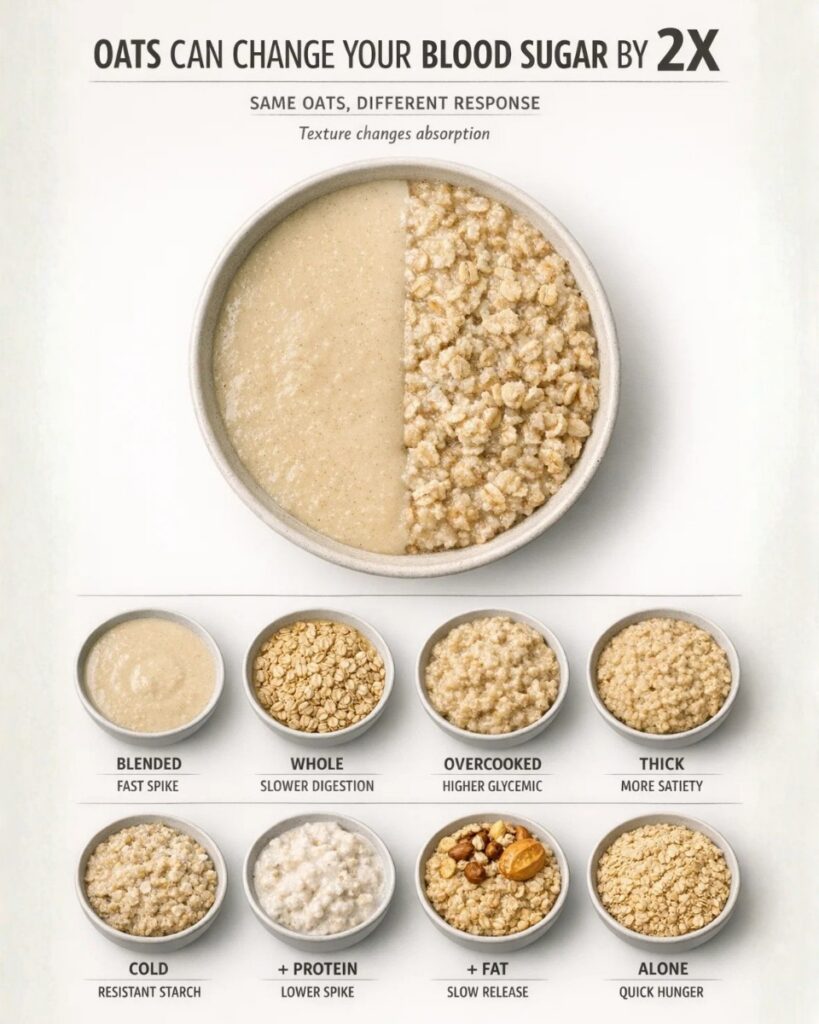
The same oats can produce completely different responses — sometimes up to 2X — depending on how they are prepared.
Why Oats Blood Sugar Response Changes Based on Texture
Oats are rich in carbohydrates, which means they directly influence glucose levels. But their impact is not fixed.
It depends on:
- how finely they are processed
- how long they are cooked
- whether they are eaten alone or combined with other nutrients
- their physical texture (liquid vs solid)
👉 The key variable is digestion speed.
- Faster digestion → faster glucose spike
- Slower digestion → more stable energy and blood sugar
This is why two bowls of oats can feel completely different in your body.
8 Common Ways Oats Change Your Blood Sugar Response
1. Blended Oats – Fast Spike
Example: oat smoothies, oat flour
Blending breaks down structure completely, making oats behave more like a liquid carbohydrate.
Effect:
- rapid absorption
- sharp glucose spike
- shorter satiety
👉 This is why oat smoothies can spike blood sugar faster than whole oats.
2. Whole Oats – Slower Digestion
Example: steel-cut oats, minimally processed oats
Whole oats maintain structure, slowing down enzyme access.
Effect:
- gradual glucose release
- more stable energy
- longer fullness
👉 Best choice for low glycemic oatmeal meals.
3. Overcooked Oats – Higher Glycemic Response
Cooking oats for too long breaks them down further.
Effect:
- softer texture
- faster digestion
- higher blood sugar response
👉 The more “mushy” the oats, the faster they act in your body.
4. Thick Oats – More Satiety
Less water = thicker texture.
Effect:
- slower eating
- slower digestion
- increased satiety signals
👉 Texture alone can influence how quickly you feel full.
5. Cold Oats – Resistant Starch Advantage
Example: overnight oats
Cooling oats increases resistant starch, which slows digestion.
Effect:
- reduced glucose spikes
- improved gut health
- steadier energy
👉 One of the simplest ways to stabilize blood sugar naturally.
6. Oats + Protein – Lower Spike
Example: oats + Greek yogurt, protein powder
Protein slows how quickly carbohydrates are absorbed.
Effect:
- lower post-meal glucose spike
- improved insulin response
- longer-lasting energy
👉 One of the most effective combinations for blood sugar control.
7. Oats + Fat – Slow Release
Example: oats + nuts, peanut butter
Fat delays gastric emptying.
Effect:
- slower digestion
- smoother glucose curve
- reduced energy crashes
👉 Helps create slow-release energy meals.
8. Oats Alone – Quick Hunger
Eating oats without protein or fat leads to faster digestion.
Effect:
- rapid glucose spike
- quick drop
- early hunger
👉 This is why many people feel hungry soon after eating plain oatmeal.
The Science: Texture Changes Absorption
The phrase in the infographic is critical:
👉 “Texture changes absorption.”
From a physiological standpoint:
- Smaller particles → larger surface area → faster enzyme action
- Softer texture → quicker digestion
- Liquid form → near-instant absorption
This directly impacts:
- blood sugar spikes
- insulin response
- satiety hormones
👉 In simple terms:
The more broken down the oats are, the faster they hit your bloodstream.
How to Eat Oats Without Blood Sugar Spikes
Use this simple structure:
👉 Oats + Protein or Fat (ideally both)
Practical combinations (high performance)
Stable energy breakfasts
- steel-cut oats + Greek yogurt + almonds
- overnight oats + chia seeds + berries
- oats + protein powder + peanut butter
Meal-prep friendly ideas
- savory oats + eggs + avocado
- oats + cottage cheese + walnuts
👉 These combinations help create low glycemic oat recipes that support energy stability.
What Most People Get Wrong About Oats
Common mistakes:
- blending oats into smoothies without protein
- adding sugar (honey, syrup) without balance
- overcooking oats into soft textures
- eating oats alone
👉 These habits often lead to:
- glucose spikes
- energy crashes
- increased cravings
How This Connects to Energy, Hunger, and Blood Sugar
Even if your goal is not “blood sugar control,” the effect still shows up as:
- unstable energy
- mid-morning hunger
- cravings later in the day
Because:
👉 Energy crashes are often just delayed blood sugar drops.
Optimizing oats can help:
- reduce blood sugar spikes after meals
- improve appetite control
- support weight management
- maintain consistent energy
Common Questions About Oats and Blood Sugar
Do oats spike blood sugar?
They can, depending on how they are prepared. Blended or overcooked oats spike faster than whole or cold oats.
What is the best way to eat oats for stable energy?
Combine oats with protein and healthy fats, and avoid over-processing.
Are overnight oats better for blood sugar?
Yes, due to resistant starch and slower digestion.
Why do oats make me hungry quickly?
Likely because they were eaten alone or in a fast-digesting form.
Final Takeaway
Oats are not the problem.
👉 How you prepare them determines the outcome.
The same oats can:
- spike your blood sugar quickly
- or provide slow, stable energy for hours
The difference comes down to:
- texture
- cooking method
- food combinations
👉 Small adjustments can completely change how your body responds.