The eat the rainbow diet is one of the simplest ways to improve overall health without following a strict meal plan.
Most people think eating healthy means choosing the “right foods.”
But the real problem is simpler:
👉 You’re probably eating the same colors every day.
White rice, brown meat, maybe a bit of green — and that’s it.
The issue?
Different colors in food represent different nutrients and biological effects.
👉 So when your plate lacks color, your body lacks diversity.
Why the Eat the Rainbow Diet Works
Food color isn’t random — it reflects plant compounds (phytonutrients) that affect your body in different ways:
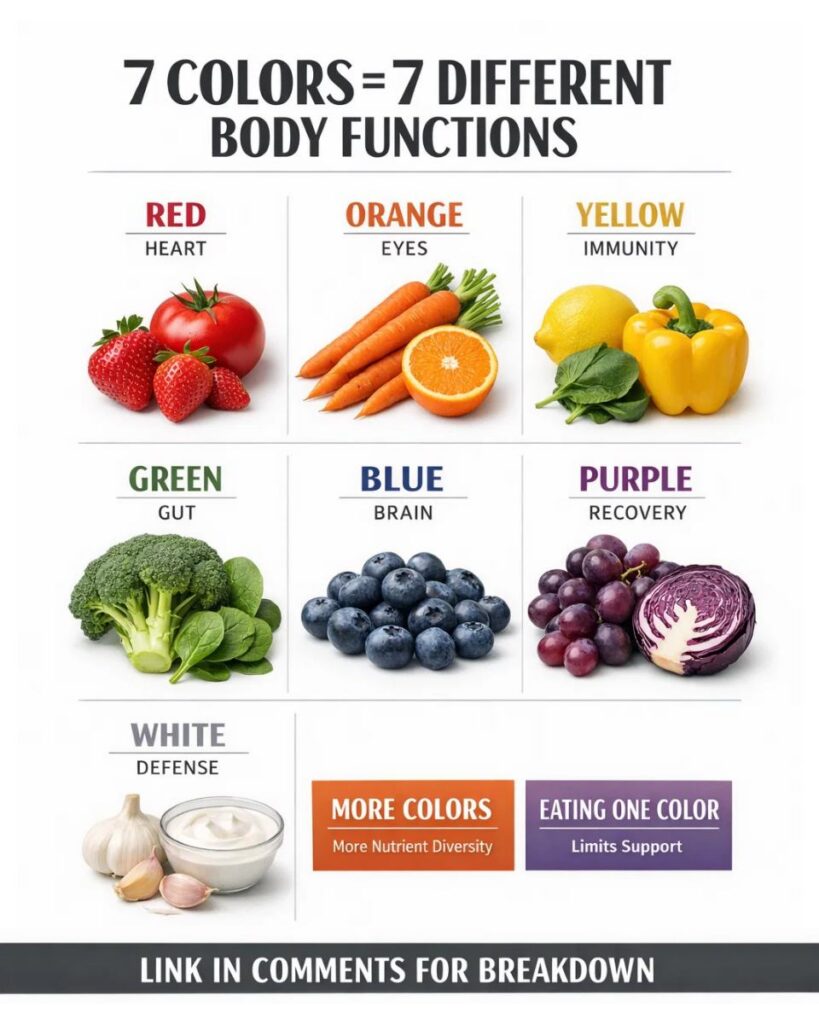
- Red → antioxidant activity
- Green → fiber + gut support
- Yellow/Orange → immune + vision support
- Blue/Purple → brain + recovery
👉 This is why “eating healthy” but repeating the same foods often doesn’t work long-term.
7 Food Colors in the Eat the Rainbow Diet
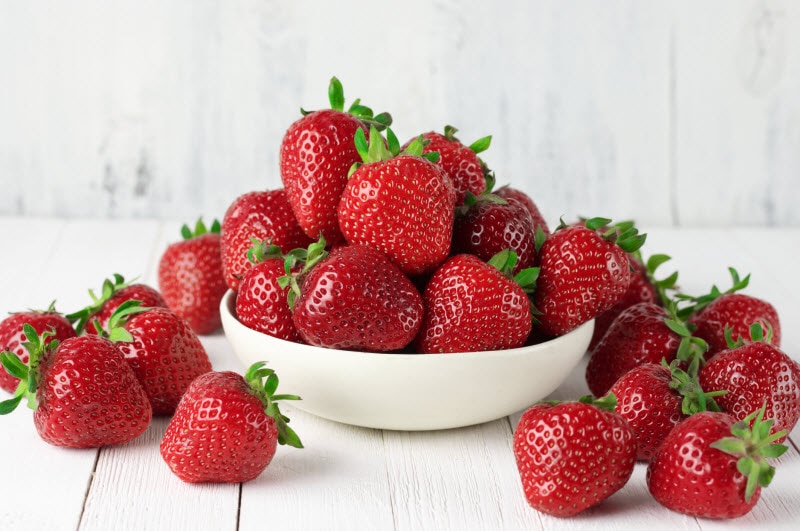
🔴 Red Foods → Heart & Circulation
Examples: tomatoes, strawberries
Red foods contain compounds like lycopene and anthocyanins that support cardiovascular function.
👉 Insight:
These compounds help reduce oxidative stress — one of the key drivers of aging and heart issues.
👉 Easy meals:
- tomatoes + eggs
- strawberries + yogurt
🟠 Orange Foods → Vision & Skin
Examples: carrots, oranges
Rich in beta-carotene → converted into vitamin A in the body.
👉 Insight:
Your body only converts what it needs — so pairing with fat improves absorption.
👉 Easy meals:
- carrots + olive oil
- orange + almonds
🟡 Yellow Foods → Immune Support
Examples: lemon, yellow peppers
High in vitamin C and flavonoids.
👉 Insight:
Vitamin C works best when combined with whole foods — not isolated supplements.
👉 Easy meals:
- lemon water in the morning
- peppers + protein meals
🟢 Green Foods → Gut & Digestion
Examples: broccoli, spinach
High in fiber, magnesium, and plant compounds.
👉 Insight:
Fiber doesn’t just “help digestion” — it feeds gut bacteria, which impacts energy, mood, and metabolism.
👉 Easy meals:
- greens + rice + eggs
- spinach + chicken

🔵 Blue Foods → Brain Function
Examples: blueberries
Contain polyphenols linked to cognitive performance.
👉 Insight:
These compounds may help protect against mental fatigue and long-term decline.
👉 Easy meals:
- blueberries + yogurt
- smoothie bowls
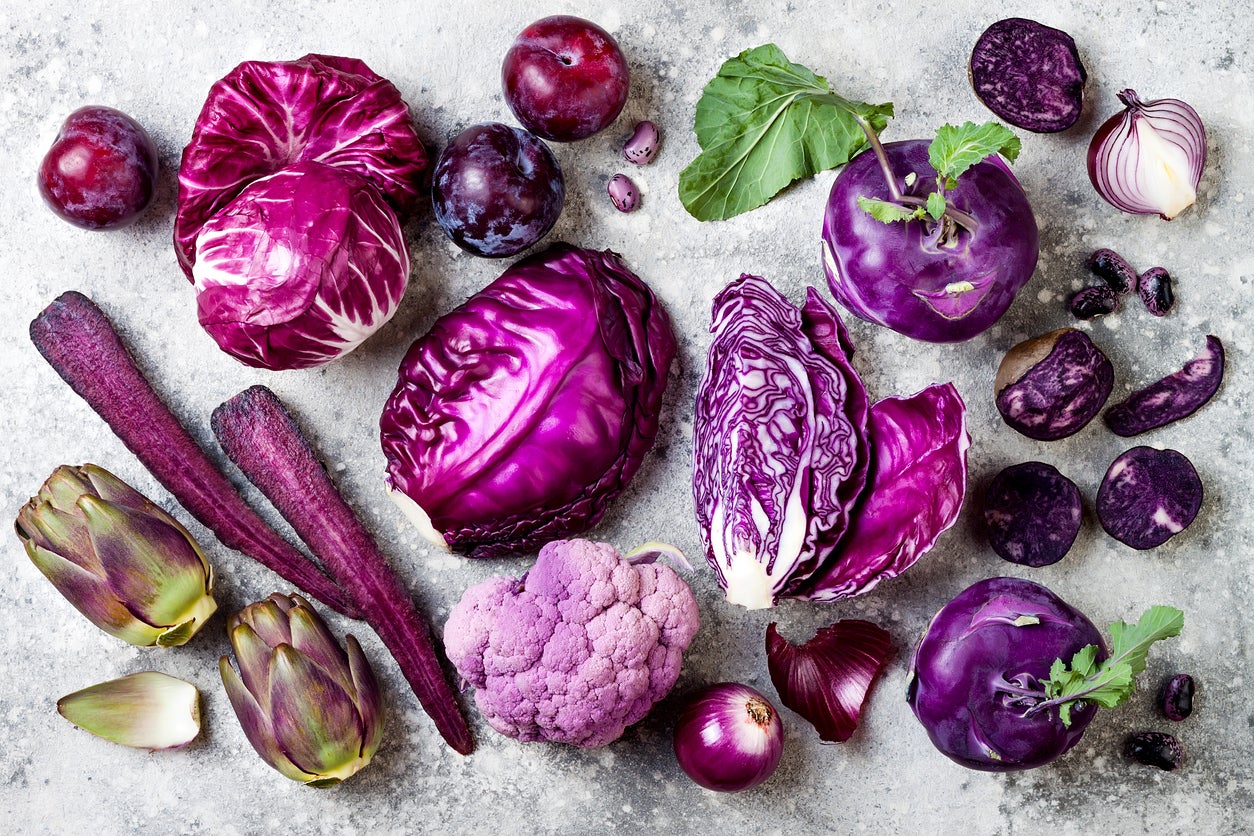
🟣 Purple Foods → Recovery & Anti-Inflammation
Examples: grapes, purple cabbage
Rich in anthocyanins.
👉 Insight:
These help reduce inflammation — important if you train, stress a lot, or have poor sleep.
👉 Easy meals:
- cabbage salad
- grapes + nuts
⚪ White Foods → Defense & Balance
Examples: garlic, yogurt
Support immune response and gut health.
👉 Insight:
Garlic contains sulfur compounds that support immune defense beyond basic nutrition.
👉 Easy meals:
- garlic in cooked dishes
- yogurt + fruit
The Real Problem: Most People Eat Too Few Colors
Typical diet:
- carbs (white)
- protein (brown)
- very little diversity
👉 Result:
- low nutrient variety
- faster hunger
- unstable energy
👉 This is why people feel like:
“I eat healthy but still feel off”
Simple Formula for Balanced Meals
Instead of overthinking nutrition, use this:
👉 3-color rule per meal
Example combinations:
- rice + greens + eggs
- chicken + vegetables + potatoes
- yogurt + berries + nuts
👉 This automatically improves:
- nutrient diversity
- digestion
- satiety
Why This Helps With Energy and Fullness
When you combine different food groups and colors:
- fiber slows digestion
- fats improve nutrient absorption
- protein stabilizes energy
👉 Result:
- fewer cravings
- longer-lasting fullness
- more stable energy levels
Practical Meal Ideas You Can Use Daily
Breakfast:
- yogurt + berries + chia seeds
- oats + banana + peanut butter
Lunch:
- rice + vegetables + chicken
- pasta + greens + olive oil
Dinner:
- salmon + greens + potatoes
- beans + rice + vegetables
Final Takeaway
You don’t need a strict diet.
👉 You need variety.
Eating more colors is one of the simplest ways to:
- improve overall nutrition
- support different body functions
- feel more satisfied after meals
👉 Start small:
Add just one new color to each meal
That alone can make a noticeable difference.