Fruit is often talked about as if one “perfect” choice can fix everything. In real life, that is not how healthy eating works. The real win comes from variety, and that is exactly the message in this simple fruit guide.
These fruits that support your body daily bring a mix of vitamin C, fiber, potassium, antioxidants, hydration, and healthy fats. Some help with digestion. Some support heart health. Some are great for hydration or steady energy. Together, they make it much easier to build a colorful routine that actually feels realistic.
Most people never realize this works because they keep looking for one miracle food, when the better strategy is rotating different fruits through the week.
Fruit List: Everyday Choices That Support Different Body Functions
Blueberry
Blueberries are known for their rich antioxidant content, especially compounds that help protect cells from everyday oxidative stress. They are easy to add to yogurt, oatmeal, smoothies, or simply eat by the handful.
Strawberry
Strawberries provide vitamin C, water, and fiber in a naturally sweet package. They are a smart option for skin support, immune health, and lighter snacks that still feel satisfying.
Kiwi
Kiwi is one of those fruits people underestimate. It brings vitamin C and fiber, and many people also enjoy it as a digestion-friendly fruit. It works well on its own, in fruit bowls, or sliced over yogurt.
Papaya
Papaya is often chosen for digestive comfort. It is also a source of vitamin C and colorful plant compounds that fit beautifully into a fresh breakfast or snack routine.
Apple
Apples are classic for a reason. They offer fiber and crunch, which can help with fullness between meals. An apple paired with nuts or yogurt makes a balanced snack that feels much more satisfying than fruit alone.
Banana
Bananas provide carbohydrates for energy along with potassium, making them a practical choice before exercise or during busy afternoons. They are easy to digest, easy to carry, and easy to pair with nut butter or oats.
Orange
Oranges are one of the most familiar vitamin C fruits. They also add hydration and refreshing flavor, which makes them a great pick when you want something simple and bright.
Avocado
Avocado stands out because it brings healthy fats rather than just natural sugars. It supports fullness, helps meals feel more substantial, and pairs well with toast, salads, eggs, or grain bowls.
Grapes
Grapes are juicy, convenient, and easy to portion. They can be a refreshing snack, especially when chilled, and they add natural sweetness to fruit plates without much prep.
Lemon
Lemon is usually not eaten like other fruits, but it still deserves a place here. It can brighten meals, flavor water, and bring a fresh citrus note that helps make healthy foods more appealing.
Watermelon
Watermelon is one of the best fruits for hydration support because of its high water content. It is especially helpful in hot weather or after a long day when you want something light and cooling.
Pineapple
Pineapple brings sweetness, fluid, and a tropical flavor that works in smoothies, fruit bowls, or alongside savory meals. Many people enjoy it as a refreshing option after heavier foods.
Almonds
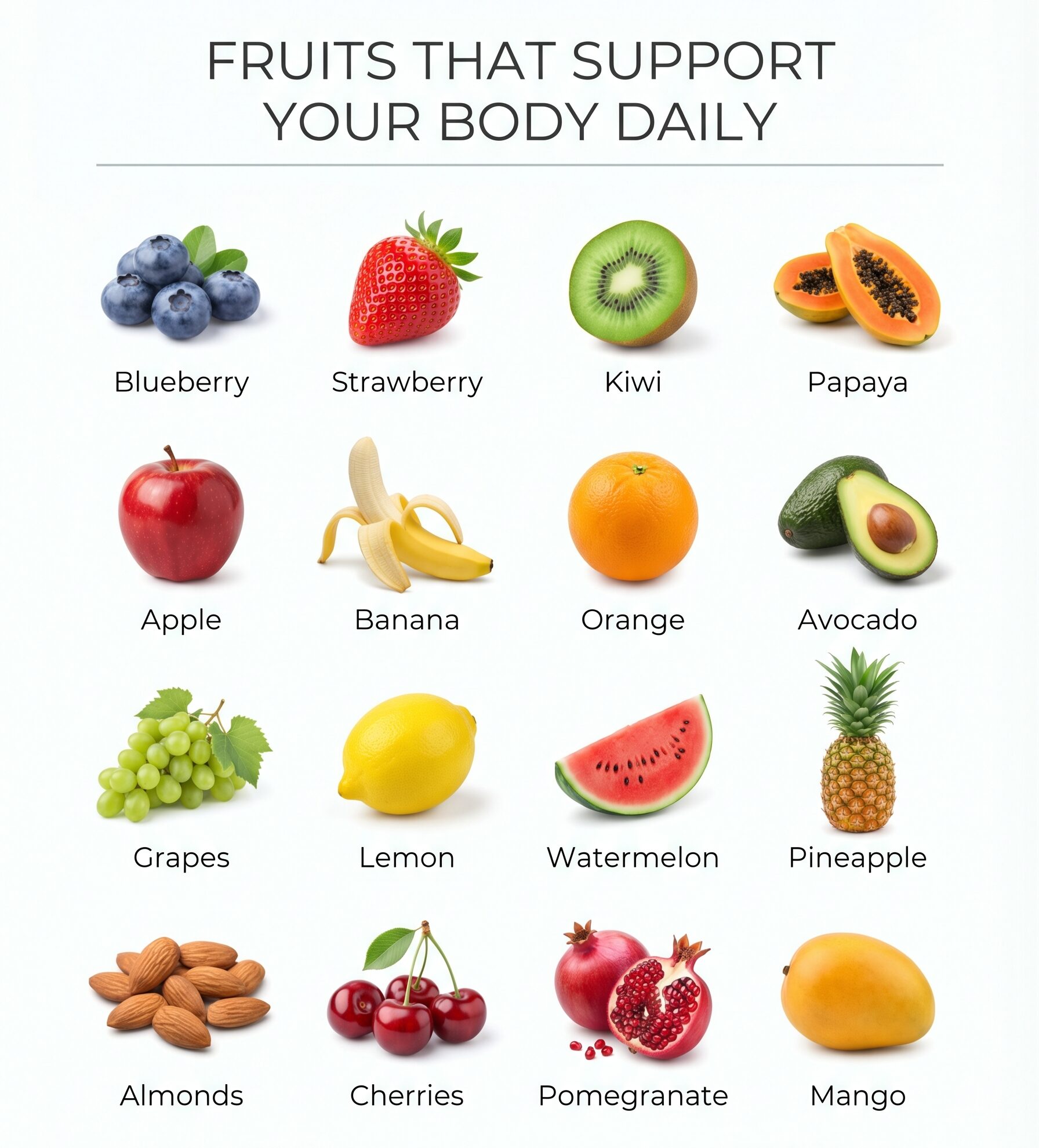
Almonds are included in the image even though they are technically not a fleshy fruit like the others. Nutritionally, they add healthy fats, some protein, and vitamin E, which helps make fruit-based snacks more filling and balanced.
Cherries
Cherries are flavorful, colorful, and enjoyable as a seasonal snack. They fit well into a fruit rotation when you want something sweet but still nutrient-dense.
Pomegranate
Pomegranate offers fiber and antioxidant-rich seeds with a bright, tart flavor. It works beautifully sprinkled over yogurt, oats, or salads for both texture and nutrition.
Mango
Mango adds natural sweetness along with vitamin-rich color. It is a great fruit for smoothies, breakfast bowls, or simple fresh slices when you want something satisfying and vibrant.
How to Build a Daily Plate Using These Fruits
A practical way to use these healthy fruits for daily wellness is to spread them through the day instead of eating only one kind.
Try this pattern:
At breakfast
Add blueberry, strawberry, kiwi, banana, or mango to oats or yogurt.
At snack time
Use apple, grapes, cherries, or watermelon for a quick fresh snack. Pair them with almonds or yogurt for longer fullness.
With meals
Use avocado with lunch, lemon over vegetables or fish, and pineapple or pomegranate to brighten savory dishes.
This helps you get a broader range of nutrients without overthinking it.
When You’ll Notice Changes
Some benefits, like better hydration, lighter digestion, and improved snack quality, may be noticeable within a few days.
Fuller benefits from a more consistent fruit intake, such as better diet variety and steadier energy from smarter snack habits, usually build over 2 to 4 weeks. The goal is not instant perfection. It is steady, repeatable variety.
Tips to Combine Them Effectively
Fruit often works even better when paired well.
Pair sweet fruit with protein or fat
Apple with almonds, banana with yogurt, or berries with cottage cheese can help you stay full longer.
Rotate colors
Blue, red, orange, green, and yellow fruits often bring different plant nutrients, so color variety matters.
Use fresh or simple frozen options
Frozen berries, mango, and pineapple can make healthy eating easier and reduce waste.
Quick Notes and Safety
Most people do well with a variety of fruits, but portions and pairings still matter.
People managing blood sugar often do better when fruit is paired with protein, fat, or fiber rather than eaten alone. Those with digestive sensitivity may tolerate some fruits better than others. Citrus fruits like orange and lemon may also bother people with reflux.
Final Takeaway
The best fruits that support your body daily are not about chasing one superfruit. They are about building a colorful routine with blueberry, strawberry, kiwi, papaya, apple, banana, orange, avocado, grapes, lemon, watermelon, pineapple, almonds, cherries, pomegranate, and mango.
The message is simple and useful: variety beats perfection. When you rotate fruits regularly, your body gets a wider nutritional advantage with far less stress.
Related source science: Fruits support daily health largely through fiber, vitamin C, potassium, hydration, and antioxidant plant compounds, while avocado and almonds add healthy fats that can make fruit-based meals more satisfying.