If you often feel tired or hungry after eating, this healthy breakfast energy crash might be the reason.
Many people think they’re eating a healthy breakfast — toast, smoothies, coffee — but still feel tired, hungry, or unfocused just 1–2 hours later.
This isn’t a willpower problem.
It’s a meal structure problem.
Understanding why you crash after breakfast can help you fix energy dips, reduce cravings, and stay full longer without extreme diets.
What Causes the Morning Energy Crash?
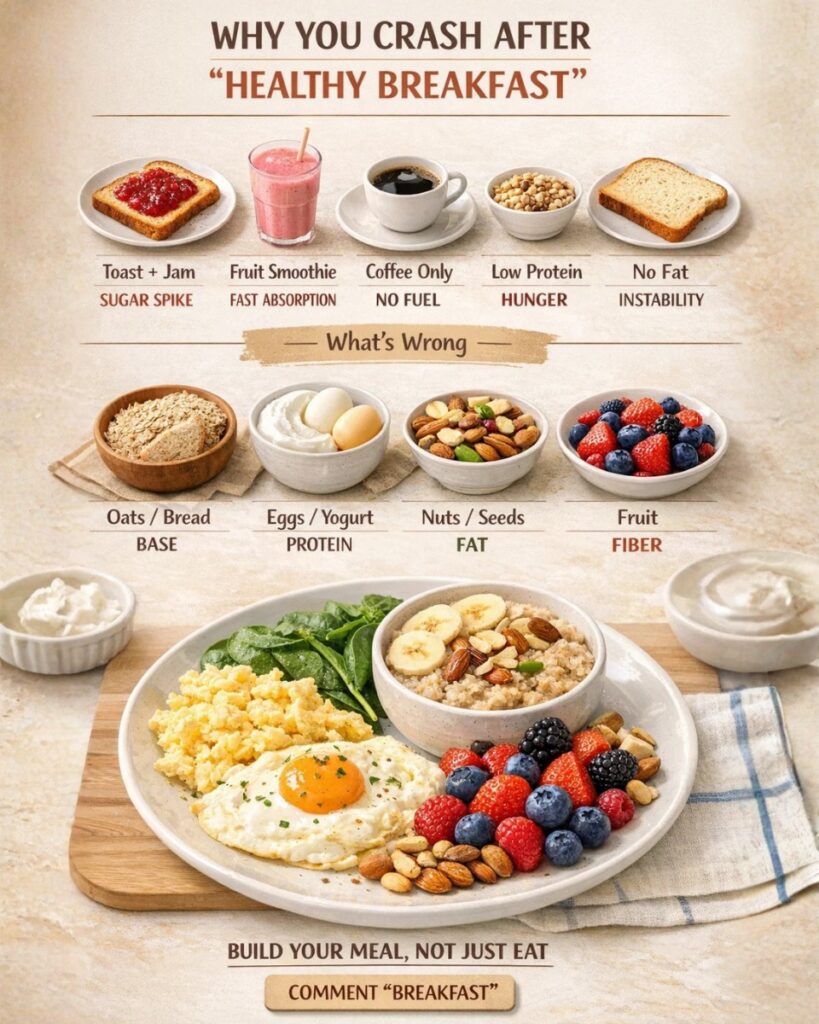
A typical “healthy breakfast” often looks like this:
- Toast with jam
- Fruit smoothie
- Coffee alone
- Low-protein snacks
- Fat-free meals
These seem clean — but they’re metabolically incomplete.

Here’s what actually happens:
1. Sugar Spike → Energy Crash
Foods like toast + jam or smoothies digest quickly.
👉 Result:
- Rapid blood sugar spike
- Insulin surge
- Followed by a crash
📊 Research insight:
High glycemic index (GI) meals are linked to faster drops in energy and increased hunger shortly after eating (Harvard School of Public Health).
2. Fast Absorption = No Sustained Fuel
Liquid calories (like smoothies) bypass normal digestion speed.
👉 Result:
- Less chewing → weaker satiety signals
- Faster absorption → shorter fullness
📊 Studies show:
Solid meals tend to be more filling than liquid ones, even with similar calories (Appetite Journal).
3. Low Protein = Hunger Returns Faster
Breakfasts without protein (like fruit or bread only) fail to regulate appetite hormones.
👉 Result:
- Ghrelin (hunger hormone) rises quickly
- You feel hungry again within hours
📊 Protein has been shown to:
- Increase satiety
- Reduce overall calorie intake throughout the day
4. No Fat = Blood Sugar Instability
Fat slows digestion and stabilizes glucose levels.
👉 Without it:
- Blood sugar fluctuates more
- Energy feels unstable
5. Coffee Alone = No Fuel
Coffee gives stimulation, not energy.
👉 Without food:
- Cortisol spikes
- Energy feels artificial → followed by a crash
The Real Fix: Build a Balanced Breakfast
Instead of focusing on “clean foods,” focus on balanced structure.
A proper breakfast should include 4 components:
1. Base (Slow Carbs)
Provides steady energy
Options:
- Oats
- Whole grain bread
- Quinoa
👉 Why it works:
Slow-digesting carbs provide gradual glucose release → stable energy
2. Protein (Satiety Control)
Keeps you full longer
Options:
- Eggs
- Greek yogurt
- Chicken
📊 Protein supports:
- Muscle repair
- Appetite control
- Stable blood sugar
3. Healthy Fat (Stability + Fullness)
Slows digestion and improves nutrient absorption
Options:
- Nuts
- Seeds
- Avocado
👉 Fat helps reduce spikes and prolong satiety
4. Fiber (Gut + Glucose Control)
Supports digestion and prevents energy dips
Options:
- Berries
- Fruits
- Vegetables
📊 Fiber slows glucose absorption and improves gut health
Example: A Balanced Breakfast That Actually Works
Instead of:
❌ Toast + jam + coffee
Try:
✅ Oats + yogurt + nuts + berries
Or:
✅ Eggs + whole grain bread + avocado + fruit
👉 This combination:
- Slows digestion
- Stabilizes blood sugar
- Keeps you full for 3–4 hours
Why This Structure Works (Science Insight)
Balanced meals influence:
✔ Blood Sugar Stability
Combining carbs + protein + fat slows glucose release
✔ Hormone Regulation
- Protein → reduces ghrelin
- Fat → supports satiety hormones
✔ Digestion Speed
Mixed meals digest slower → longer energy
📊 According to nutrition research:
Meals with combined macronutrients lead to better energy regulation and reduced cravings compared to carb-heavy meals.
Common “Healthy Breakfast” Mistakes to Avoid
- Eating carbs alone
- Drinking calories instead of eating
- Skipping protein
- Avoiding fats completely
- Relying on coffee for energy
Quick Rule to Remember
👉 If your breakfast is:
- Mostly carbs → you’ll crash
- Balanced → you’ll stay full
Final Takeaway
Feeling tired after a “healthy breakfast” isn’t random.
It usually means your meal is:
- Too fast-digesting
- Lacking protein or fat
- Not structurally balanced
You don’t need a strict diet.
👉 You just need to build your meal, not just eat.
Sources
- Harvard T.H. Chan School of Public Health – Glycemic Index & Energy
- Appetite Journal – Liquid vs solid calorie satiety
- American Journal of Clinical Nutrition – Protein and appetite control
- NIH – Macronutrient balance and metabolic health
Related searches:
- why do I feel tired after breakfast
- best breakfast for stable energy
- high protein breakfast ideas
- foods that prevent energy crash