When people think about heart health remedies, they usually picture expensive supplements or strict diets. But sometimes the most interesting ideas come from simple kitchen and garden ingredients.
This image points to a traditional-style blend made with fennel seeds, guava leaves, and onion peels. It looks humble, but each ingredient brings something different to the table. The real benefit is not that this tea can “cure” heart problems. It cannot. The smarter and more realistic message is that these plant ingredients contain compounds being studied for antioxidant, metabolic, and vascular support, while a heart-healthy lifestyle still matters most.
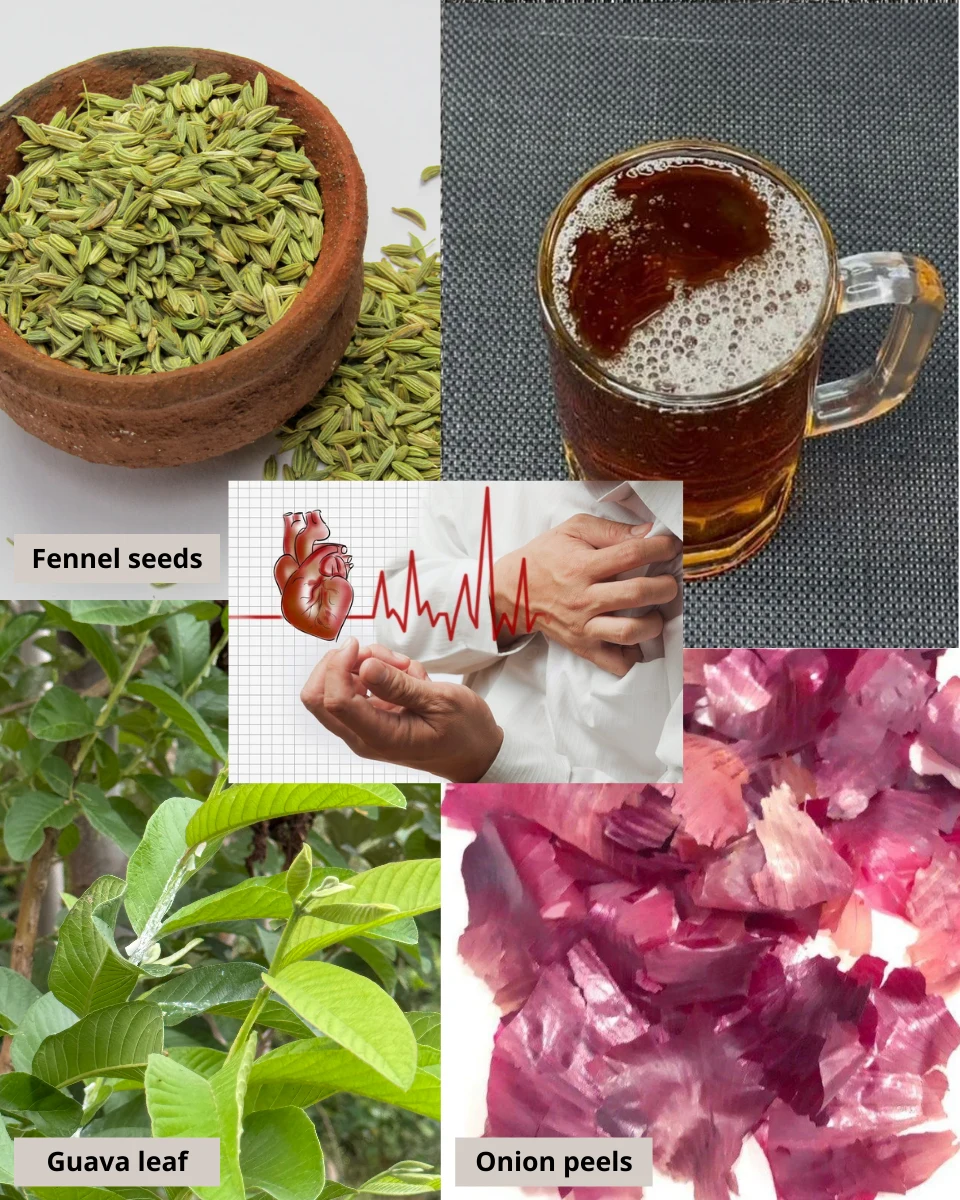 Ingredients for a Simple Herbal Heart Support Tea
For one small pot, use:
- 1 teaspoon fennel seeds
- 4 to 5 fresh guava leaves, well washed, or 1 teaspoon dried guava leaves
- 1 to 2 tablespoons clean red onion peels
- 2 1/2 cups water
This makes about 2 cups of tea, depending on how long you simmer it.
How to Prepare It
Add the fennel seeds, guava leaves, and onion peels to a saucepan with the water.
Bring it to a gentle boil, then lower the heat and let it simmer for 10 to 15 minutes.
Turn off the heat and let it steep for another 5 minutes. Strain and pour into a cup.
Drink it warm. The flavor is earthy, lightly sweet, and slightly aromatic from the fennel.
How to Use It
This kind of tea is best used as a light wellness drink, not as a replacement for blood pressure medicine, cholesterol treatment, or medical care.
A practical routine is:
- 1 cup in the morning or early afternoon
- Up to 3 to 4 times per week
- Pair it with regular meals, movement, and lower sodium intake
A quick timeline helps set expectations. You may notice the tea feels soothing for digestion right away, especially because fennel is traditionally used for that. Any broader wellness benefits from dietary herbs usually depend on consistent habits over weeks, not one dramatic overnight result. (www.heart.org)
Why This Blend May Help
This is where the image becomes more interesting. Each ingredient has a different role.
Fennel seeds may support vascular comfort
Fennel contains aromatic plant compounds and antioxidants. Recent reviews and experimental studies suggest fennel has been studied for vasorelaxant and cardiovascular-related effects, though much of that evidence is still preclinical or early-stage. That means fennel is promising, but not proven as a treatment for heart disease in humans.
Guava leaves are studied for metabolic support
Guava leaf tea has been researched most often for blood sugar and lipid support. A review of guava leaf extract and tea reported evidence for anti-hyperglycemic and anti-hyperlipidemic effects, and a guava leaf tea product was even approved in Japan as a food for specified health use aimed at people concerned about high blood glucose. Since blood sugar and cholesterol both matter for long-term heart health, this is one reason guava leaves get attention in wellness traditions.
Onion peels are rich in quercetin
Onion peels are often discarded, but they are one of the richest food sources of quercetin, a flavonoid studied for vascular and antioxidant effects. In one randomized trial, quercetin-rich onion skin extract lowered 24-hour blood pressure in people with hypertension. That does not mean homemade onion peel tea will produce the same effect, but it helps explain why onion peel is associated with heart support in natural health circles.
The bigger picture still matters most
The American Heart Association emphasizes that heart health depends most on an overall dietary pattern rich in vegetables, fruits, whole grains, legumes, nuts, seeds, and other minimally processed foods. Herbal teas can fit into that pattern, but they are not the main driver of cardiovascular protection. (www.heart.org)
Who Might Enjoy This Tea Most
This blend may be a good fit for people who want:
- A caffeine-free herbal tea
- A gentle daily ritual for wellness
- More plant compounds in their routine
- A warm drink that supports digestion and hydration
It may be especially appealing to readers focused on healthy aging, blood sugar balance, and heart-conscious habits.
Safety Notes
This part matters.
Guava leaves, fennel, and onion compounds may interact with medications in some people. Anyone taking medicine for blood pressure, diabetes, blood thinning, or heart rhythm issues should be careful with concentrated herbal remedies and discuss regular use with a qualified clinician.
Do not use this tea as a substitute for treatment if you have chest pain, high blood pressure, known heart disease, or symptoms like shortness of breath or fainting.
Pregnant or breastfeeding readers should also be cautious with medicinal-style herbal use unless advised by a healthcare professional.
Final Takeaway
This fennel seed, guava leaf, and onion peel tea is best viewed as a traditional herbal support drink for overall wellness, not a miracle heart cure.
Fennel brings aromatic antioxidants, guava leaf brings metabolic support research, and onion peel contributes quercetin-rich plant compounds. Together, they make a thoughtful tea for people trying to build gentler, more heart-conscious habits.