One of the fastest ways to improve a vegetable garden is not buying more fertilizer, building more beds, or planting more varieties. It is learning how to space plants correctly.
Plant spacing looks simple, but it shapes almost everything in the garden. It affects airflow, root competition, light exposure, disease pressure, weed growth, harvest size, and even how easy it is to water, prune, and pick. When plants are too close, the bed may look impressively full at first, but that early fullness often turns into stress, weak growth, and disappointing yields. When spacing is done well, the garden feels calmer, healthier, and far more productive.
This is one of those practical gardening skills that changes your daily routine in a real way. You stop guessing. You stop overcrowding. You start noticing how each crop uses space above and below the soil. And once that understanding becomes part of how you plant, the whole garden begins to work better.
Why plant spacing matters more than most gardeners realize
Every crop has its own way of growing. Tomatoes stretch upward and outward. Lettuce forms dense heads. Bush beans fill a middle layer. Carrots and scallions stay compact above ground but still need room below the surface. If these growth habits are ignored, plants end up competing for the same air, water, nutrients, and sunlight.
That competition causes avoidable problems:
- leaves stay damp longer, increasing disease risk
- roots compete too heavily, slowing growth
- fruiting plants produce less than they should
- root crops stay small or become misshapen
- harvesting becomes harder and more damaging
Correct spacing solves these problems before they start. It gives each crop enough room to become what it is meant to be.
A simple way to think about spacing: size classes
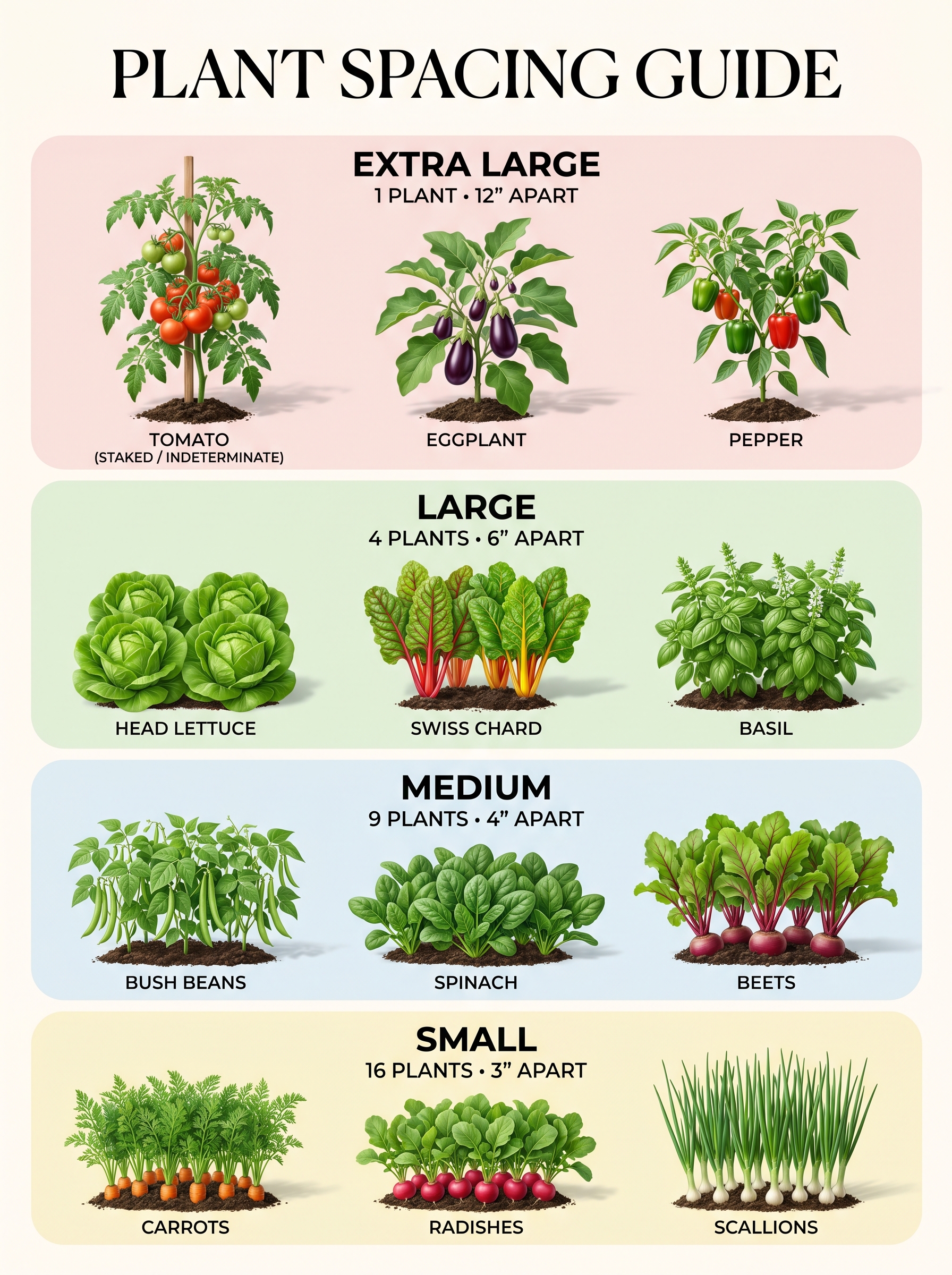
A practical garden can be organized into four spacing groups:
- Extra large crops
- Large crops
- Medium crops
- Small crops
This approach makes planning much easier, especially in raised beds and intensive kitchen gardens. Once you know which crops belong in each size class, you can build a planting layout that feels full without becoming crowded.
Extra large crops: give them room and they reward you
Extra large vegetables are the plants that quickly dominate a bed if spacing is too tight. These include staked or indeterminate tomatoes, eggplant, and peppers. They need strong root space, good air circulation, and enough elbow room for healthy leaf and fruit development.
A reliable rule for this group is one plant every 12 inches in intensive beds, as long as the plants are pruned, supported, and cared for properly.
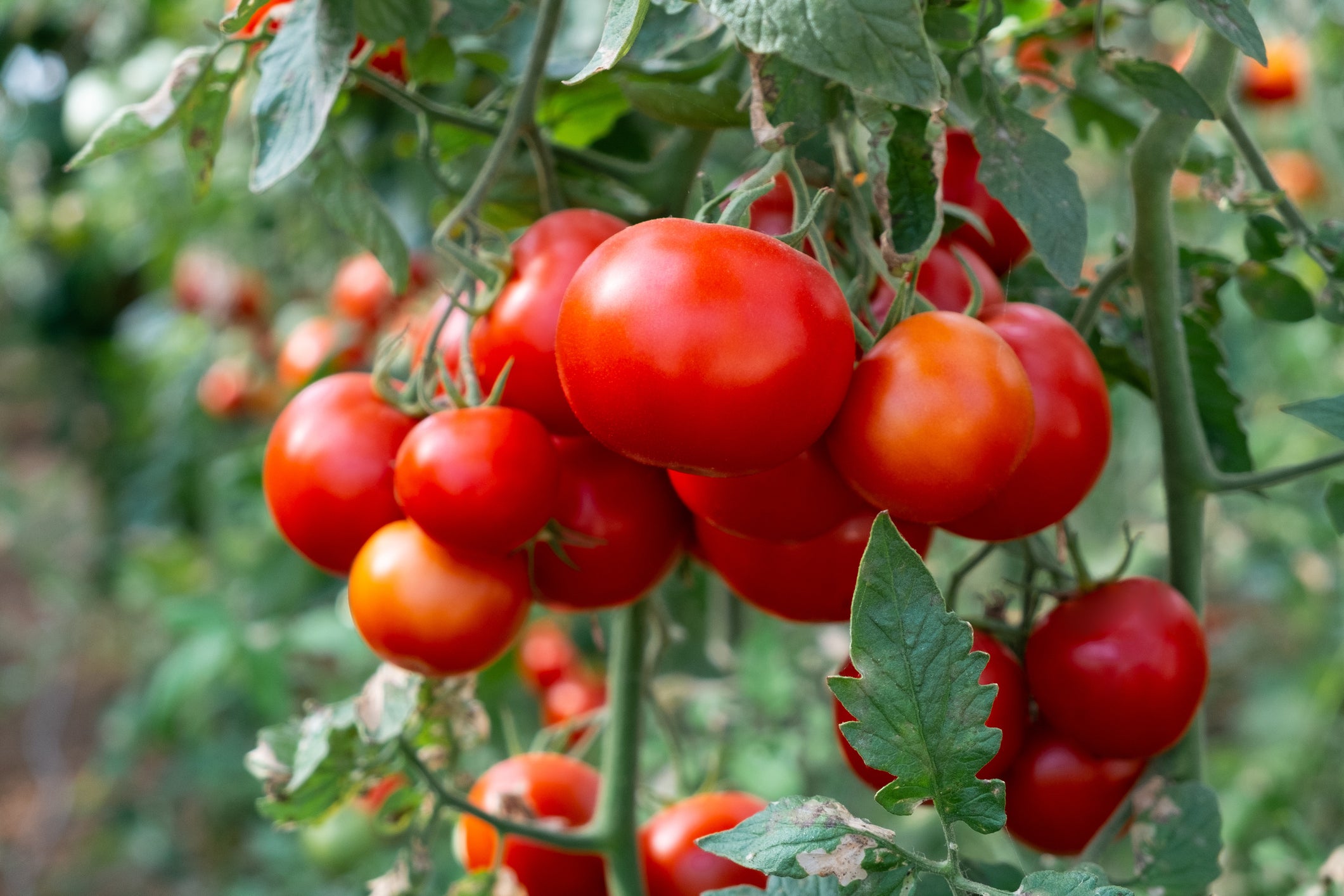
Tomatoes
Staked tomatoes can grow vigorously and produce for a long season, but only if airflow stays open. Crowded tomato plants trap humidity and become much harder to manage.
Practical tip: If you are spacing tomatoes at about 12 inches in an intensive bed, commit to vertical support and regular pruning. Tight spacing without discipline is where trouble begins.
Eggplant
Eggplant likes warmth, open light, and strong root establishment. It may look compact early, but by midsummer it wants more room than many gardeners expect.
Practical tip: Keep surrounding plants low and avoid shading the base. Eggplant performs better when its leaves dry quickly after watering or rain.
Peppers
Peppers handle fairly close spacing better than sprawling crops, but they still need light around the canopy to flower and set fruit well.
Practical tip: Do not let companion plants or herbs crowd the main stem. Peppers may survive it, but they often yield less.

Large crops: ideal for productive, leafy middle layers
Large crops usually allow about four plants per square foot, or roughly 6 inches apart, depending on the variety and harvest style. This group includes head lettuce, Swiss chard, and basil.
These are some of the most useful plants in an intensive garden because they fill space efficiently without overwhelming the bed.
Head lettuce
Head lettuce needs enough room to form a full, clean head. Too tight, and it stays undersized or traps excess moisture between leaves.
Practical tip: If you want larger, market-style heads, give lettuce slightly more room than the minimum. If you harvest young, you can plant more tightly.
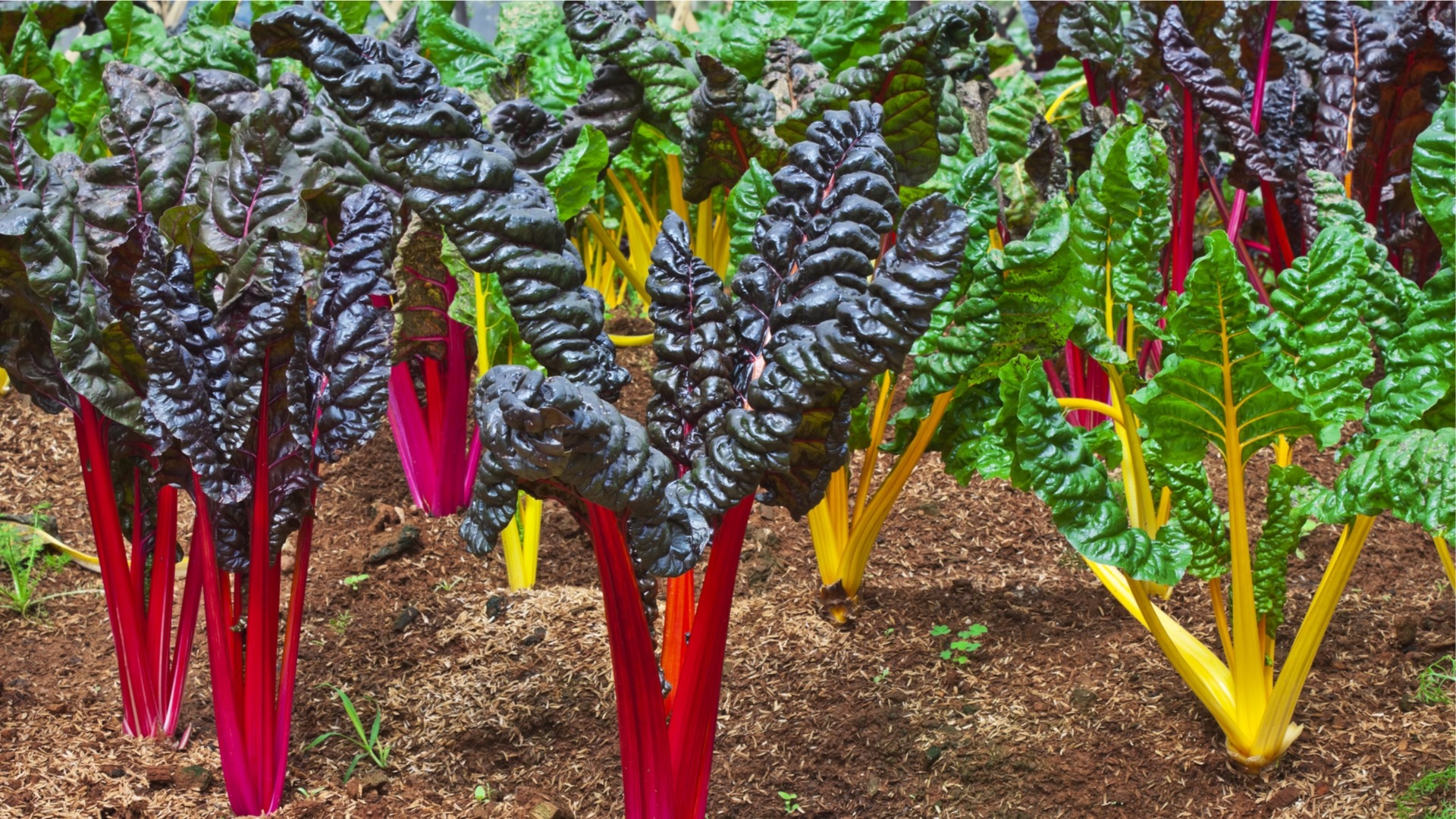
Swiss chard
Swiss chard is generous and resilient, but its leaves need light and movement. Tight planting produces thin stems and smaller leaves.
Practical tip: Harvest outer leaves often. Good spacing plus steady picking turns one planting into a long, productive harvest window.
Basil
Basil becomes far more useful when it has enough room to branch. Crammed basil grows upward too fast and becomes less leafy.
Practical tip: Space basil for airflow, then pinch frequently. Wide, bushy basil is much more productive than crowded, leggy basil.
Medium crops: the quiet workhorses of a productive bed
Medium-size crops often fit at nine plants per square foot, or about 4 inches apart. This group includes bush beans, spinach, and beets.
These crops are especially valuable because they bring strong productivity without demanding the wide spacing of fruiting plants.
Bush beans
Bush beans can be planted fairly closely, but they still need enough room to dry after rain and to make harvesting easy.
Practical tip: Plant in a block rather than one long thin row. This saves space, shades weeds, and still gives good pollination and airflow if spacing is respected.
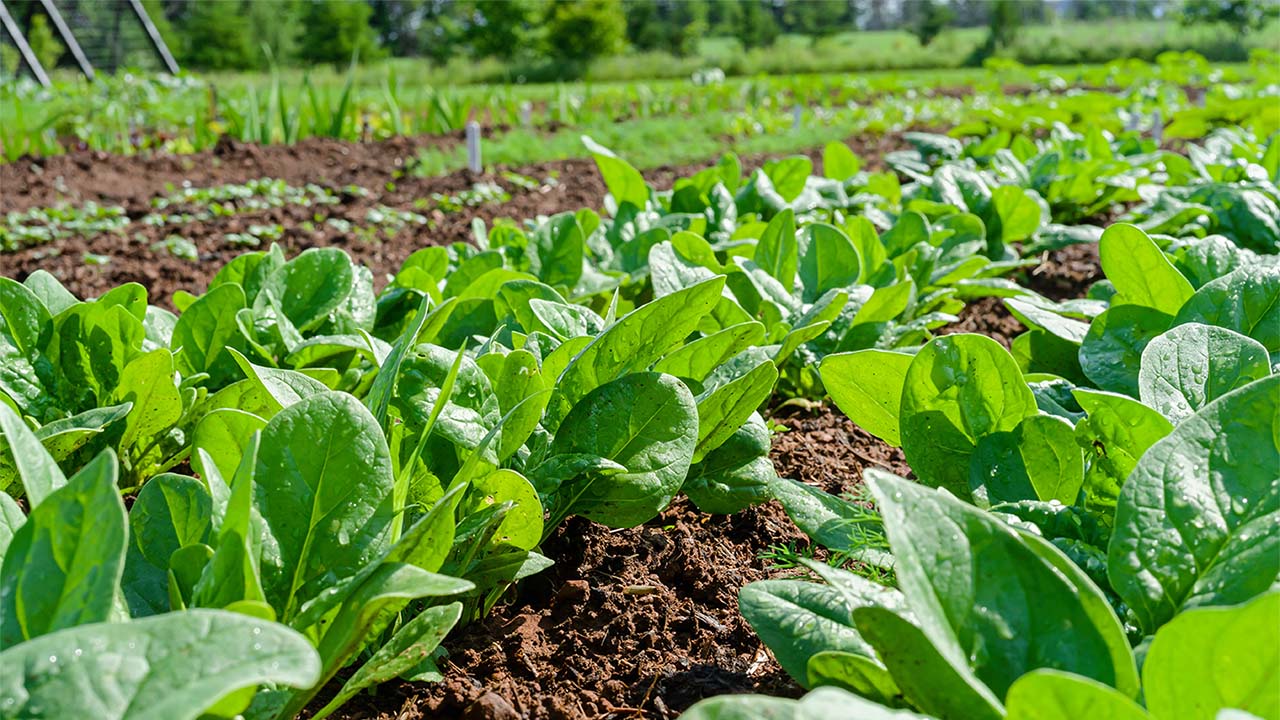
Spinach
Spinach is one of the best crops for intensive growing because it stays compact and matures quickly. Still, crowding can reduce leaf size and make harvesting messy.
Practical tip: Decide early whether you are growing baby leaves or mature bunches. Baby-leaf spinach can be closer. Full-size plants need more breathing room.
Beets
Beets are often underestimated because their tops do not seem large, but the roots still need room to size up well.
Practical tip: Thin seedlings early and without guilt. One strong beet with space is better than five crowded ones that never develop properly.
Small crops: tiny spacing, big returns
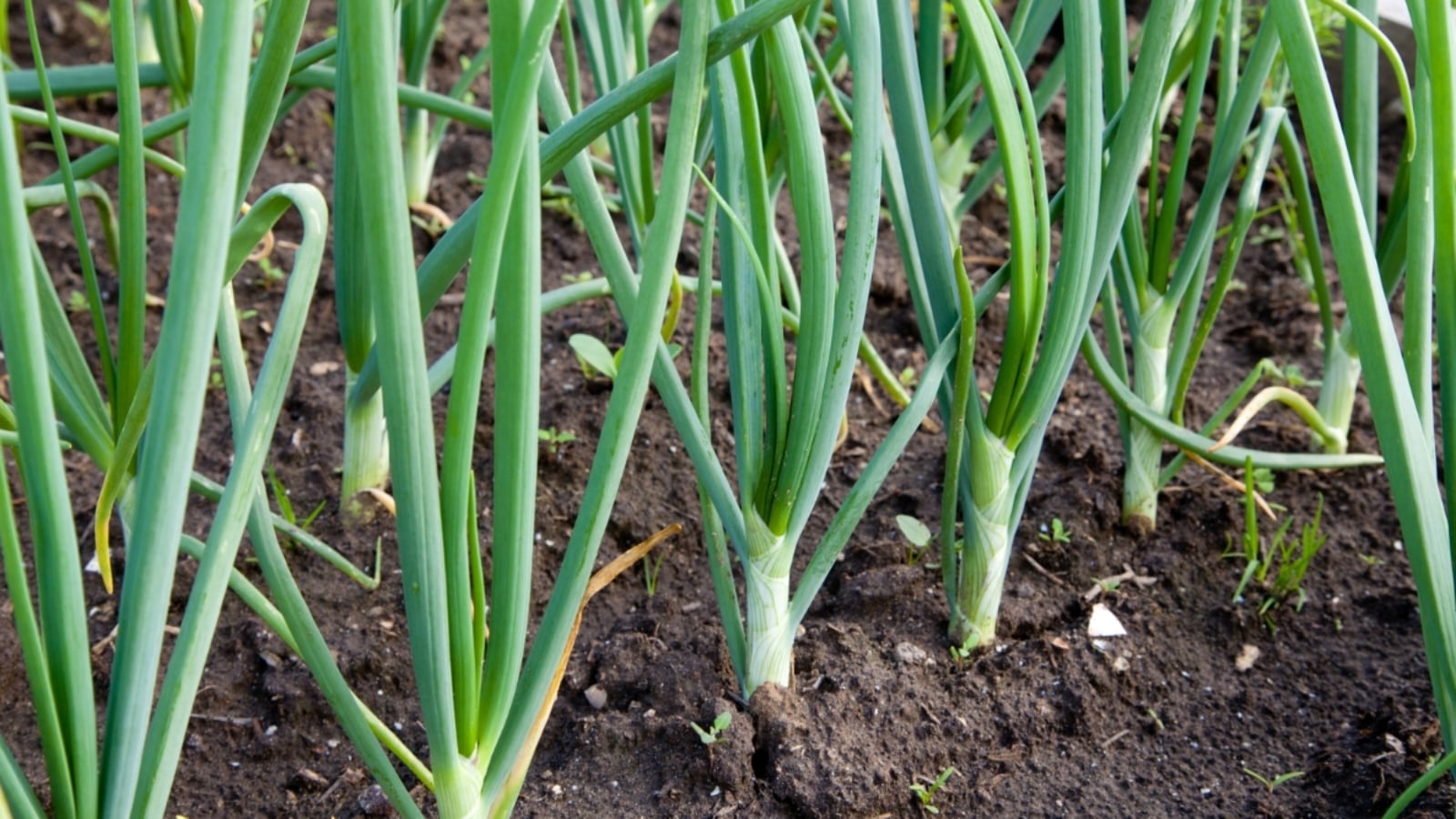
Small crops can often be grown at 16 plants per square foot, or about 3 inches apart. This group includes carrots, radishes, and scallions.
These are excellent crops for gardeners who want high productivity in small spaces, but they only perform well if thinning and soil preparation are handled carefully.
Carrots
Carrots are one of the clearest examples of why spacing matters. Too close, and roots stay narrow, twisted, or stunted.
Practical tip: Thin gradually if needed, but do not delay too long. Crowded carrots lose quality quickly.
Radishes
Radishes grow fast, which makes them ideal for tight spacing, but even they need enough room to bulb properly.
Practical tip: If radishes are only producing leaves and skinny roots, spacing is often part of the problem, especially in rich soil with too much competition.
Scallions
Scallions are naturally slender and work beautifully in intensive beds. They are one of the easiest crops to tuck into small spaces.
Practical tip: Use scallions to fill narrow strips between slower crops, but keep the planting orderly so harvesting does not disturb neighboring roots.
How to match spacing to your real garden, not just a chart
Spacing guides are useful, but good gardeners also adjust for real conditions.
Give larger plants better airflow in humid climates
In humid weather, disease spreads faster. Tomatoes, peppers, basil, and chard may all benefit from a little more room than the minimum.
Tighten spacing slightly only when soil and care are excellent
Rich soil, steady feeding, pruning, and close observation can support intensive planting. Poor soil and crowded spacing are a bad combination.
Consider harvest stage
Crops harvested young can be planted more tightly than crops grown to full size. This matters especially for spinach, lettuce, beets, and radishes.
Use vertical growing whenever possible
A staked tomato takes less horizontal space than a sprawling one. The same is true for trellised cucumbers or supported beans. Vertical methods often make better spacing possible without sacrificing yield.
Common spacing mistakes that quietly reduce harvests
Planting for today’s size instead of mature size
Seedlings always look small. That is why overcrowding is so common. Good spacing requires imagination. You have to plant for what the crop will become.
Avoiding thinning because it feels wasteful
This is especially common with carrots, beets, radishes, and spinach. But thinning is not waste. It is crop management.
Filling every empty spot
Bare soil can feel uncomfortable, especially in new beds. But every gap does not need a plant. Some space is working space. Some space is airflow. Some space is future growth.
Mixing crops without respecting the anchor plant
If tomatoes, peppers, or eggplants are the main crop, nearby herbs or greens should support them, not crowd them.
A practical planting mindset for better daily garden management
The most productive gardeners do not simply memorize numbers. They learn to see spacing as part of plant care. When you space well:
- watering reaches the root zone more effectively
- pruning and harvesting take less time
- disease is easier to prevent
- yields are more consistent
- the bed stays readable and manageable
That changes how gardening feels. Instead of fighting congestion and confusion, you move through the garden with more clarity. You notice what needs attention sooner. You waste less effort correcting problems that good spacing would have prevented.
Final thoughts: spacing is one of the simplest ways to garden like a pro
A healthy garden is not the one with the most plants squeezed into a bed. It is the one where each crop has enough room to thrive.
Give tomatoes, eggplants, and peppers space to breathe. Let lettuce, basil, and chard fill the middle layer. Use beans, spinach, and beets as steady productive workers. Pack carrots, radishes, and scallions intelligently, not carelessly. When you match spacing to plant size, the garden stops feeling crowded and starts feeling efficient.
That is where better gardening begins. Not with more effort, but with smarter layout. And once you learn that lesson, every bed you plant becomes more productive, more beautiful, and much easier to manage.