After a hard workout, a long walk, or even a physically demanding day, the body can feel tight, heavy, and inflamed.
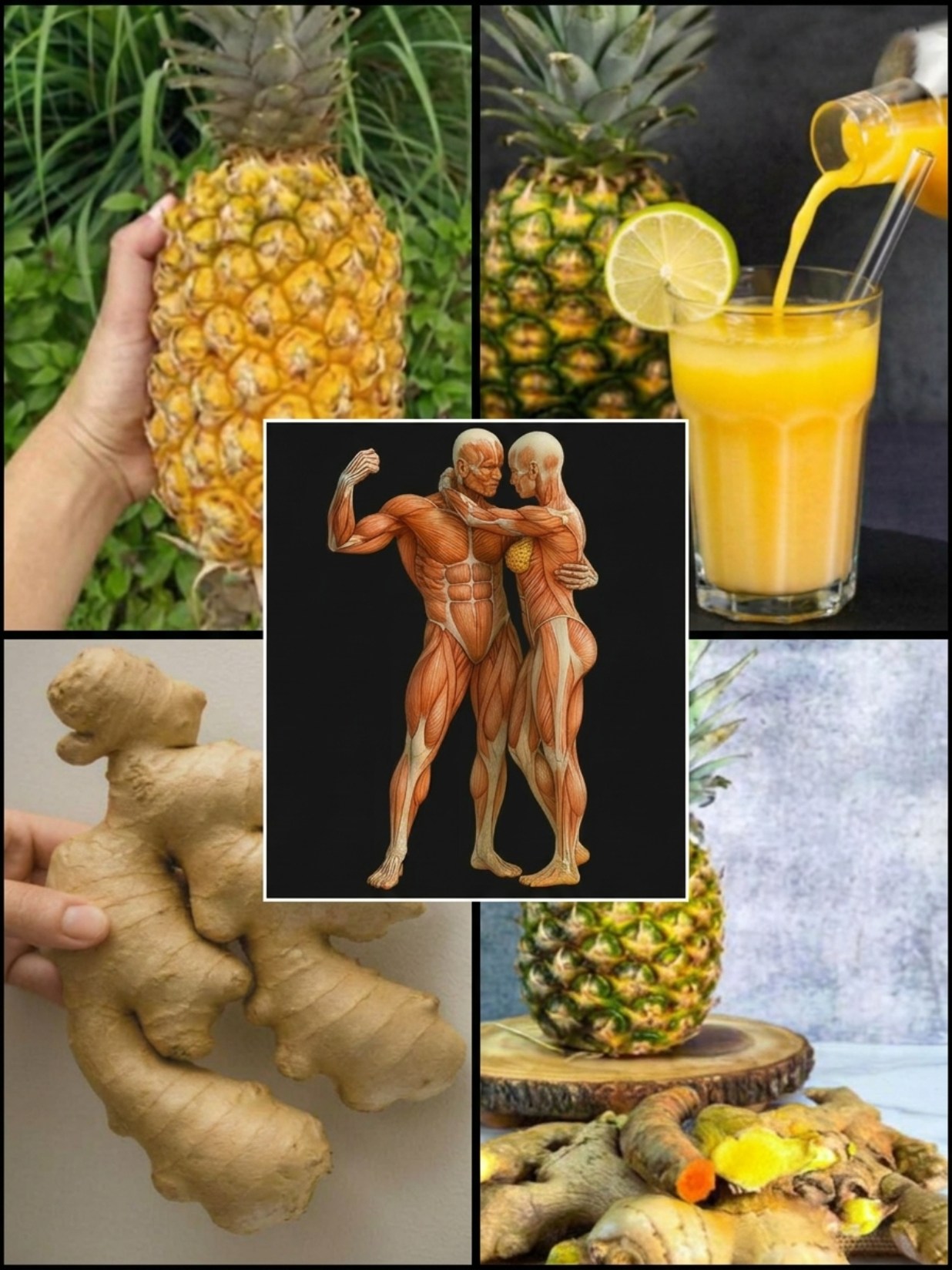
That is why a simple pineapple and ginger drink for muscle recovery gets so much attention. It is easy to make, refreshing, and built around two ingredients that are often discussed for post-exercise comfort: pineapple and ginger. Pineapple contains bromelain, an enzyme mixture found in the fruit and stem, while ginger contains compounds such as gingerols that have been studied for pain, inflammation, and recovery-related effects. (NCCIH)
Most people are drawn to this remedy because it feels practical. You do not need a long ingredient list or a complicated routine. Still, it is important to keep expectations realistic. This drink may support recovery and hydration, but it is not a cure for injury, and it will not replace proper rest, protein intake, or medical care when pain is severe or persistent.
Ingredients
Here is a simple version using the ingredients suggested by the remedy:
- 1 cup fresh pineapple chunks
- 1 to 1½ inches fresh ginger, peeled
- ¾ to 1 cup cold water
- Optional squeeze of lime for brightness
This makes about 1 serving. If you want a thinner drink, add a little more water.
How to Prepare
This is one of the easiest home recovery drinks to make.
Step 1: Prep the ingredients
Cut the pineapple into chunks and peel the ginger.
Step 2: Blend
Add the pineapple, ginger, and water to a blender. Blend until smooth.
Step 3: Adjust
Taste and adjust the thickness with more water if needed. A small squeeze of lime can make it taste fresher, but it is optional.
Step 4: Serve
Drink it fresh. You can serve it chilled or over ice if that feels better after exercise.
How to Use It and Best Time to Drink It
This drink works best as part of a broader recovery routine.
A good time to have it is:
- After a workout
- On days when the body feels sore or stiff
- With a light meal or snack after exercise
Because pineapple is naturally sweet and ginger can feel strong, many people do best starting with a modest serving. One glass is usually enough. More is not always better.
Why It Works
This is where the drink gets interesting.
Pineapple and bromelain
Bromelain is a group of enzymes found in pineapple. NCCIH notes that bromelain breaks down proteins, and research reviews describe it as having anti-inflammatory potential. Some studies and reviews have explored bromelain for swelling, soreness, and inflammatory markers, although the evidence is stronger for supplements than for an ordinary glass of juice. (NCCIH)
Ginger and muscle pain
Ginger has long been studied for several health uses. NCCIH notes the strongest evidence is around nausea, but research also suggests ginger compounds have anti-inflammatory activity. In one randomized trial, daily ginger consumption led to moderate-to-large reductions in exercise-induced muscle pain, which is one reason ginger remains popular in recovery drinks. (NCCIH)
Why the combination makes sense
Pineapple brings fluid, carbohydrates, and bromelain. Ginger adds warmth and recovery-focused plant compounds. Together, they create a drink that can fit well after activity, especially when you want something lighter than a heavy meal but more useful than plain sugary juice. That said, most of the research looks at isolated bromelain or ginger in controlled settings, so it is more accurate to say this drink is supportive rather than proven as a treatment.
Who Benefits Most
This kind of drink may be most useful for people who:
- Feel sore after workouts
- Want a simple natural muscle recovery drink
- Prefer food-based recovery habits
- Need a light post-exercise option that also helps with hydration
It can be especially appealing after high-intensity training, long walks, leg day, or any period of unaccustomed exercise, since delayed onset muscle soreness often shows up after harder or unfamiliar movement. (PubMed)
When You May Notice Relief
A drink like this will not erase soreness instantly.
Some people may feel a little better the same day simply because they are rehydrating and eating again after activity. Muscle soreness from exercise usually improves over time, and any noticeable support from ingredients like ginger or bromelain is more likely to be modest than dramatic. A realistic timeline is within several hours to a couple of days, depending on how hard you trained, how well you sleep, and what the rest of your recovery looks like.
Safety Notes and Simple Adjustments
This matters more than most people think.
Ginger is generally used as a food, but concentrated amounts or supplements can cause side effects in some people. NCCIH advises that complementary products are not risk-free, and ginger is still being studied for different uses. Bromelain can also cause side effects or interact with certain medications, especially in supplement form. (NCCIH)
Be cautious if you:
- Take blood thinners
- Have acid reflux or a very sensitive stomach
- Are allergic to pineapple
- Are dealing with a true muscle injury rather than ordinary soreness
If the drink feels too sharp, use less ginger. If it feels too sweet, reduce the pineapple and pair it with a protein-rich snack instead of relying on the drink alone.
Final Takeaway
This pineapple and ginger drink for muscle recovery is a simple, practical remedy that may help support post-workout comfort, hydration, and recovery. Pineapple contributes bromelain, and ginger brings compounds linked with pain and inflammation research, which is why the pairing makes sense for sore, tired muscles. (NCCIH)
The best results come when you treat it as one part of a smart recovery plan: good sleep, enough protein, hydration, and time. That is where real recovery happens.
Related Source Science
Bromelain from pineapple has been reviewed for anti-inflammatory potential, while ginger has been studied for nausea, menstrual pain, and exercise-related muscle pain. The evidence is promising enough to support this drink as a helpful wellness habit, but not strong enough to market it as a cure for injury or inflammation on its own.