Sometimes the most popular home remedies are the simplest ones.
A cup of ginger and Lipton tea is one of those classic combinations many people turn to when they want something warm, comforting, and easy to make. It is often used when the body feels cold, digestion feels sluggish, or the throat simply needs a soothing drink. Most people overlook it because it feels too basic, but that is exactly why it has stayed popular for so long.
This remedy is not fancy, and it does not need to be. The strength of this drink comes from the balance between fresh ginger and black tea. Ginger brings warmth and digestive comfort, while Lipton tea adds the familiar depth of brewed tea that many people already keep in the kitchen.
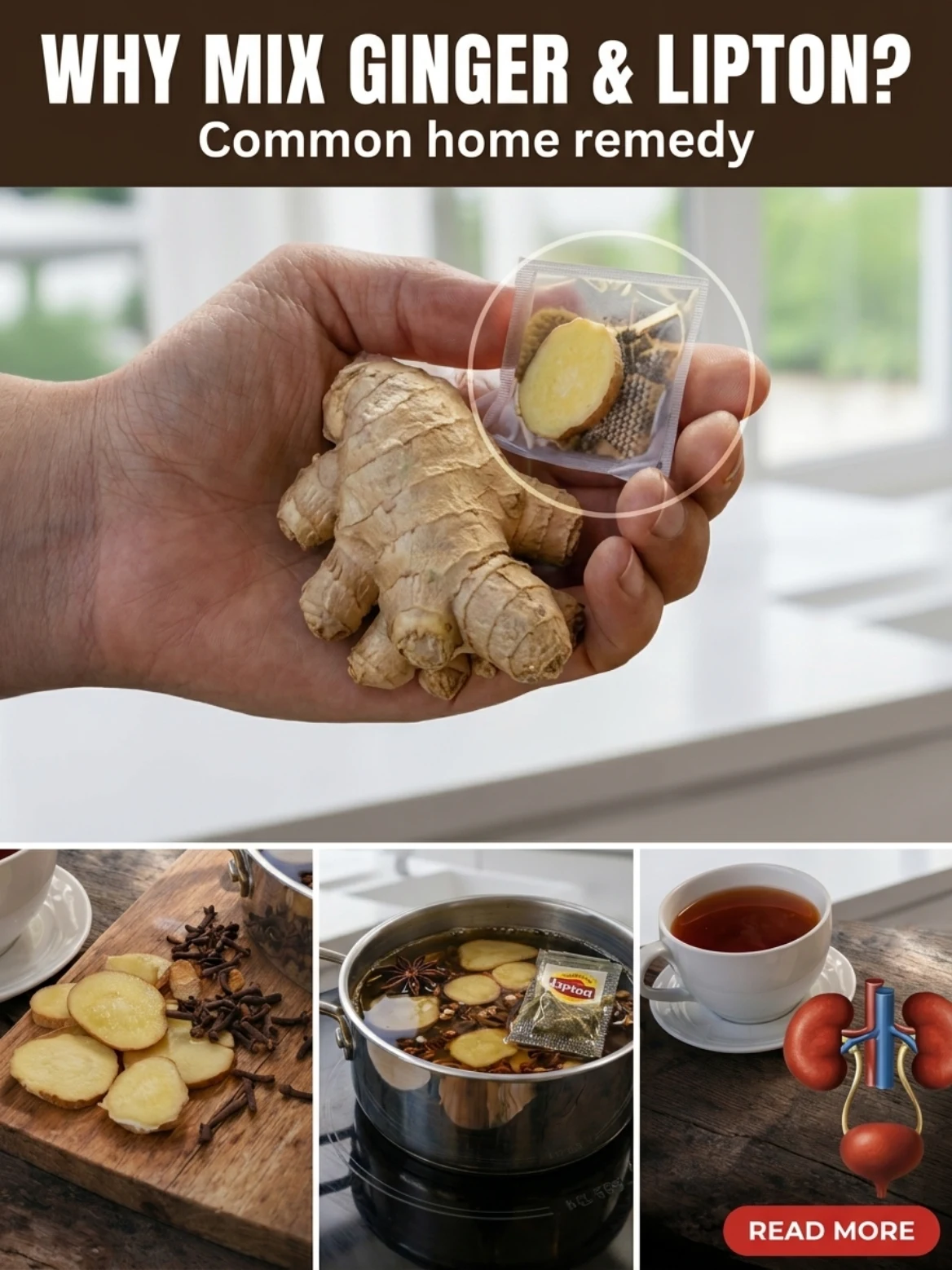
Ingredients
Here is a simple version of this home remedy:
- 1 Lipton tea bag
- 1 to 2 inches fresh ginger, washed and sliced
- 2 cups water
- 3 to 5 cloves, if you want the spiced version shown
- Optional honey after brewing, if desired
This makes about 1 to 2 cups.
How to Prepare
This tea is quick to make, which is one reason it stays in so many home routines.
Step 1: Prepare the ginger
Slice the fresh ginger into thin rounds. You do not need to cut it too small, but thinner slices help release more flavor.
Step 2: Simmer the ginger
Add the ginger slices to 2 cups of water. If using cloves, add them at the same time.
Bring the mixture to a gentle boil, then lower the heat and let it simmer for about 8 to 10 minutes.
Step 3: Add the tea bag
Turn off the heat and place the Lipton tea bag into the pot or cup.
Let it steep for about 3 to 5 minutes, depending on how strong you want it.
Step 4: Strain and serve
Remove the tea bag and strain out the ginger and cloves if needed.
Drink it warm.
How to Use It
This drink is usually taken in small, comforting amounts rather than in large servings all day.
Many people like to use it:
In the morning
A warm cup in the morning can help the body feel more awake and settled, especially on cold days or after heavy meals the day before.
After meals
This is one of the most common times to use ginger tea for digestion. It may feel helpful when the stomach is heavy, bloated, or sluggish.
During weather changes
When the throat feels rough or the body feels chilled, a warm ginger and black tea drink can be comforting.
During tired afternoons
Some people enjoy it when they want a gentle lift without reaching for a stronger drink.
Why People Mix Ginger and Lipton
This combination stays popular because each ingredient adds something different.
Ginger adds warmth
Ginger is widely used in home remedies because it feels warming and stimulating. It is often associated with digestive comfort, especially when the stomach feels unsettled or slow.
Lipton tea adds body and familiarity
Lipton tea, which is usually black tea, gives the drink structure, aroma, and that classic tea taste many people enjoy. It makes the remedy feel more complete than plain ginger water.
Cloves deepen the remedy
When cloves are added, the tea becomes more aromatic and spicy. That stronger scent and warmth are one reason some households make this version during cold mornings or when they want something extra soothing.
Why It Works
This remedy feels useful because it combines comfort and function.
Digestive support
Ginger is one of the best-known kitchen ingredients for easing digestive discomfort. A warm cup after meals can feel especially helpful when food feels heavy.
Gentle warmth
The combination of hot liquid, ginger, and tea creates a warming effect that many people find soothing when they feel chilled or run down.
Light mental refreshment
Because black tea contains caffeine, it may offer a mild boost in alertness. That can be helpful when you feel sluggish but do not want anything too strong.
Simple daily ritual
Sometimes the biggest benefit is the ritual itself. A hot, fragrant cup can help you slow down, settle the stomach, and feel more grounded.
Who May Benefit Most
This home remedy may be especially appealing for people who:
- want a simple ginger tea remedy
- often feel bloated after meals
- enjoy warm drinks in the morning
- want a mild tea with more flavor than plain hot water
- like traditional kitchen remedies that do not require many ingredients
It is especially practical for people who already keep tea bags and fresh ginger at home.
Quick Relief Timeline
This remedy usually works through comfort, not intensity.
Some people notice warmth and throat comfort within 10 to 20 minutes. If the goal is digestive ease, the tea may feel helpful within 30 minutes to a few hours, especially after a heavy meal.
The effect is usually gentle. This is not a fast medical treatment. It is a supportive home drink.
Simple Tips to Make It Better
A few small changes can improve the experience.
For stronger flavor
Simmer the ginger a little longer.
For a lighter cup
Use fewer ginger slices and steep the tea bag for less time.
For a more soothing feel
Drink it slowly while still warm rather than very hot.
For evening use
Use a weaker tea brew if you are sensitive to caffeine later in the day.
Safety Notes
This part matters.
- Ginger can irritate some people with acid reflux if used in larger amounts.
- Black tea contains caffeine, so it may not be ideal late at night for sensitive sleepers.
- Cloves should be used in small kitchen amounts only.
- People taking blood thinners, managing ulcers, or dealing with chronic digestive symptoms should be cautious with frequent strong ginger remedies.
- Ongoing pain, vomiting, severe bloating, or urinary symptoms should not be treated with tea alone.
Final Takeaway
Ginger and Lipton tea remains popular because it is simple, warming, and genuinely comforting. It is often used for digestion, mild throat comfort, and everyday sluggishness, and it fits easily into a normal kitchen routine.
Sometimes the best remedies are not the most complicated ones. They are the ones you can make in minutes, sip slowly, and come back to whenever the body needs something warm and settling.
Related Source Science
Ginger is widely appreciated for its naturally active compounds linked with digestive comfort and warming relief, while black tea contributes antioxidants and a mild caffeine lift. Together, they create a practical home remedy that is best viewed as supportive, gentle, and easy to use with realistic expectations.