Ever heard of feeding your plants milk? It might sound a little unusual, but many gardeners are discovering the surprising benefits of a simple milk and water mixture, sometimes even with a squeeze of lime! This natural concoction is believed to provide essential nutrients and give your green friends a helping hand.
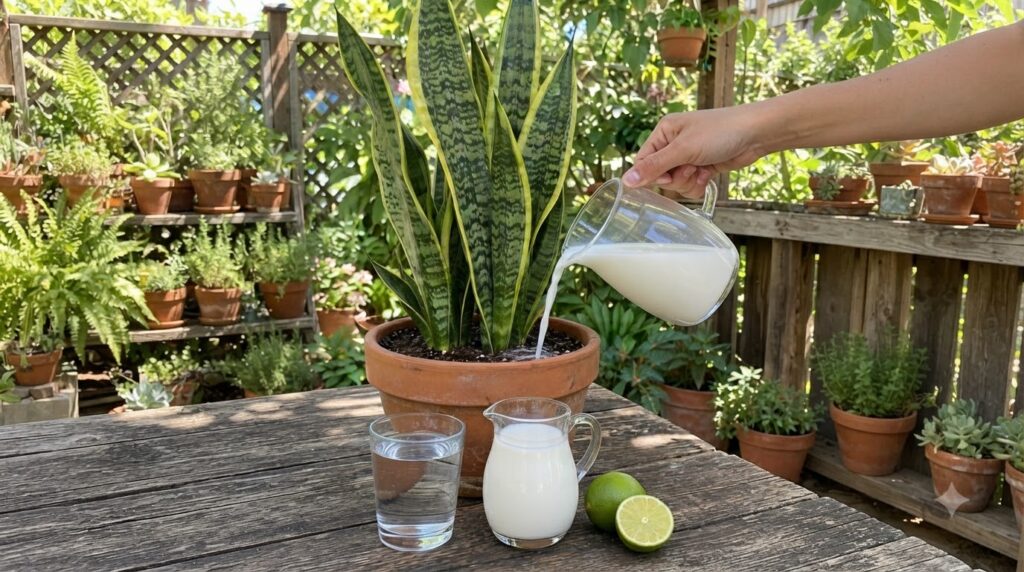
We recently spotted a snake plant getting this special treatment, and it’s got us curious! Let’s dive into why this unique elixir might be just what your plants need to thrive.
The Secret Ingredient: Why Milk for Plants?
Milk isn’t just good for us; it’s packed with calcium, which is vital for plant health. Calcium helps strengthen plant cell walls, leading to sturdier stems, healthier leaves, and more robust growth. It also plays a crucial role in nutrient uptake and can even help plants resist certain diseases and pests. Think of it as building a strong foundation for your plants!
What About Lime?
Adding a touch of lime juice to your milk and water solution can bring additional benefits. Lime contains micronutrients and can slightly acidify the solution, which some plants prefer. While milk primarily offers calcium, lime can provide a gentle boost of other elements, and some gardeners even find its citrus properties can deter certain common garden pests when used sparingly.
Crafting Your DIY Plant Elixir: Milk + Water + Lime
Creating this natural plant tonic is incredibly simple. The key is dilution to prevent any adverse effects.
What You’ll Need:
- Fresh or evaporated milk (avoid sweetened condensed milk)
- Clean water
- A fresh lime (optional)
- A watering can or spray bottle
Simple Steps to Prepare:
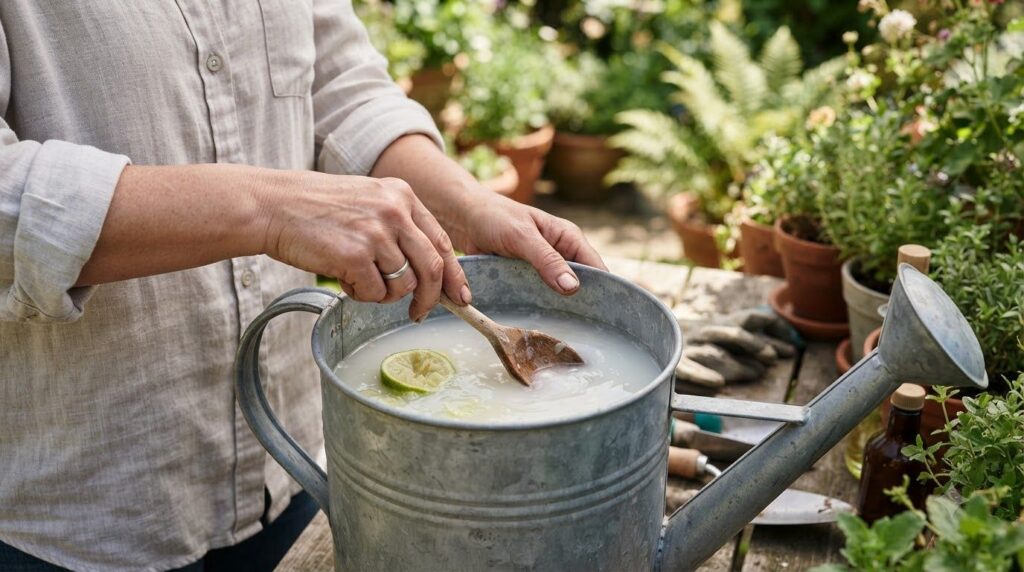
- Dilute the Milk: Mix one part milk with four parts water. For example, if you use 1 cup of milk, add 4 cups of water. This dilution is crucial to prevent souring and potential bacterial growth in the soil.
- Add Lime (Optional): Squeeze a small amount of lime juice (e.g., 1-2 teaspoons per liter of diluted milk) into the mixture. Stir gently to combine.
- Mix Well: Ensure the milk, water, and lime are thoroughly mixed.
How to Apply Your Milk & Lime Solution
This elixir can be applied in a couple of ways, depending on your plant’s needs:
- Soil Drench: For potted plants and garden beds, use the diluted mixture to water your plants as you normally would. Ensure the soil is evenly moist. This allows the roots to absorb the nutrients.
- Foliar Spray: For some plants, a light foliar spray can also be beneficial. Pour the diluted mixture into a clean spray bottle and lightly mist the leaves. Avoid spraying in direct sunlight to prevent leaf burn.
Important Note: Use this elixir sparingly, perhaps once every 2-4 weeks, as part of your regular feeding routine. Too much milk can lead to unpleasant odors or even fungal issues due to the sugars in the milk.
Which Plants Benefit Most?
While most plants can benefit from a little calcium, some particularly appreciate it. Tomatoes, peppers, and squash are known to suffer from blossom end rot, which is often caused by a calcium deficiency. Houseplants like the snake plant (as seen in our image!), ferns, and even flowering plants can also show improved vigor and health. Always observe your plants’ reactions!

Beyond the Bottle: Other Natural Gardening Hacks
The world of organic gardening is full of fascinating, natural solutions! Besides milk and lime, consider exploring:
- Compost Tea: A liquid fertilizer made by steeping compost in water, packed with beneficial microbes.
- Eggshells: Crushed eggshells can provide a slow release of calcium to your soil.
- Banana Peels: Rich in potassium, burying banana peels near fruiting plants can give them a valuable boost.
- Coffee Grounds: Can add nitrogen and acidity to the soil, loved by acid-loving plants.
These simple, natural methods can make a big difference in the health and vitality of your garden, without relying on harsh chemicals.
Ready to Try It?
This gentle application of a milk and lime elixir is just one of many wonderful natural solutions available to gardeners. It’s a testament to how simple household items can contribute to a thriving garden!
Have you ever tried this trick, or do you have other unique plant food secrets? Share your thoughts and experiences below – we’d love to hear them!