Building muscle is not just about lifting heavier weights.
Your body also needs:
- enough protein
- proper hydration
- quality carbohydrates
- healthy fats
Without the right nutrition, recovery and muscle growth become much harder — even with consistent workouts.
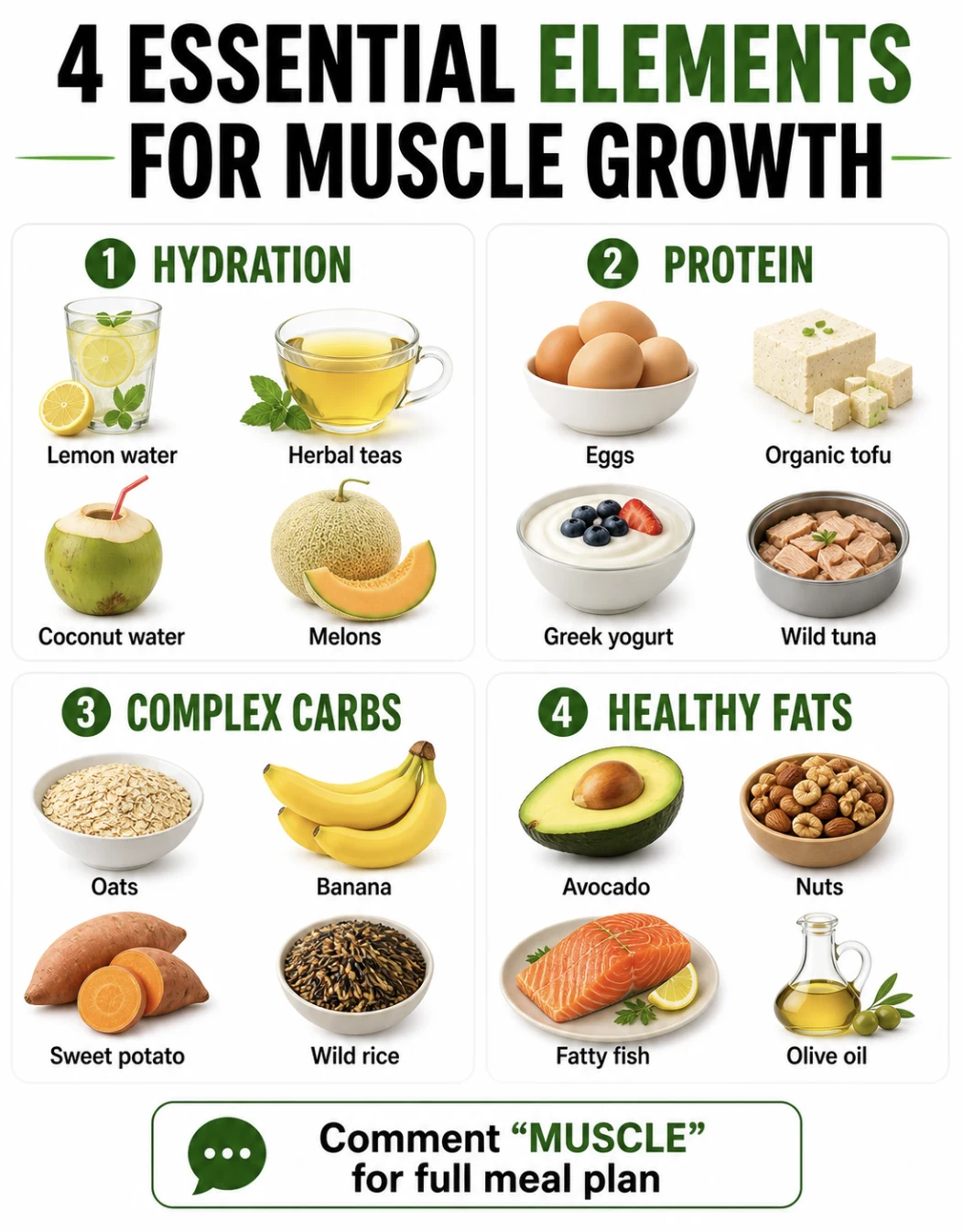
This guide breaks down the 4 essential elements for muscle growth and includes:
- a full muscle building meal plan
- exact portions
- calories and protein
- meal timing tips
- workout nutrition guidance
If you’re looking for:
- foods for muscle growth
- high protein meal plan ideas
- healthy muscle building meals
- gym meal prep ideas
this guide keeps things simple and practical.
Why Nutrition Matters for Muscle Growth
Training creates stress on muscle fibers.
Nutrition helps:
- repair muscle tissue
- improve recovery
- support strength gains
- maintain energy levels
A balanced lean muscle diet should include:
- protein for recovery
- carbs for training fuel
- fats for hormones
- hydration for performance
Many people focus only on protein, but muscle gain foods work best when all nutrition components work together.
1. Hydration: The Most Overlooked Muscle Builder
Muscles are heavily dependent on hydration for:
- strength
- recovery
- endurance
- performance
Even mild dehydration can reduce workout quality.
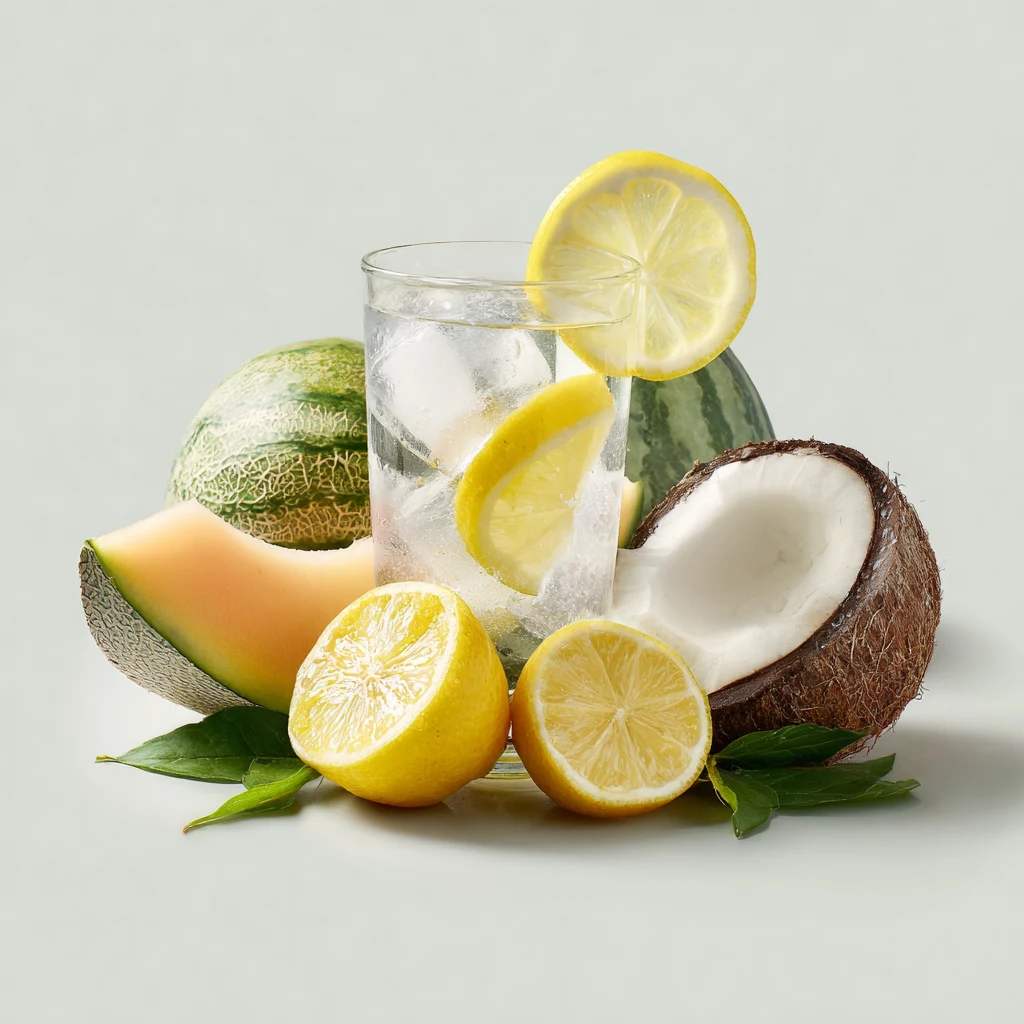
Best Hydration Foods & Drinks
Lemon Water
Helps increase fluid intake and supports hydration habits.
Herbal Tea
Can support recovery and relaxation.
Coconut Water
Contains natural electrolytes.
Melons
High water content helps daily hydration.
Daily Hydration Goal for Active Adults
A good starting point:
- 2.5–3.5 liters daily
Increase intake if:
- sweating heavily
- training intensely
- exercising outdoors
2. Protein: The Foundation of Muscle Recovery
Protein provides amino acids needed for muscle repair and growth.
For most active people:
- 25–40g protein per meal works well
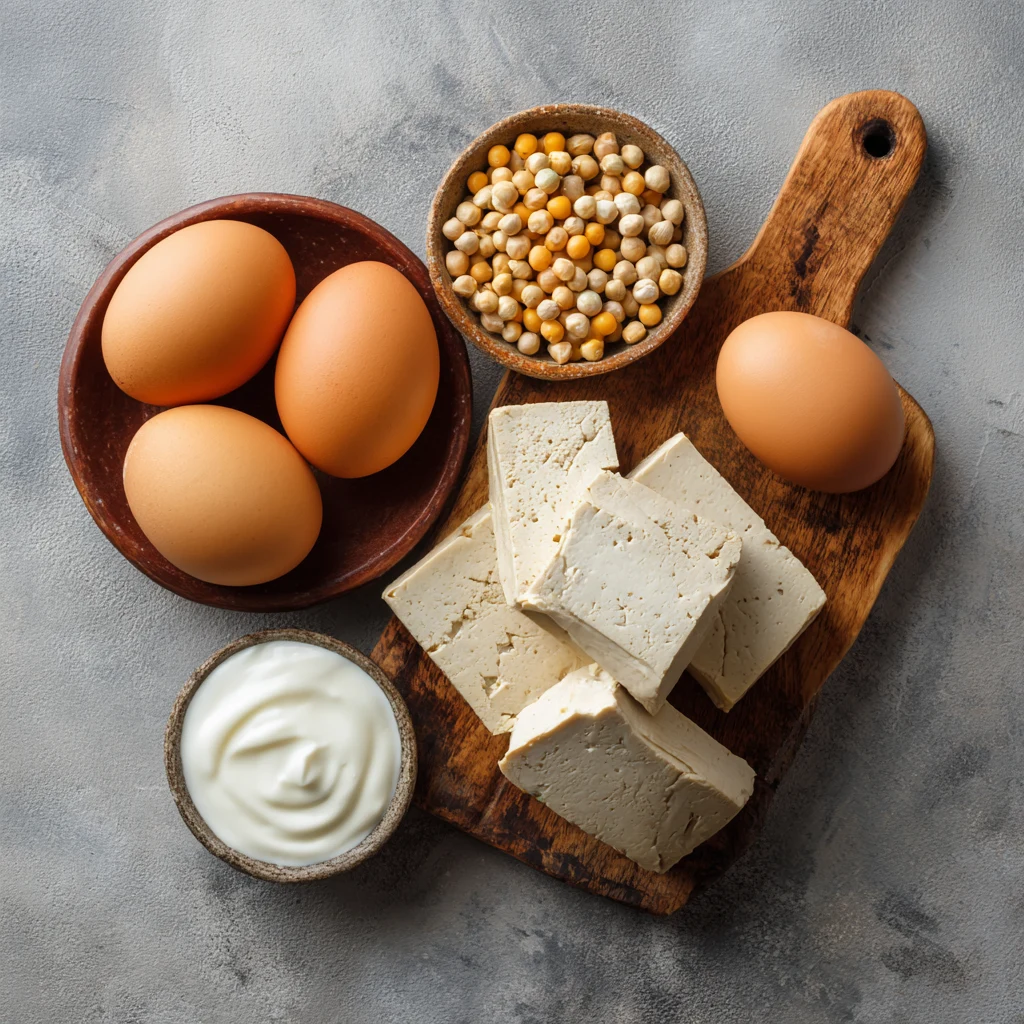
Best High Protein Foods for Muscle Growth
Eggs
Affordable and rich in complete protein.
Greek Yogurt
High protein and easy for snacks or breakfast.
Wild Tuna
Lean protein source with minimal prep.
Organic Tofu
Great plant-based protein option.
These foods are common in many high protein meal plan strategies because they’re practical and nutrient-dense.
How Much Protein Do You Need?
General muscle-building target:
- 0.7–1g protein per pound of body weight
Example:
- 160 lb person → 110–160g protein daily
Spread protein evenly throughout the day for better muscle recovery.
3. Complex Carbs: Fuel for Training Performance
Carbohydrates help:
- replenish glycogen
- improve workout intensity
- support recovery
Low energy intake often leads to:
- poor performance
- slower recovery
- reduced muscle growth
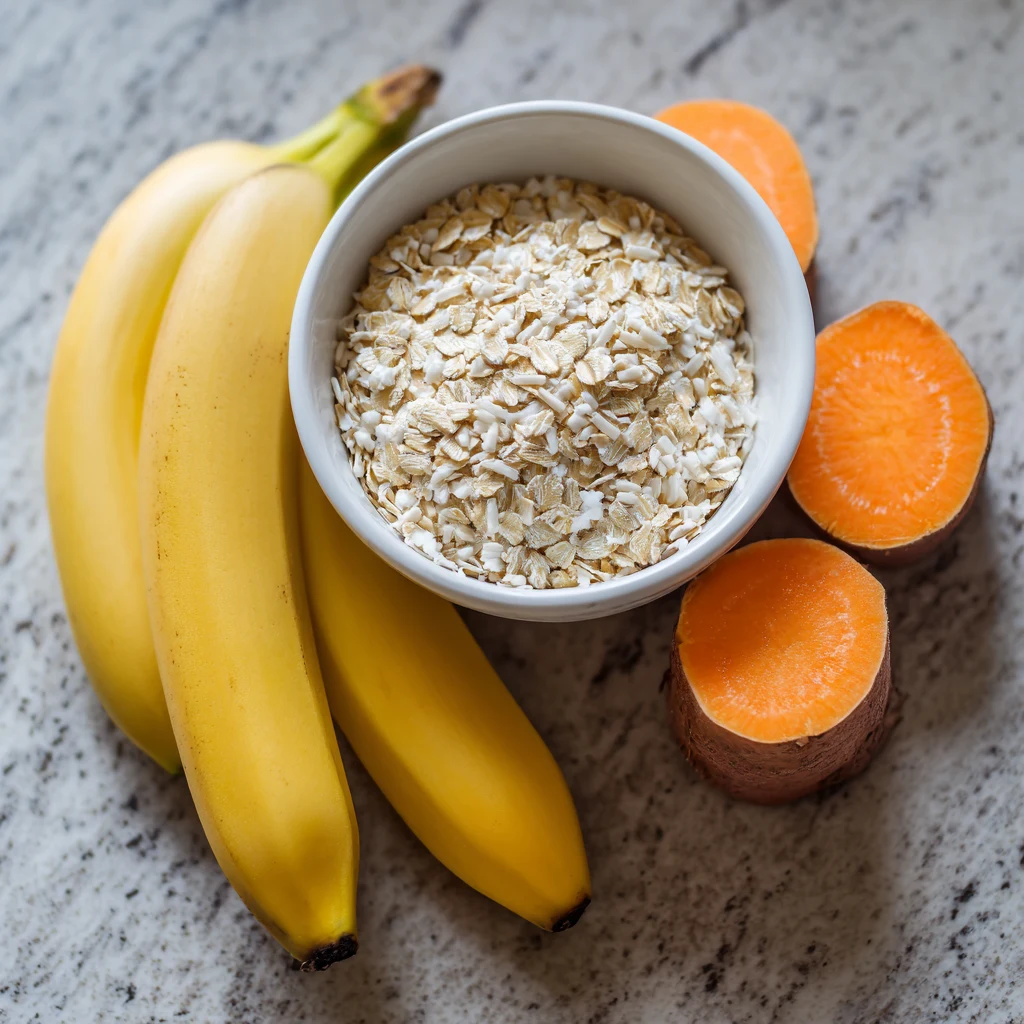
Best Complex Carbs for Muscle Gain
Oats
Excellent for breakfast and meal prep.
Bananas
Easy pre-workout carb source.
Sweet Potatoes
Rich in fiber and potassium.
Wild Rice
Balanced carb source for muscle building meal prep.
These foods are commonly included in healthy muscle building meals because they provide steady energy instead of quick crashes.
4. Healthy Fats: Important for Hormones & Recovery
Healthy fats support:
- hormone production
- joint health
- recovery
- overall calorie intake
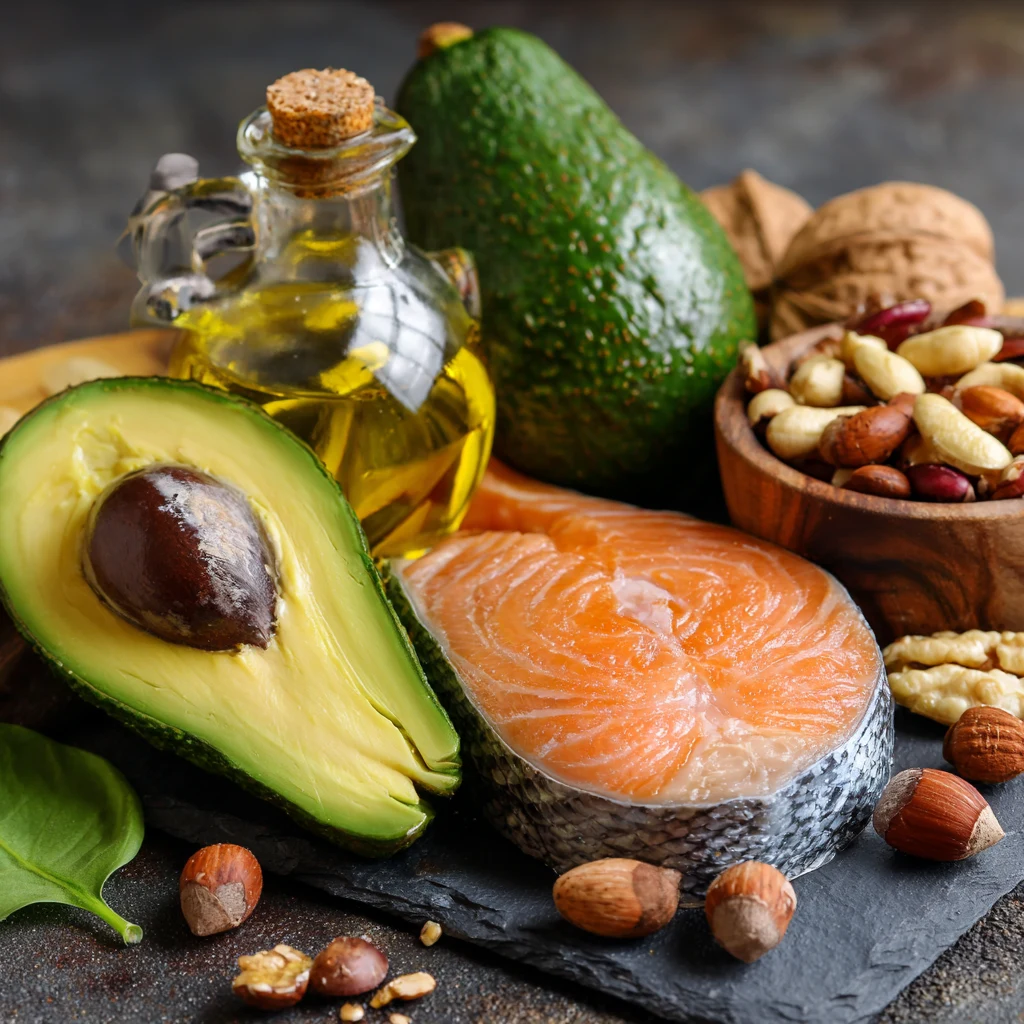
Best Healthy Fats for Muscle Growth
Avocado
Rich in healthy monounsaturated fats.
Nuts
Convenient snack with healthy fats and minerals.
Fatty Fish
Provides omega-3 fats for recovery.
Olive Oil
Easy way to increase healthy calories.
A lean muscle diet should still include fats — removing them completely can negatively affect recovery and hormone balance.
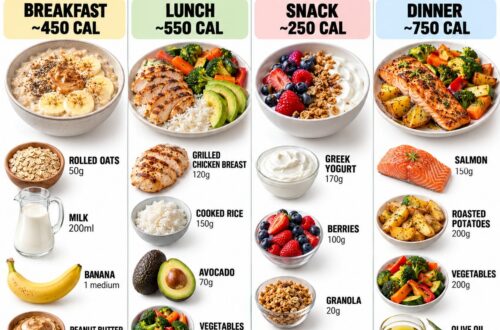
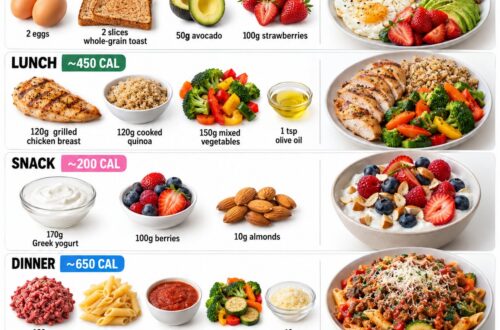
Full Daily Muscle Building Meal Plan
This sample muscle building meal plan provides approximately:
- Calories: ~2,450
- Protein: ~175g
Perfect for:
- lean muscle growth
- workout recovery
- gym meal prep ideas
Breakfast: Protein Oat Bowl
Ingredients
- 1 cup oats
- 1 scoop whey protein
- 1 banana
- 1 tbsp peanut butter
- 1 cup milk
Nutrition
Calories: ~620
Protein: ~42g
Why It Works
Combines:
- protein
- complex carbs
- healthy fats
for steady morning energy.
Snack: Greek Yogurt Recovery Bowl
Ingredients
- 1 cup Greek yogurt
- 1/2 cup berries
- 1 oz almonds
Nutrition
Calories: ~390
Protein: ~30g
This works well as:
- post-workout fuel
- recovery snack
- easy meal prep option
Lunch: Chicken & Rice Muscle Bowl
Ingredients
- 6 oz grilled chicken breast
- 1 cup wild rice
- 1 cup broccoli
- 1 tbsp olive oil
Nutrition
Calories: ~610
Protein: ~50g
A classic example of healthy muscle building meals.
Snack: Tuna & Crackers
Ingredients
- 1 tuna pouch
- whole grain crackers
- 1 apple
Nutrition
Calories: ~330
Protein: ~28g
Simple portable option for busy schedules.
Dinner: Salmon & Sweet Potato Plate
Ingredients
- 6 oz salmon
- 250g roasted sweet potato
- 1 cup vegetables
- 1 tsp olive oil
Nutrition
Calories: ~500
Protein: ~38g
Excellent meal for:
- recovery
- omega-3 intake
- evening satiety
Best Meal Timing Tips for Muscle Growth
Before Workouts
Eat:
- carbs + moderate protein
Examples:
- banana + Greek yogurt
- oats + protein shake
After Workouts
Focus on:
- protein
- hydration
- carbs
to improve recovery.
Easy Muscle Gain Meal Prep Tips
Batch Cook Proteins
Prepare:
- chicken
- rice
- potatoes
- vegetables
2–3 days at a time.
Keep Quick Protein Options Ready
Examples:
- Greek yogurt
- tuna packets
- boiled eggs
- protein shakes
Use Balanced Plates
Try including:
- protein
- carb
- vegetables
- healthy fat
at most meals.
Common Muscle Building Nutrition Mistakes
Not Eating Enough
Muscle growth requires adequate calories.
Ignoring Hydration
Hydration strongly affects performance.
Too Little Protein
Inconsistent protein intake slows recovery.
Skipping Carbs
Complex carbs help fuel muscle-building workouts.
Final Thoughts
Muscle growth depends on more than just training hard.
A balanced approach including:
- hydration
- protein
- complex carbohydrates
- healthy fats
can help improve:
- recovery
- performance
- energy
- long-term muscle gains
Whether you’re searching for:
- muscle building meal plan ideas
- foods for muscle growth
- high protein meal prep
- healthy muscle building meals
- gym nutrition basics
focusing on consistent nutrition habits usually works better than extreme diets or complicated plans.
For personalized nutrition advice or medical concerns, consult a qualified healthcare professional or registered dietitian.
Sources
- Harvard T.H. Chan School of Public Health — Protein & Healthy Eating
- Academy of Nutrition and Dietetics — Sports Nutrition Guidelines
- Mayo Clinic — Healthy Diet for Fitness & Muscle Recovery
- Cleveland Clinic — Hydration and Exercise Performance