There’s nothing quite as rewarding as stepping into your backyard and harvesting fresh, homegrown vegetables. The secret to this abundant success often lies not just in what you plant, but when you plant it! Mastering your garden’s sowing schedule is a fundamental skill that transforms good intentions into bountiful harvests. It’s all about understanding the rhythm of nature and aligning your planting efforts with the perfect conditions for each seed to thrive.
Why Sowing Time is Crucial for a Thriving Garden
Imagine planting a tender tomato seedling in frosty soil or delicate peas in the scorching summer heat. Neither would fare well, right? The timing of your planting, or sowing, is critical for several reasons:
- Soil Temperature: Different seeds germinate best at specific soil temperatures. Cool-season crops prefer cooler soil, while warm-season crops need it much warmer.
- Frost Dates: Knowing your area’s average last spring frost and first fall frost dates is paramount. Planting too early exposes tender seedlings to lethal cold, while planting too late might mean your warm-season crops don’t mature before the autumn chill.
- Growing Season Length: Each vegetable has a specific number of days it needs to mature. Sowing at the right time ensures your plants have enough time to grow, flower, and produce fruit or vegetables before adverse weather conditions set in.
- Pest and Disease Avoidance: Sometimes, planting slightly earlier or later can help your plants avoid the peak activity of certain pests or diseases that are prevalent during specific times of the year.
Understanding Your Garden’s Calendar: Cool-Season vs. Warm-Season Crops
Vegetables generally fall into two main categories based on their temperature preferences:
Cool-Season Vegetables (When the Frost Fades)
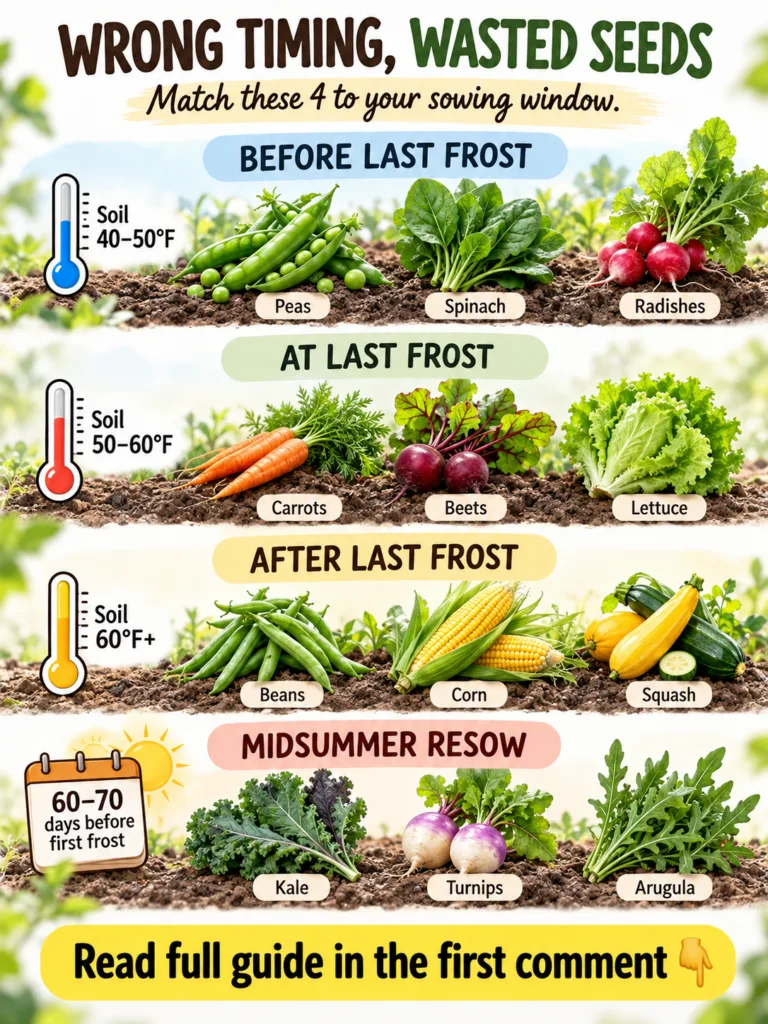
These plants love the milder temperatures of spring and fall. They can tolerate light frosts and often bolt (go to seed prematurely) in hot weather. They typically thrive when soil temperatures are between 45-65°F (7-18°C).
- Leafy Greens: Spinach, lettuce, kale, Swiss chard
- Root Vegetables: Carrots, beets, radishes, turnips
- Cruciferous Vegetables: Broccoli, cabbage, cauliflower
- Legumes: Peas (can be sown as soon as the soil is workable)
Warm-Season Vegetables (After All Danger of Frost Has Passed)
These heat-loving plants need consistently warm soil and air temperatures to grow and produce. They are very sensitive to frost and should not be planted until all danger of freezing has passed, typically when soil temperatures are consistently above 60°F (15°C).
- Fruiting Vegetables: Tomatoes, peppers, eggplants, squash, zucchini, cucumbers, melons
- Legumes: Bush beans, pole beans
- Grains: Corn
How to Determine Your Optimal Planting Times
Know Your Frost Dates
This is your starting point. Look up the average last spring frost date and first fall frost date for your specific region. Many online resources and local extension offices provide this information. Mark these dates on your calendar!
Check Soil Temperature
A soil thermometer is an inexpensive yet invaluable tool. Insert it a few inches into the soil in the morning to get an accurate reading. This will tell you if the soil is warm enough for your chosen seeds.
Read Your Seed Packets
Every seed packet is a miniature instruction manual. It will provide crucial information on ideal planting times, depth, spacing, and days to maturity. Always follow these guidelines.
Observe Local Weather Patterns
While averages are helpful, Mother Nature sometimes has her own plans. Pay attention to extended forecasts and local conditions. A cold spring might mean delaying planting by a week or two, even if past frost dates suggest otherwise.
Tips for a Successful Sowing Season
- Prepare Your Soil: Healthy soil is the foundation of a healthy garden. Amend your soil with compost and organic matter before planting to provide essential nutrients and improve drainage.
- Water Properly: Keep newly sown seeds and seedlings consistently moist, but not waterlogged. Gentle watering is key to prevent disturbing tiny seeds.
- Succession Planting: For crops like lettuce, radishes, or beans, consider planting small batches every 2-3 weeks. This ensures a continuous harvest throughout the growing season instead of one large flush.
- Protect Young Plants: Use row covers or cloches to protect tender seedlings from unexpected late frosts or hungry pests.
- Thin Seedlings: Once your seedlings emerge, thin them to the recommended spacing. This gives the remaining plants enough room and resources to grow strong and healthy.
By understanding and applying these principles, you’ll be well on your way to a thriving, productive vegetable garden. Happy sowing, and may your harvests be bountiful!