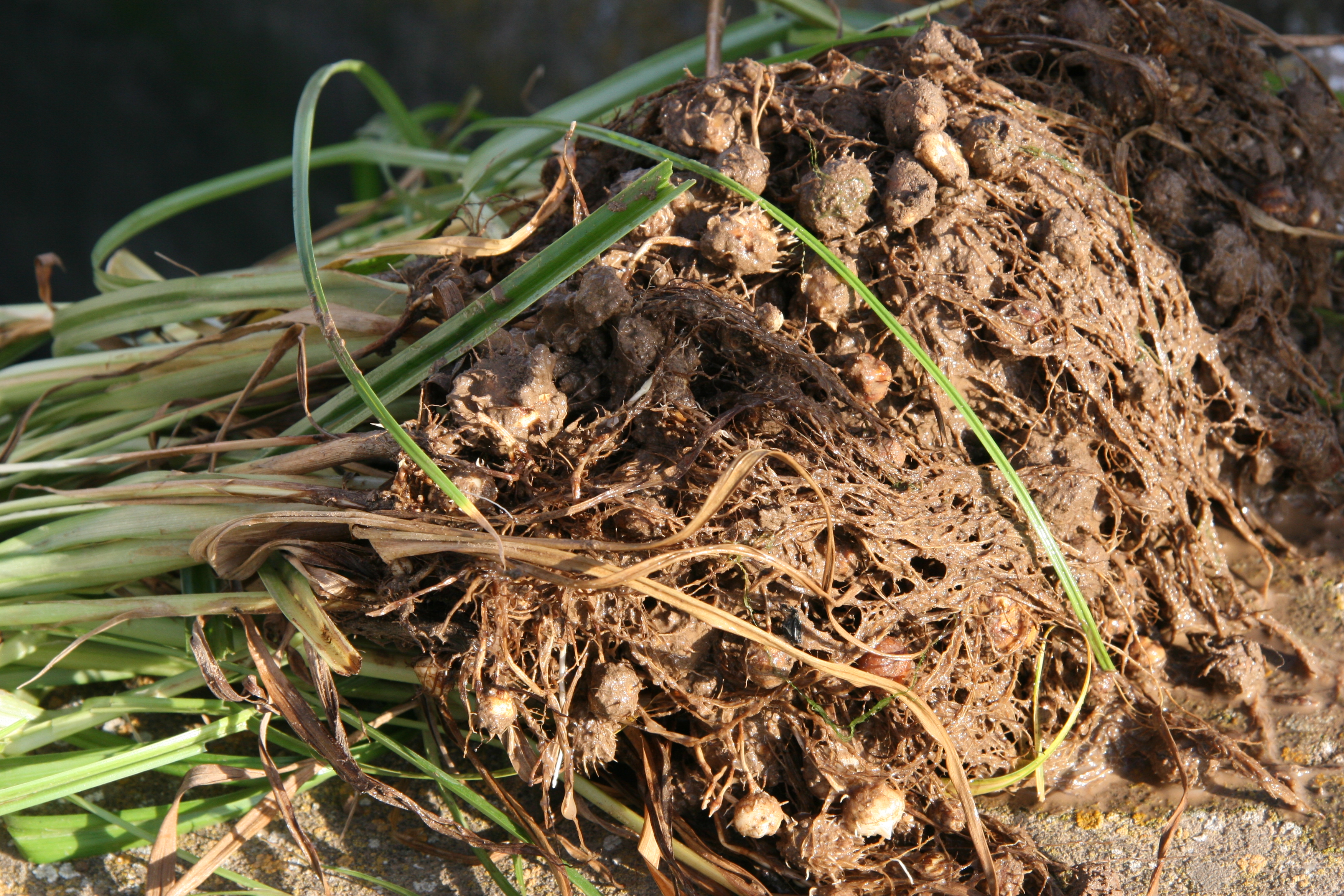
At first glance, this plant does not look special.
But beneath it are small underground tubers that appear to be tiger nuts, also called chufa, earth almonds, or the edible tubers of yellow nutsedge (Cyperus esculentus). This plant is a grass-like sedge that spreads by rhizomes and tubers, and those tubers have been eaten traditionally as a snack food and used to make drinks such as horchata de chufa.
That is what makes this plant so interesting. Most people notice only the thin leaves above the soil. They never realize the real treasure is hidden underneath. In traditional food use, the tubers are valued for their mildly sweet, nutty taste and for the way they can be eaten raw after soaking, roasted, dried, or ground into flour.
What This Plant Is
This looks like tiger nut sedge, a form of Cyperus esculentus. The plant itself is often treated as a weed in many places, but the tubers are a very different story. Those little underground “nuts” are not true nuts. They are edible tubers, and one plant can produce many of them in a single growing season.
That contrast is part of the curiosity. A plant farmers may pull up as a nuisance can also be the source of a traditional food that has been appreciated in Africa, Spain, and other regions for generations.

Why People Traditionally Use Tiger Nuts
Tiger nuts are usually not used like a strong medicinal herb. They are more often valued as a traditional nourishing food.
People commonly use them for:
Gentle digestive support
Tiger nuts contain dietary fiber and resistant starch, which is one reason they are often linked with gut-friendly eating and better digestive comfort. Research and food reviews describe tiger nuts as rich in fiber and phenolic compounds, with potential antioxidant value as well.
Steady energy
These tubers contain carbohydrates along with fat and fiber, so they are often seen as a satisfying traditional snack rather than a quick sugar hit. Agronomic and nutrition studies describe tiger nut as a high-energy tuber crop with notable carbohydrate and fat content.
Traditional drinks
One of the best-known uses is horchata de chufa, a sweet, milk-like drink made from soaked and ground tiger nuts. That drink has a long traditional history, especially in Spain.
What Tiger Nuts Offer Nutritionally
This is where tiger nuts become more than just a foraged curiosity.
Studies describe tiger nuts as containing dietary fiber, starch, minerals, fatty acids, and phenolic compounds. Some research also highlights their antioxidant activity and a fatty acid profile rich in monounsaturated fat, especially in the oil.
That does not mean they are a miracle food. It means they are a surprisingly nutrient-dense traditional tuber that can fit well into a balanced diet.
How to Use Tiger Nuts
If the tubers are correctly identified and gathered from a clean, food-safe source, there are a few traditional ways people use them.
Ingredients
- Fresh or dried tiger nut tubers
- Clean water for soaking
- Optional pinch of salt for roasting
Instructions for simple eating
First, wash the tubers very well.
If they are dried or very hard, soak them in water for several hours or overnight. This softens them and makes them easier to chew. Tiger nuts are often soaked before eating because the dried tubers are quite firm.
After soaking, you can:
- eat them as a chewy snack
- lightly roast them for a warmer, nuttier flavor
- dry and grind them into flour
- blend soaked tubers with water to make a traditional tiger nut drink
Simple tiger nut drink method
Soak the tubers overnight, blend with water, strain, and chill. This is the basic idea behind tiger nut beverages such as horchata.
How to Build a Daily Plate Using Tiger Nuts
Tiger nuts work best as a small, useful addition rather than the whole meal.
You can add them to:
- breakfast bowls for extra texture
- trail mixes instead of candy-heavy snacks
- smoothies or homemade nut-free drinks
- baked goods using tiger nut flour
Because they are naturally rich and dense, a little usually goes a long way.
When You’ll Notice the Benefits
Tiger nuts are not the kind of traditional food that gives dramatic overnight changes.
What most people notice first is:
- better satiety
- a pleasant chewy snack texture
- a more filling feeling than refined snacks
If they suit your digestion, the fiber-related benefits are more likely to show up over days to a few weeks, especially when tiger nuts are part of an overall pattern of better hydration and less processed food.
Tips to Use Them Effectively
Start with a small amount if you are not used to high-fiber foods. Since tiger nuts are fiber-rich, jumping in with a large portion may feel too heavy for some stomachs.
Soaking them well usually improves texture and makes them easier to enjoy. That is one reason traditional preparation matters.
Safety Notes
Correct plant identification matters. Not every sedge with underground tubers should be treated as food.
Also, gather only from clean areas. A roadside patch or chemically treated soil is not the place to harvest edible tubers.
Because tiger nuts are fiber-dense, some people may notice bloating if they eat too much too quickly. Start modestly and see how your body responds.
Final Takeaway
The hidden treasure beneath this plant is most likely tiger nuts. They may look humble, but they have a long traditional history as an edible tuber used for snacks, flour, and refreshing drinks. Their mix of fiber, energy, and traditional food value is exactly why they continue to attract attention today.
Sometimes the most useful traditional foods are the ones people mistake for weeds.
Related Source Science
Research on Cyperus esculentus describes tiger nuts as edible tubers with dietary fiber, minerals, phenolic compounds, antioxidant activity, and a useful fatty acid profile. Traditional food use includes raw, soaked, roasted, and beverage forms, with horchata remaining one of the best-known examples.