Unlock Nutrients: Essential Soaking Times for Healthier Nuts
Are you looking for simple ways to boost the nutritional power of your favorite nuts? You’re in the right place! Soaking nuts is a practice gaining popularity, and for good reason. It&rsquos an easy, ancient technique that can unlock more nutrients, improve digestibility, and even enhance their flavor.
This article will guide you through the “why” and “how” of soaking nuts. You’ll learn the incredible benefits this simple step offers, understand the science behind it, and get practical soaking times for popular nuts like almonds, walnuts, and cashews. Get ready to enjoy your healthy snacks even more!
Why Soaking Nuts Matters: The Benefits
You might be wondering, “Why bother soaking nuts?” It’s a valid question! This traditional preparation method offers several significant benefits for your health and digestion.
Improved Digestibility
Nuts naturally contain compounds like phytic acid and enzyme inhibitors. While not harmful in small amounts, these “anti-nutrients” can make nuts harder to digest for some people. Soaking helps to break down these compounds, making the nuts easier on your stomach and reducing issues like bloating or gas.
Enhanced Nutrient Absorption
By neutralizing phytic acid, soaking allows your body to better absorb essential minerals found in nuts, such as zinc, iron, calcium, and magnesium. This means you’re getting more bang for your nutritional buck from every bite!
Activated Enzymes
Soaking also “wakes up” dormant enzymes within the nuts. These enzymes are vital for their growth and can aid in our own digestive processes once consumed. It’s like giving the nuts a head start in their natural state.
Better Taste and Texture
Many people find that soaked nuts have a creamier texture and a milder, less bitter flavor. This can make them even more enjoyable to eat, especially in recipes where a softer consistency is desired.
The Science Behind Soaking Nuts
At a basic level, soaking nuts mimics the natural germination process. When a seed (like a nut) is exposed to water, it signals the start of growth, breaking down protective compounds.
Phytic Acid (Phytate)
This compound, found in the outer layer of nuts, seeds, grains, and legumes, binds to minerals like iron, zinc, and calcium, forming phytates. This can reduce their bioavailability, meaning your body might not fully absorb them. Soaking activates the enzyme phytase, which breaks down phytic acid, freeing up these valuable minerals for absorption.
Enzyme Inhibitors
Nuts also contain enzyme inhibitors that protect them until they’re ready to sprout. These can interfere with our digestive enzymes, making it harder for our bodies to break down proteins and starches. Soaking deactivates these inhibitors, allowing for smoother digestion.
Optimal Soaking Times for Popular Nuts
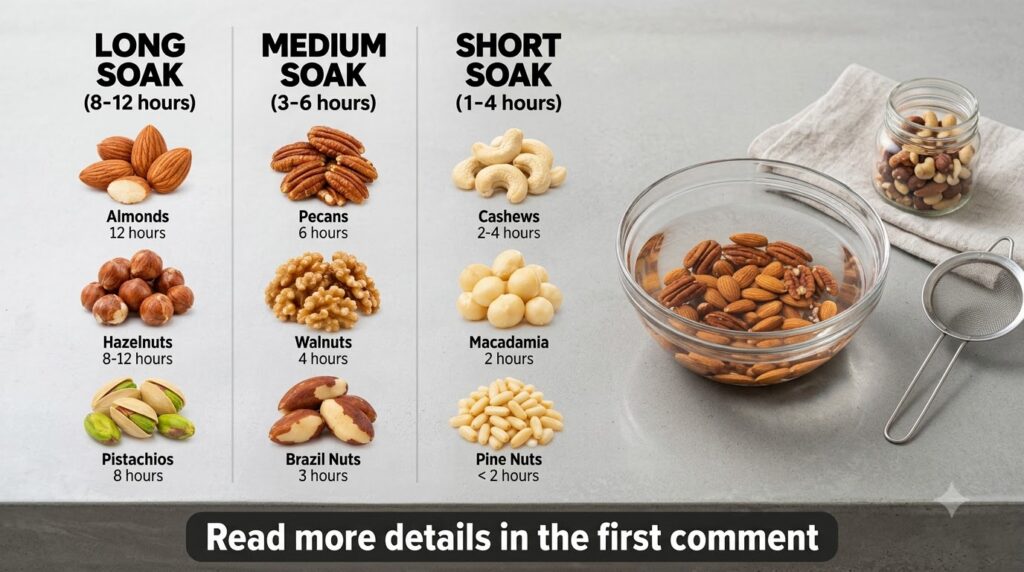
The ideal soaking time varies depending on the type of nut. Generally, harder nuts with higher phytic acid content require longer soaking.
Here’s a general guide:
Food Chart Table: Recommended Soaking Times
| Nut Type | Soaking Time | Main Benefit |
|---|---|---|
| Almonds | 8-12 hours | Improved calcium & magnesium absorption |
| Walnuts | 4-8 hours | Reduced bitterness, better omega-3 absorption |
| Pecans | 4-8 hours | Enhanced antioxidant & mineral availability |
| Cashews | 2-4 hours | Creamier texture for sauces/dips |
| Hazelnuts | 8-12 hours | Better Vitamin E & folate absorption |
| Brazil Nuts | 4-6 hours | Enhanced selenium absorption |
| Pistachios | 4-8 hours | Improved iron & potassium absorption |
| Macadamia Nuts | Not typically soaked (low phytates) | N/A |
Soaking Steps: A Quick Guide
- Measure: Place your desired amount of raw, unroasted nuts in a bowl.
- Cover: Cover the nuts with filtered water, ensuring they are fully submerged. Add a pinch of sea salt (optional, but can further aid in enzyme activation).
- Soak: Let them soak at room temperature (or in the fridge for longer soaks, especially in warm climates) for the recommended time.
- Drain & Rinse: After soaking, drain the water and rinse the nuts thoroughly under running water.
- Use or Dry: Use them immediately, or if you prefer a crunchy texture or plan to store them, dehydrate them in a low-temperature oven (around 150-170°F / 65-75°C) for several hours until completely dry and crispy.
Best Ways to Enjoy Soaked Nuts
Soaked nuts are incredibly versatile. Here are some ideas:
- Snacking: Enjoy them plain as a soft, chewy snack.
- Smoothies: Blend them into smoothies for added creaminess and nutrients.
- Nut Milks: They make excellent homemade nut milks with a smoother consistency.
- Baking: Incorporate them into muffins, breads, or cookies (if dried first).
- Salads: Add them to salads for a nutritious crunch (or soft chew if not dried).
- Nut Butters & Sauces: Soaked nuts blend easily into creamy nut butters, dips, and sauces.
Potential Risks and Considerations
While soaking nuts is generally beneficial, there are a few things to keep in mind:
- Mold: If not properly dried, soaked nuts can develop mold. Ensure they are completely dry if storing for longer than a day or two.
- Rancidity: Over-soaked or improperly stored nuts can go rancid. Always smell your nuts before consuming them.
- Taste: Some people prefer the texture and taste of unsoaked nuts. It’s a personal preference!
- Not All Nuts Need Soaking: Macadamia nuts and pine nuts are lower in phytic acid and generally don’t require soaking.
Practical Tips for Soaking Nuts
- Start Small: If you’re new to soaking, try a small batch of your favorite nut first.
- Use Filtered Water: This ensures your nuts aren’t absorbing any unwanted chemicals from tap water.
- Change Water: For longer soaks, changing the water every few hours can be beneficial.
- Refrigerate Longer Soaks: If soaking for more than 8 hours, especially in warm climates, place the bowl in the refrigerator to prevent fermentation.
- Dehydrate for Crunch: If you miss the crunch, invest in a dehydrator or use your oven at its lowest setting until fully dry.
- Store Properly: Once dry, store soaked and dehydrated nuts in an airtight container in a cool, dark place or in the refrigerator/freezer for extended freshness.
FAQs About Soaking Nuts
Q1: Do I have to soak all nuts?
A: While most nuts benefit from soaking, some – like macadamias – are naturally lower in phytic acid and don’t require it. It’s a personal choice based on your digestive sensitivity and desired nutrient absorption.
Q2: Can I soak nuts for too long?
A: Yes, soaking nuts for too long (e.g., beyond 24 hours for most nuts without changing water) can lead to fermentation, spoilage, or a slimy texture. Stick to the recommended times.
Q3: What about roasted nuts? Can I soak them?
A: Soaking is primarily beneficial for raw nuts. Roasted nuts have already been heat-treated, which changes their structure and negates some of the benefits of soaking, such as deactivating enzyme inhibitors.
Q4: Do I need to add salt to the soaking water?
A: Adding a pinch of sea salt is optional but can help activate enzymes and draw out enzyme inhibitors more effectively. It’s not strictly necessary, but many find it enhances the process.
Q5: How do I store soaked nuts?
A: “Wet” soaked nuts should be used within 1-2 days and stored in the refrigerator. “Dry” soaked and dehydrated nuts can be stored in an airtight container in a cool, dark place for a few weeks, or in the refrigerator/freezer for several months.
Q6: Does soaking reduce the fat content of nuts?
A: No, soaking does not significantly reduce the fat content of nuts. It primarily impacts their digestibility and nutrient bioavailability by breaking down phytic acid and enzyme inhibitors.
Conclusion
Soaking nuts is a simple yet powerful way to elevate your healthy snacking and cooking. By taking a little extra time, you can improve digestion, enhance nutrient absorption, and enjoy a milder, creamier texture. It’s a testament to how small changes in food preparation can lead to significant health benefits.
Experiment with different nuts and soaking times to find what works best for you. Your body (and taste buds!) will thank you for it. Keep exploring healthy eating by checking out more of our articles on nutritious foods and healthy recipes!
This content is for educational purposes only and should not be considered medical advice. Consult a qualified healthcare professional for personalized dietary recommendations.