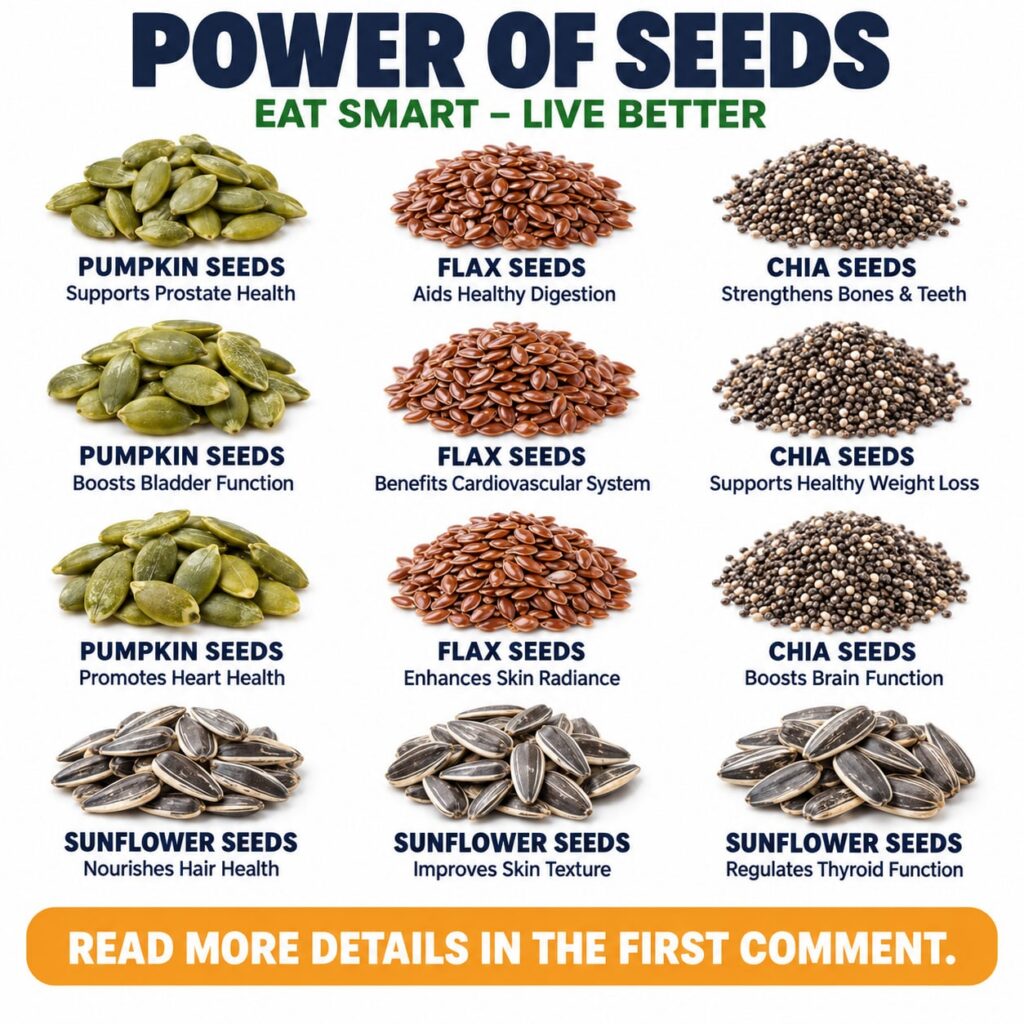
The Power of Seeds: Tiny Grains, Mighty Health Benefits
Did you know that some of the smallest foods can pack the biggest nutritional punch? Seeds, often overlooked, are true superfoods loaded with vitamins, minerals, fiber, and healthy fats. Incorporating a variety of seeds into your daily diet can significantly boost your overall well-being, from supporting heart health to aiding digestion and enhancing skin vitality.
In this guide, we’ll dive into the incredible world of seeds, exploring the unique benefits of popular varieties like pumpkin, flax, chia, and sunflower. You’ll learn about their nutritional profiles, discover easy ways to add them to your meals, and get practical tips for making them a staple in your healthy lifestyle. Get ready to sprinkle your way to better health!
Why Seeds Are Nutritional Powerhouses
Seeds are the start of life for plants, so it’s no wonder they’re packed with concentrated nutrients designed to help a plant grow and thrive. When we consume them, we tap into this rich supply of essential compounds.
- Fiber: Crucial for digestive health, satiety, and blood sugar regulation.
- Healthy Fats: Including omega-3 and omega-6 fatty acids, vital for heart health and reducing inflammation.
- Protein: Many seeds offer a good source of plant-based protein, essential for muscle repair and growth.
- Vitamins and Minerals: Rich in magnesium, zinc, iron, vitamin E, and B vitamins, among others.
- Antioxidants: Compounds that help protect your cells from damage caused by free radicals.
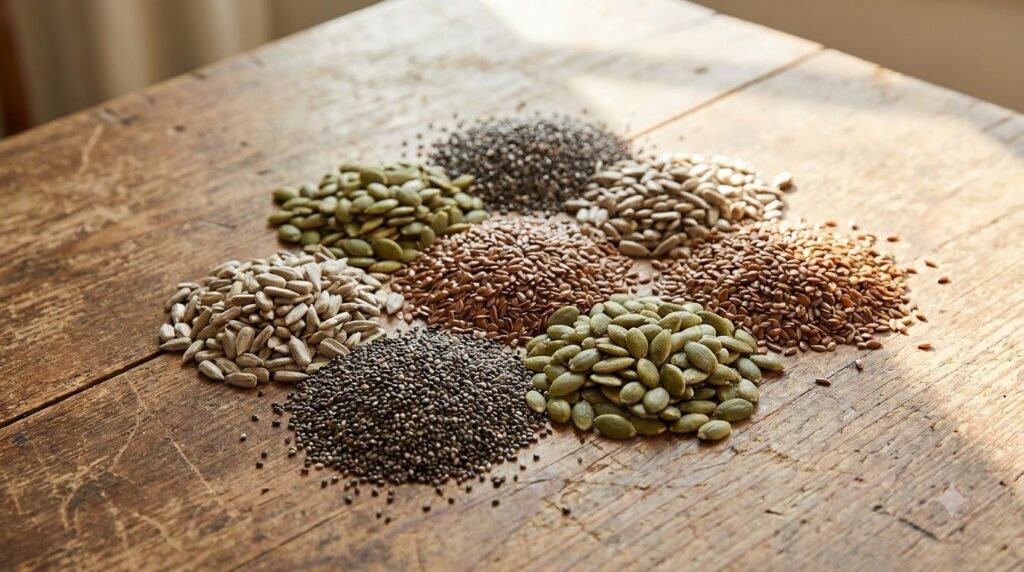
Spotlight on Specific Seeds
Pumpkin Seeds: The Heart-Healthy Crunch
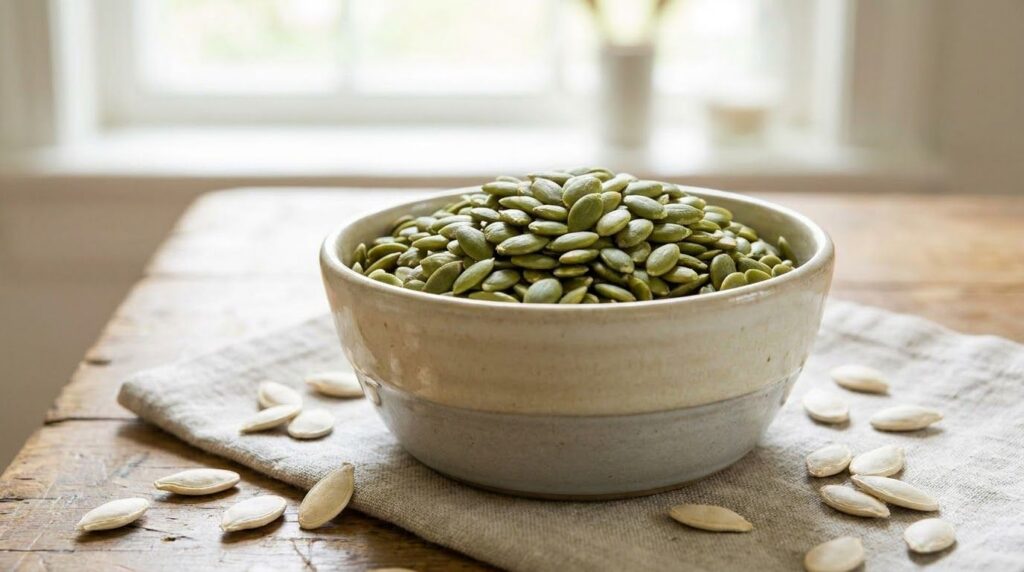
Pumpkin seeds, also known as pepitas, are more than just a seasonal snack. They are nutritional gems, particularly beneficial for heart health and providing a significant magnesium boost.
Benefits:
- Heart Health: Rich in magnesium, which can support healthy blood pressure and blood sugar levels. They also contain phytosterols, compounds associated with reducing bad cholesterol.
- Immune Support: A good source of zinc, vital for immune function and cell growth.
- Antioxidant Power: Packed with antioxidants that help reduce inflammation and protect cells.
Nutrition Facts (per 1 oz / ~28g):
- Calories: ~160
- Protein: ~7g
- Carbs: ~5g
- Fat: ~14g (mostly healthy unsaturated fats)
- Fiber: ~2g
- Main Nutrients: Magnesium, Zinc, Iron
Best Ways to Eat:
- Sprinkle on salads, soups, or roasted vegetables.
- Add to granola, yogurt, or oatmeal.
- Enjoy as a standalone snack, raw or lightly roasted.
Flax Seeds: Digestive Dynamo
Tiny but mighty, flax seeds are best known for their exceptional fiber content and omega-3 fatty acids, making them a powerhouse for digestive and heart health. For optimal absorption, it’s best to consume them ground.
Benefits:
- Digestive Health: Abundant in soluble and insoluble fiber, which can promote regularity and feed beneficial gut bacteria.
- Omega-3s: A fantastic plant-based source of alpha-linolenic acid (ALA), an omega-3 fatty acid crucial for heart health and reducing inflammation.
- Lignans: These plant compounds have antioxidant and estrogenic properties, potentially offering benefits for hormonal balance.
Nutrition Facts (per 1 oz / ~28g ground):
- Calories: ~150
- Protein: ~5g
- Carbs: ~8g
- Fat: ~12g (rich in ALA omega-3s)
- Fiber: ~8g
- Main Nutrients: Omega-3 ALA, Fiber, Lignans
Best Ways to Eat:
- Mix into smoothies, yogurt, or oatmeal.
- Use as an egg substitute in baking (1 tbsp ground flax + 3 tbsp water = 1

