Wild leafy herbs and green pepper berries have long appeared in traditional herbal preparation methods across different cultures. One simple approach involves crushing fresh leaves and berries before slowly infusing them in oil to create an aromatic herbal oil blend used in folk wellness practices and homemade herbal routines.
This type of infused oil is often appreciated for its earthy scent, botanical appearance, and connection to traditional plant-based preparation techniques.
What This Herbal Preparation Includes
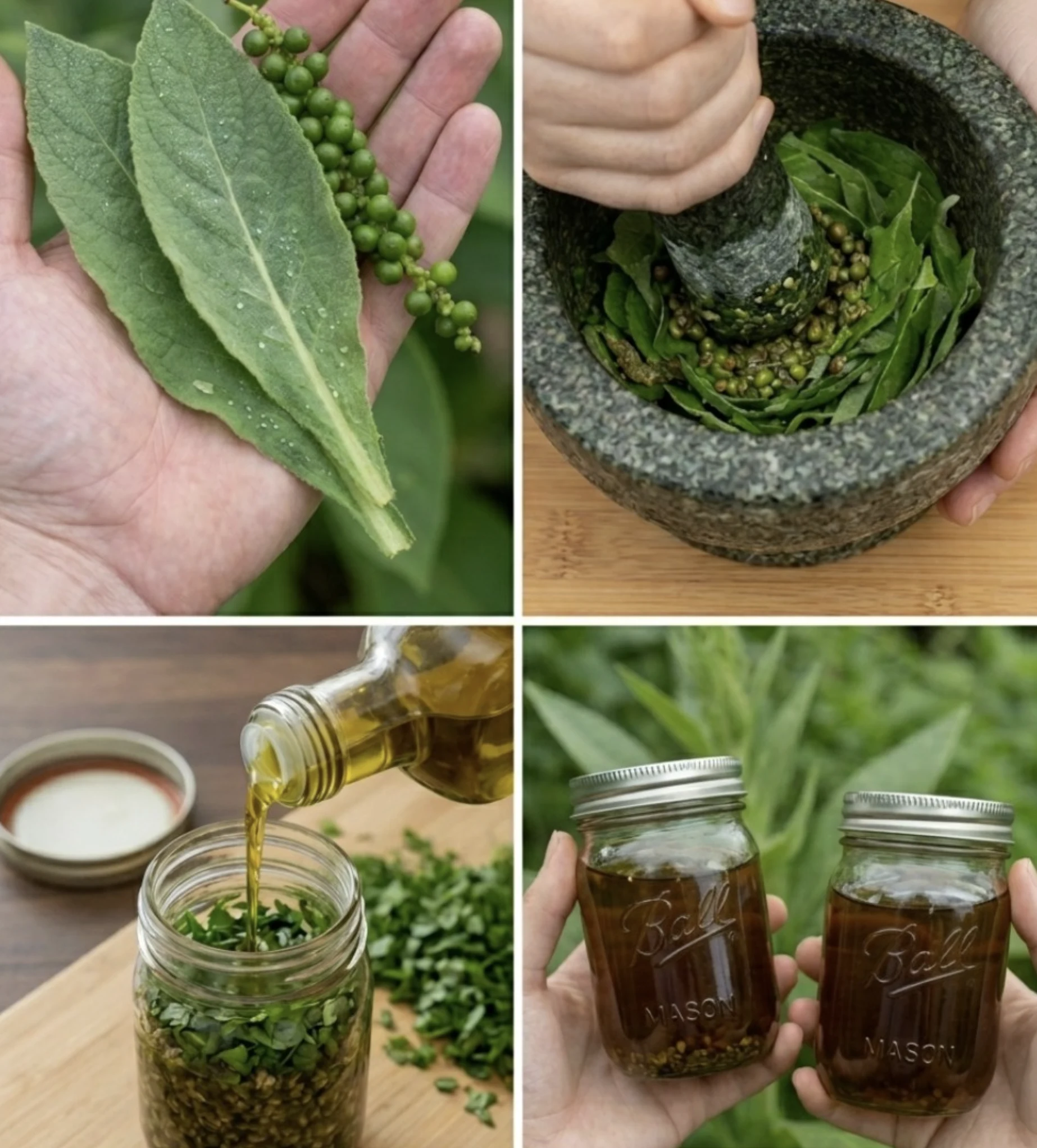
The content shown features:
- fresh leafy herbs
- clusters of green pepper berries
- mortar and pestle crushing process
- oil infusion in mason jars
The combination creates a rustic herbal infusion commonly associated with traditional botanical preparations.
Supplies You’ll Need
Basic Ingredients
- fresh leafy herbs
- green pepper berries
- carrier oil (olive oil is commonly used)
- glass mason jars with lids
Tools
- mortar and pestle
- knife or scissors
- clean dry jar
- strainer or cheesecloth
Step-by-Step Herbal Oil Infusion
Step 1: Gather Fresh Herbs
Select fresh herbs that:
- appear healthy
- are dry and clean
- show no mold or damage
Fresh green pepper berries are often added for their bold botanical aroma.
Step 2: Crush the Herbs and Berries
Using a mortar and pestle:
- lightly crush herbs
- gently break pepper berries
- release natural plant oils and aroma
Crushing helps expose more plant surface area for infusion.
Step 3: Fill the Mason Jar
Add crushed herbs and berries into a clean glass jar.
Do not pack too tightly. Leave enough room for oil to circulate around the herbs.
Step 4: Pour in Carrier Oil
Slowly pour oil into the jar until:
- herbs are fully submerged
- no plant material sticks above oil level
Olive oil is one of the most commonly used options for traditional infused oil preparations.
Step 5: Seal and Store
Close the jar tightly and store it in:
- cool area
- dark cabinet
- dry place away from sunlight
Many herbal oil infusions are traditionally left for:
- 2 to 4 weeks
Step 6: Shake Occasionally
Every few days:
- gently shake jar
- redistribute herbs
- help infusion process
Over time, the oil often darkens and develops a stronger herbal scent.
Step 7: Strain the Oil
After infusion:
- strain mixture through cheesecloth or fine mesh strainer
- remove all plant material
- transfer oil into clean glass container
Your herbal infused oil is now ready for storage.
Traditional Uses of Herbal Infused Oils
Throughout history, botanical oil infusions have commonly been used in:
- massage blends
- herbal self-care rituals
- aromatic preparations
- topical oil blends
- folk wellness traditions
Practices vary widely depending on region and plant type.
Important Safety Notes
Not all wild plants are safe for topical or internal use.
Before using any unfamiliar herb:
- confirm accurate plant identification
- research traditional safety information
- avoid using unknown wild plants
- consult a qualified herbal professional when needed
Some herbs may:
- irritate skin
- trigger allergies
- interact with medications
Pregnant individuals, children, and people with medical conditions should use extra caution with herbal preparations.
Why People Enjoy Homemade Herbal Infusions
Many people appreciate herbal oil projects because they:
- connect with traditional plant knowledge
- encourage slower DIY routines
- reduce reliance on synthetic fragrances
- create visually beautiful jars and preparations
The process itself is often considered calming and creative.
Storage Tips
For best quality:
- store in dark glass bottles if possible
- keep away from direct heat
- avoid moisture contamination
- label jars with preparation date
Discard immediately if:
- mold appears
- odor becomes sour
- texture changes unusually
Rustic Herbal Photography Ideas
This type of content works well with:
- close-up herb textures
- crushed leaves in mortar and pestle
- oil pouring into jars
- amber herbal infusions
- wooden table styling
- botanical flat lays
- natural window lighting
Final Thoughts
Traditional herbal infused oil preparations continue to interest people who enjoy botanical DIY projects and old-style herbal routines. Combining fresh leafy herbs, green pepper berries, and oil infusion techniques creates a simple homemade preparation rooted in traditional plant practices.
Whether used for display, aroma, or traditional self-care inspiration, these rustic herbal oil infusions remain popular among people interested in herbal lifestyles and natural preparation methods.